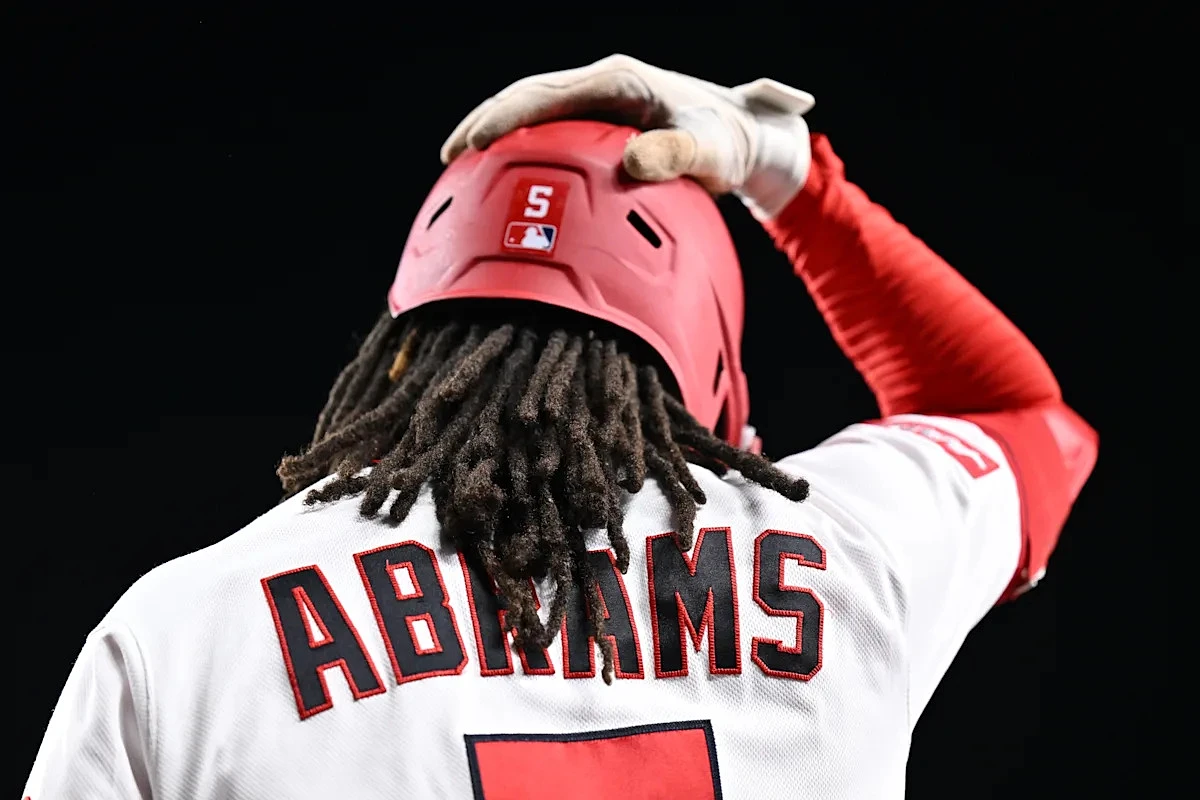


The New York Mets (9-19) welcome the Washington Nationals (13-16) to Citi Field for their first meeting of the season, as well as the first in-division series of the year for the Mets.
There isn’t too much to say about the Mets’ season at this point that hasn’t been said already here, on WFAN, in every sports column in the tri-state area, every bar that shows baseball games, as well as shouted by passersby who see me still wearing a Mets cap. This is a terrible, terrible season thus far by just about every available metric.
The Mets have played the bulk of their games without one of their two biggest stars, the bats have been as silent as Marcel Marceau, the pitching performances from the folks who need to be good have been disappointing, and almost every player has underperformed in some capacity. I won’t quite say that everything that could’ve gone wrong has, because there is always something worse that could come around the corner. But looking at even the measured, modest expectations some put on this team versus where they are now, it’s stark.
After their twelve game losing streak, the Mets won two against the Twins and things looked like they might get back on some sort of track. But then, the Mets were swept by the Rockies, scoring just four runs across three games and looking like a warmed over Double-A offense against a last place club.
Without Francisco Lindor, without stronger performances from Kodai Senga and David Peterson, without some sort of solution to the black hole that is the bottom of the Mets’ lineup, there doesn’t appear to be many options for getting this team back on track. A healthy Jorge Polanco in the lineup would help, but last we heard, he was ‘week to week’ with his dual achilles and wrist injuries. If Polanco returns, it seems unlikely that he will immediately slot into the first base slot, rather taking a bulk of the DH at bats. Both Brett Baty and Mark Vientos have struggled at first, so that is a position that needs to be sorted. Bo Bichette needs to have better at-bats. Juan Soto and Francisco Alvarez need to heat up.
Some of those things—namely Soto, Alvy and Bichette—seem likely to happen, just based on talent and track record. It also seems likely that the Mets’ starting pitching situation will begin to sort itself out after another turn or two in the rotation. If Senga continues to struggle, it seems likely that he’ll be demoted to the bullpen and, perhaps, David Peterson will get his rotation spot back. With Christian Scott unable to return for another week or so, the only other option in Triple-A that looks like more than a one-start fill in would be Jonah Tong. But Tong could really use some more time on the farm to develop, so Wednesday’s “TBD” may see any number of possibilities taking the ball.
If there’s good news for the Mets, it is that, aside from the Braves, the rest of the NL East isn’t looking so hot either. The Nationals are three games under .500, which the Mets can only dream of at this point in the season, but the Mets aren’t exactly facing a powerhouse this week. The Mets are also lucking out in that they are missing both Foster Griffin and Jake Irvin, and so this seems like a perfect opportunity for the bats to get some work in against two pitchers with atrocious ERA-s (186 and 209, respectively).
The Nats are arriving in Queens after taking two of three from the White Sox, another team that isn’t exactly lighting the world on fire. The last Mets/Nats series at the end of 2025 saw Washington take two of three, a result that directly led to the Mets missing the playoffs, so there is some residual animosity here, in addition to the usual divisional heat. However, so much of the Mets’ team has turned over since then, who knows if there’s any juice left there.
If we are being optimistic – an if the size of an ocean – this is the perfect team for the Mets to buck up against and attempt to right the shit-ship before May begins. If we’re being pessimistic, if the Mets can’t beat the Nats, this might be an early sign that things won’t get any better any time soon.
Holmes (2026): 30.0 IP, 19 K, 10 BB, 3 HR, 2.10 ERA, 4.26 FIP, 53 ERA-
Clay Holmes is not an exciting starting pitcher to watch most of the time, but it is hard to argue with the results he’s been getting since converting to starting. In five starts this season, he hasn’t allowed more than two earned runs in a start and has lasted at least five innings. That’s a solid early season performance, and a good person to have opening this series.
Littell (2026): 25.0 IP, 15 K, 8 BB, 11 HR, 7.56 ERA, 8.61 FIP, 186 ERA-
You’re not reading that wrong, Littell has given up 11 home runs in five starts. That’s a 4.00 HR/9. Again, if the Mets’ bats are going to wake up, this would be a very convenient game for that to happen.
Cade Cavalli (2026): 24.2 IP, 28 K, 12 BB, 0 HR, 4.01 ERA, 2.80 FIP, 99 ERA-
Cavalli is having a decent start to his season, striking out 10.2/9 and limiting dingers. However, he’s only had one start where he recorded an out in the sixth inning and that was his first start of the year. A disastrous one and a third innings performance against the Pirates sullied his line heavily in this young season, but overall he’s been a perfectly cromulent start for the Nats.
Peralta (2026): 32.1 IP, 36 K, 13 BB, 4 HR, 3.90 ERA, 3.90 FIP, 99 ERA-
Peralta being second only to Nolan McLean in terms of innings pitched is one of the few positive surprises of 2026 so far. While not quite looking like the ace the Mets hoped he would be, Peralta has been solid, if unspectacular thus far. If Carlos Mendoza was a little quicker with the trigger in terms of pulling him from games, his ERA would benefit, but you can’t really blame Mendy for wanting him to go more than five innings. However, if he keeps struggling in the sixth and beyond, that may just be a pill we need to swallow.
Mikolas (2026): 23.1 IP, 16 K, 10 BB, 7 HR, 8.49 ERA, 6.94 FIP, 209 ERA-