The Dallas Cowboys have officially checked off every box on their offseason to-do list, and for fans who've been waiting for a defensive overhaul, the results are worth celebrating.
Let's face it—last season was a defensive disaster. The Cowboys finished dead last in scoring, EPA per play, and DVOA. There was no hiding from those numbers. The message from the front office was clear: fix the defense, or watch another promising season slip away.
Head coach Brian Schottenheimer wasted no time moving on from defensive coordinator Matt Eberflus. But instead of rushing into a replacement, he took a measured approach, eventually landing on rising star Christian Parker. In years past, that might have been the end of the story—swap out the coach, cross your fingers, and hope a fresh voice turns things around without spending a dime on new talent. Not this time.
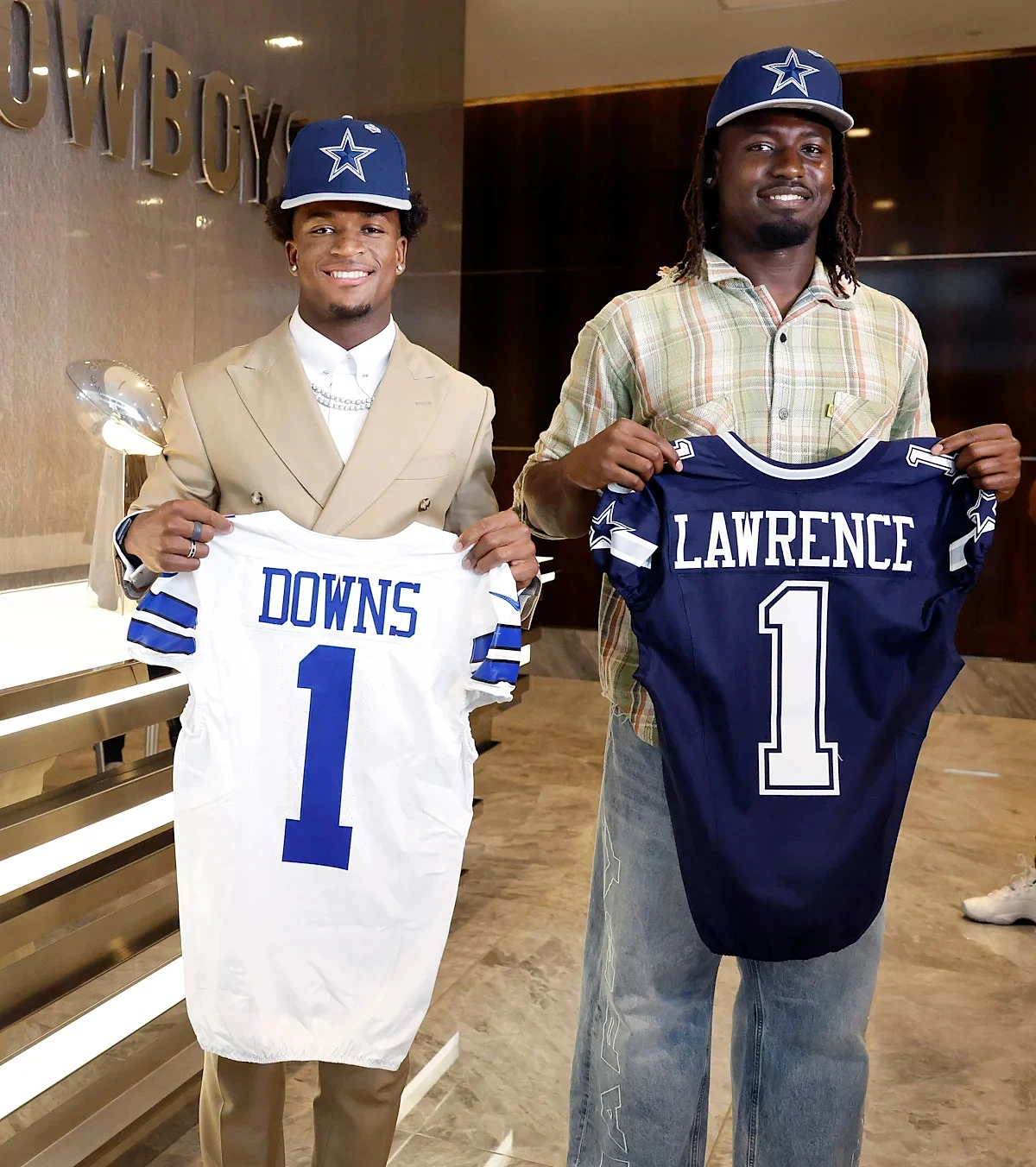
The Cowboys understood the assignment, and their offseason moves—culminating in a stellar 2026 NFL Draft—prove they're serious about rebuilding from the ground up.
For decades, Dallas has stuck to a familiar blueprint on the defensive line: undersized, athletic linemen who rely on quickness to slip past blockers. Rod Marinelli made it a signature approach, and even before him, Jay Ratliff played nose tackle at under 300 pounds. When the team drafted Mazi Smith, a massive presence out of Michigan, they immediately asked him to shed weight. The philosophy was clear: speed over size.
But that approach has its limits, especially against the run. The Cowboys are finally pivoting to something different—something that fits the Vic Fangio-inspired scheme Parker is bringing to Dallas.
Think about it: Quinnen Williams, Kenny Clark, and Otito Ogbonnia all play comfortably over 300 pounds. None of them sacrifice mobility for mass, but they bring the kind of heft and strength that holds up at the point of attack. That's exactly what the Cowboys have been missing.
The addition of Rashan Gary signals a major shift in philosophy. Gary is nearly as heavy now as Osa Odighizuwa was when the Cowboys drafted him to play the 3-technique. But Gary won't be lining up inside—he's an edge rusher with the size and strength to play all three downs. He can get after the quarterback, but he can also set the edge against the run. That versatility is a game-changer for a defense that has struggled to stop anyone on the ground.
And for the traditional speed rushers? The Cowboys still have options. Donovan Eze and two other prototypical edge players give Parker the flexibility to mix and match—speed on passing downs, power on early downs, and a rotation that keeps everyone fresh.
This offseason wasn't about tinkering. It was about transforming. The Cowboys identified their weaknesses, committed to a new identity, and went out and got the players to make it work. For a team that has often been criticized for doing just enough, this feels different.
The defense has a new voice, a new philosophy, and most importantly, new personnel that fits the plan. If the pieces come together the way they're drawn up, the Cowboys might finally have the defense to match their high-powered offense.