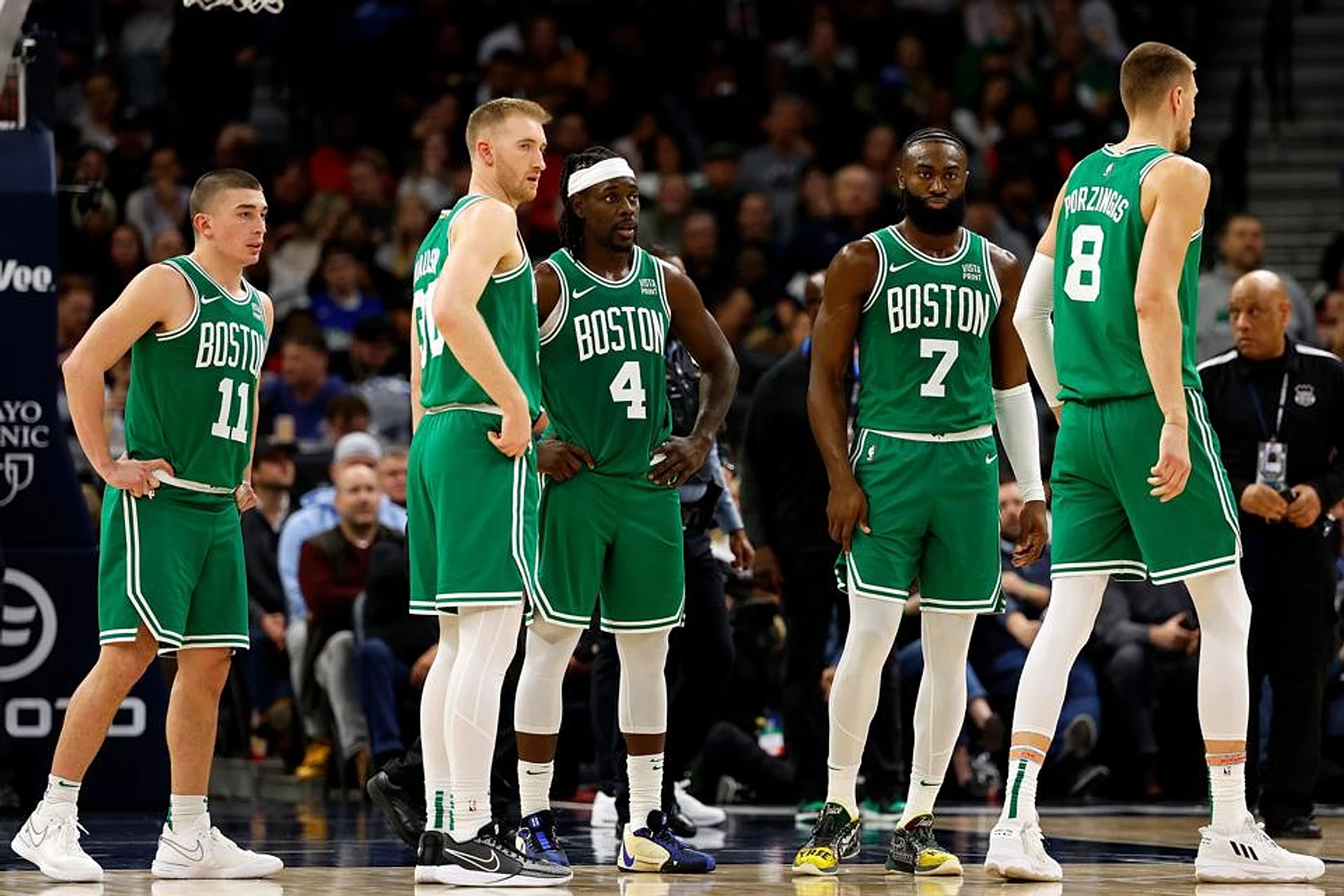
The Boston Celtics' decision to prioritize financial flexibility over roster depth came back to haunt them in a dramatic first-round playoff exit against the Philadelphia 76ers. Had the Celtics kept Jrue Holiday and Kristaps Porziņģis instead of salary-dumping them, they likely would have advanced past the Sixers and kept their championship window wide open.
After Jayson Tatum suffered a torn Achilles during the 2025 playoffs, the Celtics made a bold pivot. Rather than becoming the first $500 million team in NBA history, they began dismantling the roster that won the 2023-24 championship. That cost-cutting strategy proved costly when the 76ers stormed back from a 3-1 series deficit in the 2026 playoffs—a collapse that shook the basketball world.
Entering the postseason as the East's No. 2 seed, the Celtics looked unstoppable. They jumped out to a commanding 3-1 lead over Philadelphia, even blowing out the Sixers by 32 points in Game 4 despite Joel Embiid's return from an appendectomy. At that point, history was on Boston's side: the franchise had never lost a series after leading 3-1 (32-0 all-time), while the Sixers were 0-18 in that situation.
But Embiid, Tyrese Maxey, and Paul George refused to let history stand. They engineered a stunning comeback, making Philadelphia just the 14th team ever to overcome a 3-1 deficit. The Celtics became the latest cautionary tale about what happens when championship chemistry meets the luxury tax calculator.
The irony? Without Tatum, this Celtics team wildly overachieved, winning 56 games and securing home-court advantage. But the playoffs revealed a harsh truth: cost-cutting left Boston vulnerable. When the Sixers cranked up the pressure, the Celtics simply didn't have the depth—or the star power they once had—to respond.
For fans who remember the glory of 2024, this series was a painful reminder that in the NBA, you get what you pay for—and sometimes, what you save costs you everything.