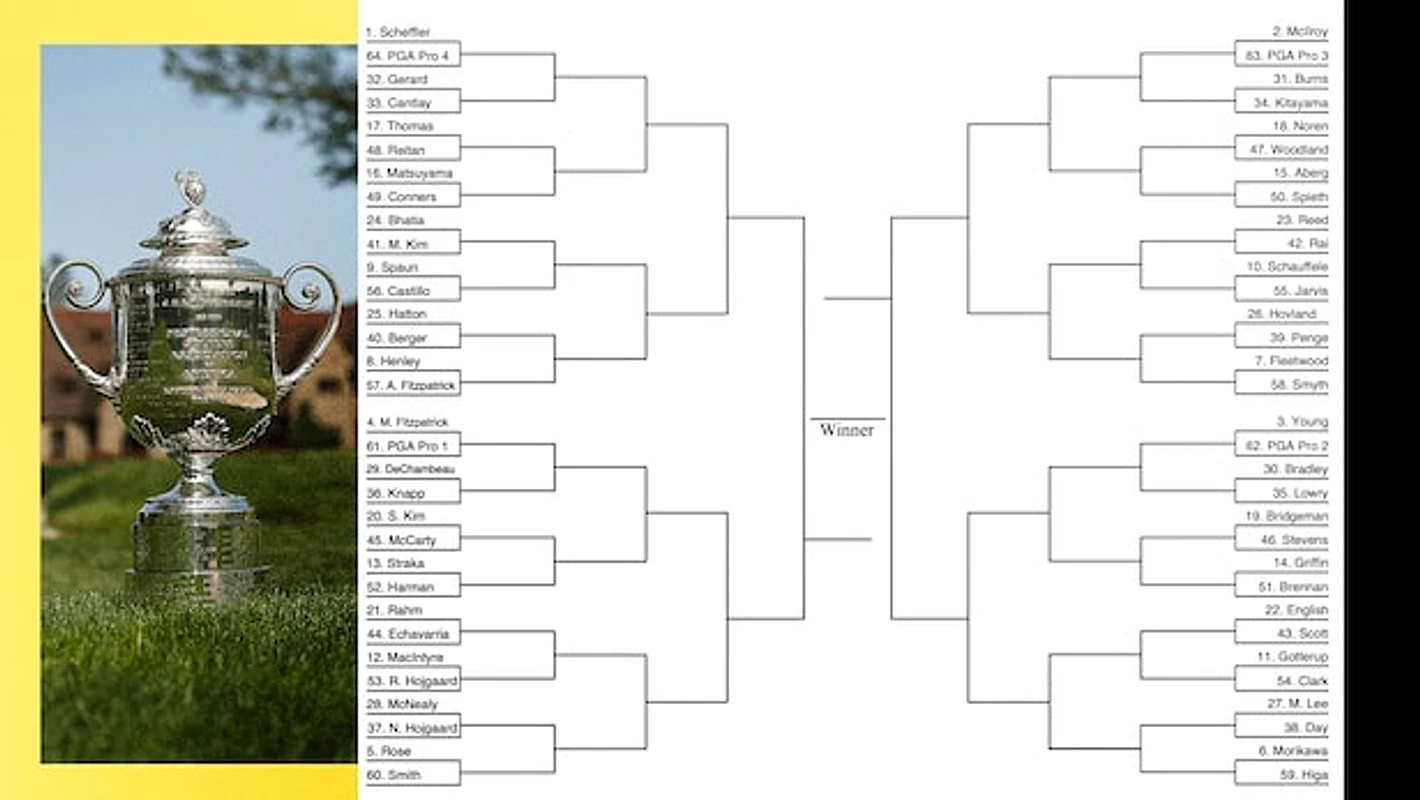
Every year when the PGA Championship rolls around, a familiar buzz fills the air among fans and media alike—a longing for the days when this major was a true test of nerve and endurance in match-play format. From its very first edition in 1916 until 1957, the PGA Championship was exactly that: a knockout tournament where golfers battled head-to-head, hole after hole, until only one champion remained.
Back then, the format was simple yet brutal. Players first competed in 36 holes of stroke-play qualifying to earn one of just 32 spots in a bracket. From there, it became a grueling, nine-round gauntlet where survival meant everything. Winning the Wanamaker Trophy often required playing more than 200 holes over the course of the week—a true marathon of skill, stamina, and mental toughness.
But as the game evolved, so did the economics. In 1957, the tournament actually lost money for the PGA of America. Broadcasters were uneasy about the unpredictable nature of match play—what if the biggest names got knocked out early? There simply wasn't enough golf to fill weekend television schedules. By 1958, with CBS producing its first broadcast, the PGA Championship fell in line with the other majors and switched to the familiar 72-hole stroke-play format we know today.
Yet the question lingers: what if the PGA Championship returned to its match-play roots? How would it work in the modern era? Who would get a spot in the field, and how many rounds would they have to survive? Armed with a spreadsheet and a deep love for head-to-head drama, I set out to design a format that could bring back the magic.
The first challenge is scheduling. While the dream scenario would be watching Rory McIlroy and Scottie Scheffler battle through eight intense rounds for the title, I'm realistic enough to know that's not feasible in 2026. Still, I'm asking players to commit to an extra day of competition. Here's how it would unfold: a 64-player field starts on Wednesday in a traditional single-elimination bracket. Thirty-two advance to Thursday, 16 to Friday, and eight play on Saturday morning. The semifinals would take place Saturday afternoon, setting up a Sunday showdown over 18 holes for the championship.
Some purists argue a 36-hole final would be more fitting for a major championship. But asking players to compete in 72 holes over the weekend alone is simply too much. The beauty of match play lies in its unpredictability and the sheer drama of sudden-death moments—and that's exactly what a return to this format would deliver.