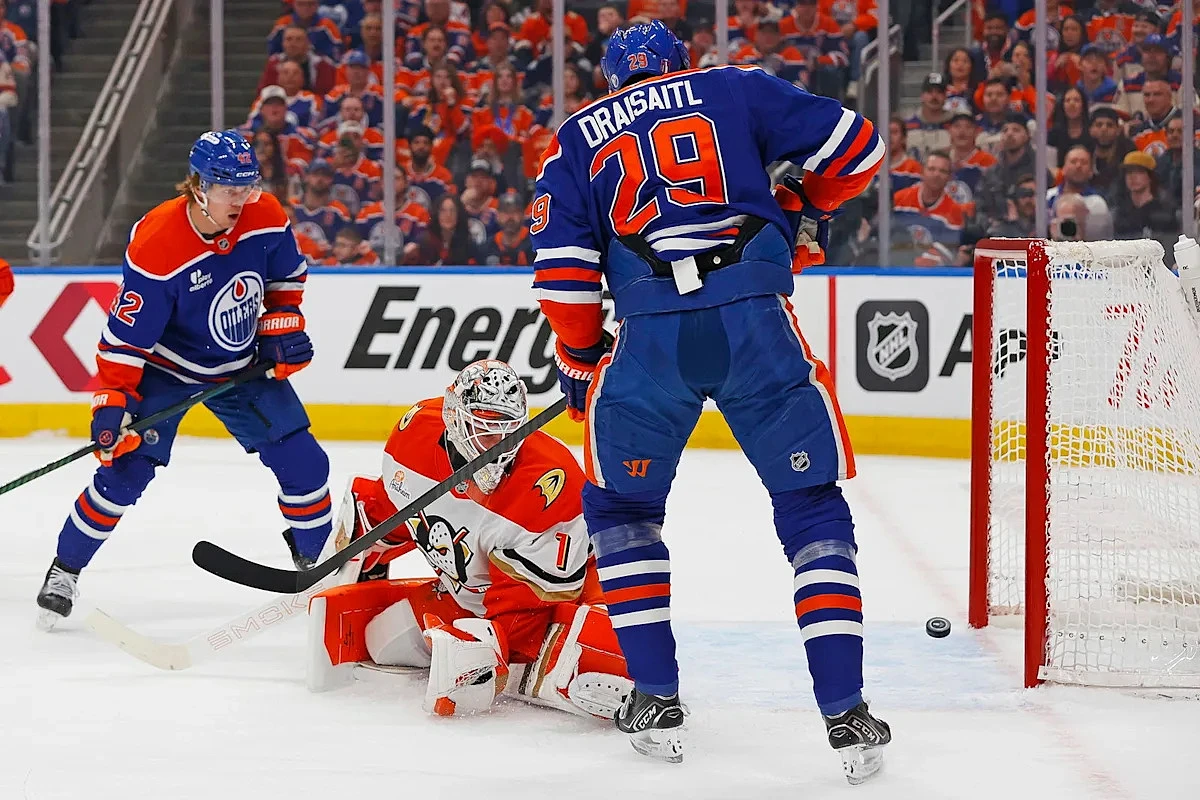

With a chance to advance to the second round for the first time since 2017, the Anaheim Ducks traveled to face the Edmonton Oilers for their Game 5 matchup on Tuesday night in Alberta.
In one of (maybe the most) entertaining series in this year’s playoffs, the Ducks dropped Game 1 before rattling off wins in Games 2-4. The Oilers had scored first in each of the first four games of the series, and every game had seen lead changes prior to Tuesday.
2026 Stanley Cup Playoffs: Round 1, Game 5 - Ducks vs. Oilers Gameday Preview (04/28/26)
The Anaheim Ducks Approach to Having the Edmonton Oilers on the Brink of Elimination
On the Edmonton side, Connor McDavid and Jason Dickinson were said to be game-time decisions, as they missed the Oilers’ morning skate. They were each in the lineup, in their typical positions.
Radko Gudas remained out of the Ducks’ lineup, as he had for Games 2-4 with a lower-body injury, and head coach Joel Quenneville didn’t alter the lineup for this potentially monumental Game 5. Here’s how the Ducks lined up in this game:
Lukas Dostal got the start for the Ducks and stopped just six of nine shots before he was quickly pulled with 9:47 remaining in the first period. He was replaced by Ville Husso in relief, who saved 10 of 11. Oilers head coach Kris Knoblauch turned back to Connor Ingram in his net for Game 5 after electing to start Tristan Jarry for Game 4. Ingram saved 29 of 30 shots.
The expected push from the Oilers came early, as Knoblauch went with his “break glass in case of emergency” option. He elected to place Leon Draisaitl and McDavid on their top line together to start, along with Kasperi Kapanen, and kept them together throughout the course of this one.
Edmonton capitalized on three early defensive breakdowns from Anaheim, added a power play tally after a response goal from the Ducks, and locked it down from then on out.
For the second half of the hockey game, the Oilers elected to high-flip out of the defensive zone and deployed an extremely passive neutral zone forechecking scheme to eliminate any semblance of an Anaheim rush attack. Every entry resulted in a distance shot, Edmonton winning a puck battle, and a high flip to the opposing blueline.
“I would have liked to find out how we would have played in a situation where we didn’t give them an easy lead like that,” Quenneville said after the game. “They could play at home with the crowd and the enthusiasm, you’re down 2-0 out of the gate, and that plays right into what they’re trying to do, their game plan. It was a tough beginning again. We were fortunate to get back in it the last time. We just gotta be ready from puck drop, and then take care of business.”
Rush Defense-The Ducks seemed to have had their rush defense game sorted and ironed in the playoffs, as it was an area of concern for most of the regular season. One early mistake in that realm cost them the opening goal, where Jacob Trouba sagged too far towards his crease as Evan Bouchard stopped up after entry. Bouchard was able to find a streaking Vasily Podkolzin through the seam that opened. Podkolzin buried off Trouba’s stick and by Dostal.
The Ducks had numbers back, but a sorting issue or lack of scanning from Trouba cost them the opener, setting the tone for this game.
D-Zone Coverage-Edmonton’s well-executed game plan allowed them to generate elongated cycles deep in the offensive zone early. Their movement, especially with McDavid and Draisaitl on the ice together, forced Anaheim’s defensemen to shade too far from their goal line. When point shots were eventually taken, Oilers’ forwards were left uncovered in front for deflections and rebounds.
Lukas Dostal-Dostal will be the story of this game from Anaheim’s side, but it may not be entirely warranted. He made a mistake on the second goal of the game, attempting a long outlet to a retreating winger that was picked off. After it was picked off by Ryan Nugent-Hopkins, it was easily moved to a (way too) wide-open Zach Hyman in front, who doesn’t often miss in those situations.
Dostal allowed three goals on nine shots, but every goal was deflected in some manner, and two came off sticks of inexcusably open Oilers directly in front of him.
Depth Scoring-Every Ducks line featured a goal scorer in Game 4. In Game 5, though Edmonton was the team that stacked their top line, the only Anaheim line that consistently generated offense was their top line of Gauthier-Carlsson-Terry.
When the bottom three lines were on the ice, they lacked creativity and tenacity on forechecks to recover pucks that Edmonton forced them to dump. For Ducks followers who remember, this aspect felt reminiscent of the height of the Bobby Ryan/Ryan Getzlaf/Corey Perry era, where they were the only line to be trusted with manufacturing any semblance of offense.
“We gotta get angry at ourselves,” Quenneville continued after the game. “We gotta be excited about going home and take advantage of the crowd, and then play.”
The pressure in the series will now shift from the experienced, lethal Cup contenders to the young, inexperienced, “happy to be here” club. The fourth win in a series is the hardest to earn, and the Ducks will need to earn it on home ice on Thursday or risk heading back to Alberta for a potential Game 7 in a hostile environment and against a hungry team with momentum on their side.