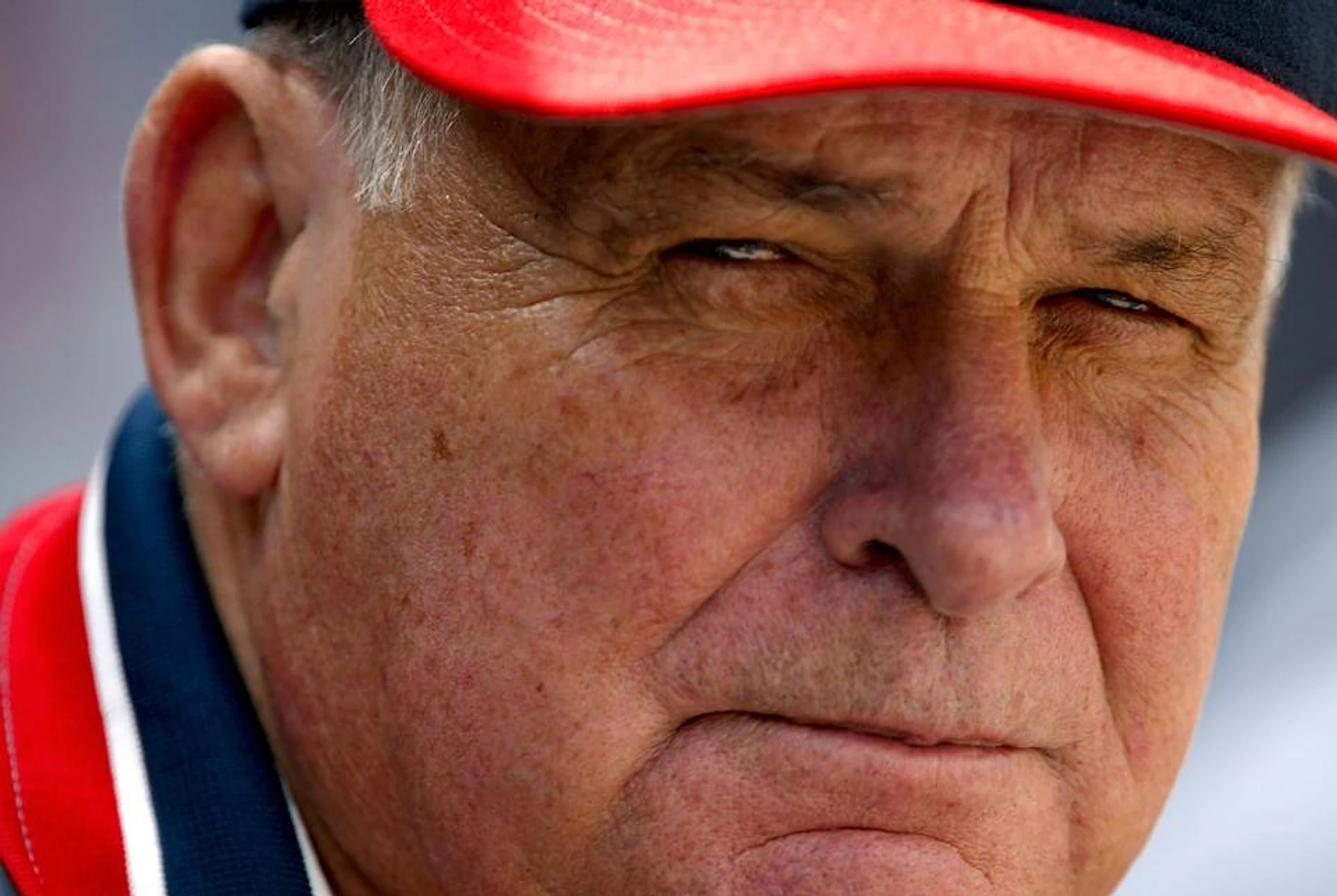
Bobby Cox was a paradox wrapped in a Braves uniform. To the baseball world, he was the fiery Hall of Fame manager who would storm out of the dugout to argue with umpires, his face reddening as he kicked dirt and waved his arms. But off the field, he was surprisingly affable—a warm, approachable figure who would chat with reporters about almost anything. Almost.
The moment the conversation turned to his Atlanta Braves, Cox would clam up. He became a vault, offering little more than polite deflections. It was a frustrating wall that many in the media hit, especially as the Braves built one of the most dominant runs in MLB history: 14 consecutive division titles through 2005, five pennants, and a World Series championship in 1995. Today, that legacy has helped push the franchise to an estimated $3.35 billion valuation, ranking eighth on Forbes' team valuations list.
But for a select few, Cox was an open book. And that trust was hard-earned.
To understand Cox, you have to go back to the beginning. He first managed the Braves from 1978 to 1981, but owner Ted Turner fired him—a decision Turner would later call the worst of his professional life. Turner, who passed away earlier this week, was a larger-than-life figure known for his quirks and his stewardship of the Braves, Hawks, and Thrashers, not to mention his cable TV empire and philanthropy. After letting Cox go, Turner watched him go to Toronto and lead the Blue Jays to success. So, in 1986, Turner did what any smart owner would do: he brought Cox back, this time as general manager.
That was the same year I joined the Atlanta Journal-Constitution as a sports columnist. Over the next 25 years, through May 2009, I had a front-row seat to Cox's genius. As GM, he teamed up with farm director Hank Aaron—yes, that Hank Aaron—to stockpile the talent that would fuel that historic playoff run. Then, in 1991, Cox returned to the dugout as manager, where he stayed until his retirement in 2010.
His players adored him. They loved his baseball mind, his loyalty, and the way he had their backs. But for those he trusted, Cox offered something even rarer: insight. He would share stories about the team's inner workings, the psychology of a clubhouse, and the art of building a winner. It was a side of Bobby Cox that few ever saw—and a reminder that even the most guarded figures have a soft spot for those who earn their confidence.