

For at least the last decade, a system that allows private schools to compete for sectional and state championships alongside public schools where talent pools are restricted by district boundaries has been a source of debate.
A string of proposals and counterproposals at the state level resulted in a New York State Public High School Athletic Association (NYSPHSAA) resolution earlier this year that Section 1 administrators insisted would have little impact on the issue of competitive fairness.
If administrators in Section 1 get their way, NYSPHSAA will be forced to go beyond the recently approved oversight committee many deem incapable of restoring a competitive balance and draw up plans for a playoff system that separates public and private schools.
If representatives from the 11 NYSPHSAA sections on Friday elect to go in a less controversial direction, Section 1 is likely to vote on a constitutional amendment that will leave four member schools with a difficult decision to make.
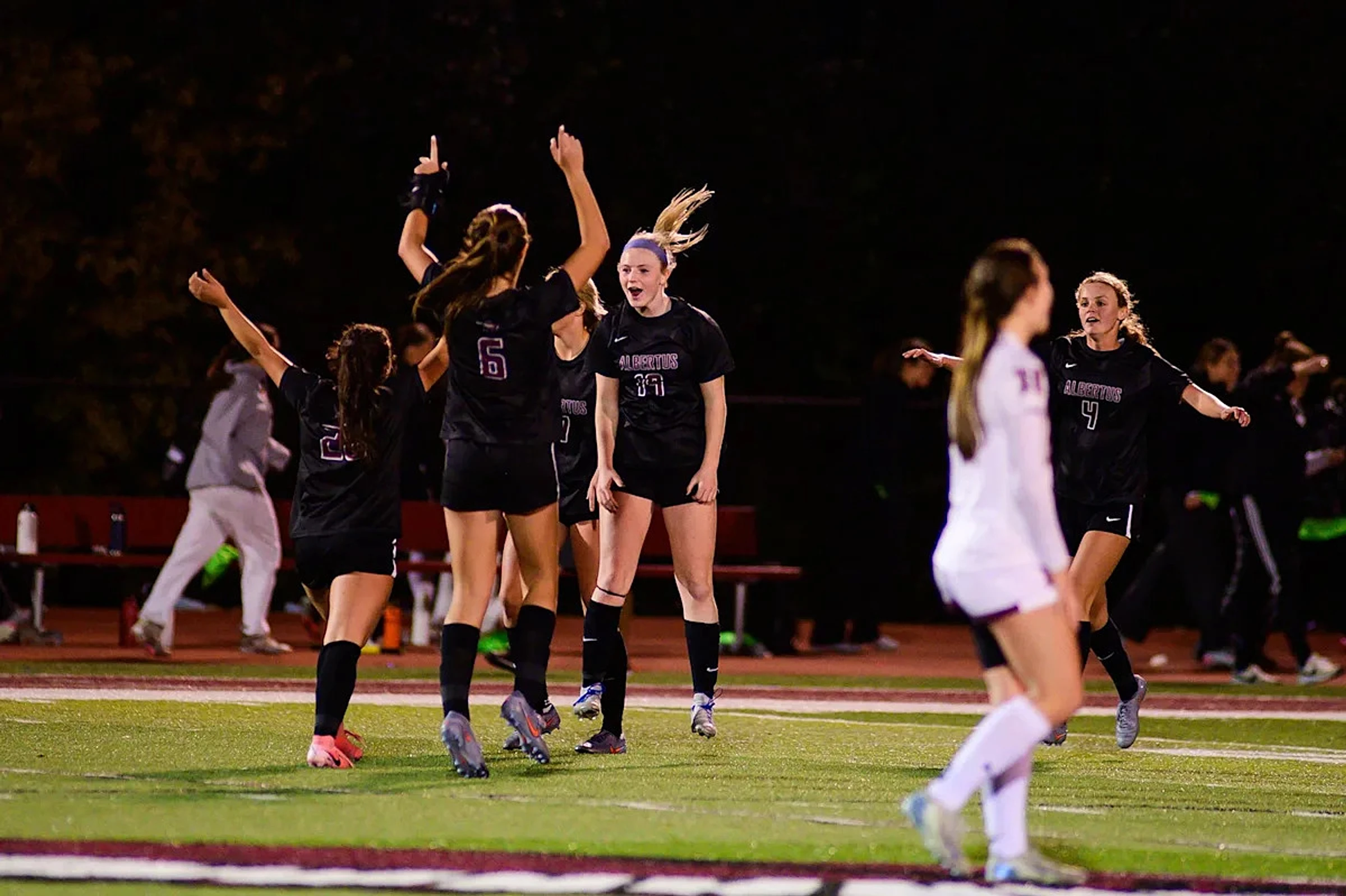
Albertus Magnus, Ursuline, Leffell School and Keio Academy would essentially be excluded from traditional Section 1 and NYSPHSAA postseason tournament play, starting with the 2027-28 school year.
“We’ve gotten here because of the inaction of the NYSPHSAA,” Clarkstown School District superintendent and Section 1 President Marc Baiocco said. “We need to get them to realize there are structural inequities that exist across the state. … There are predictable results when a school can assemble rosters from a regional talent pool that no public school can draw from.”
As schools without boundaries, Albertus Magnus, Ursuline, Leffell and Keio can pull talent from multiple towns, states and even countries. They are prohibited from any kind of direct recruiting by state and sectional rules.
The four schools have full athletic programs with high participation rates and varying degrees of success.
So far this calendar year, there have been 28 Section 1 championship games in football, boys and girls soccer, field hockey and boys and girls basketball. Only three non-public school teams went home with titles, and they all happened to be from Albertus Magnus.
“I think what you’re seeing is powerhouse teams emerging,” said Putnam Valley superintendent Jeremy Luft, who is president-elect of the Lower Hudson Council of School Superintendents (LHCOSS) and sits on the NYSPHSAA Central Committee and Section 1 Executive Committee. “It's easy just to count championships, but if you look at it from an opportunity loss for students, how many public school students never had an opportunity to participate in that championship by virtue of whatever powerhouse made their way through sectionals and eliminated a bunch of teams along the way, then they made their way through regionals and eliminated more public schools, then in the semifinals or finals did the same? It’s a much greater number.”
A number of local superintendents have grown frustrated with NYSPHSAA executive director Robert Zayas and have suggested the state education department needs to get involved.
“I've been involved in Section 1 athletics for about six years now and this is my second go-round as president,” Baiocco said. “The (NYSPHSAA) is a membership driven organization, but there's no governing body that oversees it. Oftentimes, when we speak to Dr. Zayas, we're getting a very nebulous answer, if any, and we're not getting any type of leadership that's coming out and saying, ‘OK, we recognize there are inequities here, and we need to move to a more equitable environment where students in public schools aren't being disenfranchised anymore.’ ”
A bill proposing separate interscholastic championships for public and non-public schools was introduced last year by New York State Assemblyman Matt Slater (R-Yorktown) but failed to gain traction.
Interscholastic athletics have increased exponentially in size and scope over the last 20 years. Parents have never been more influential, and they are primarily responsible for the increased volume level when a public school is sent home from the playoffs by a private school team.
Yes, there are trophy hunters in the conversation but they are outnumbered by folks who have witnessed the heartbreaking end of a memorable season at the hands of a private school that plays by different rules. The outcry resulted in NYSPHSAA forming the Schools Without Boundaries ad hoc committee to explore solutions.
During the initial meeting in October 2024, Zayas cautioned that prohibiting non-public schools from competing in state championships in any way could lead to potential legal and legislative challenges.
The state association’s legal counsel, Renee James, provided a historical review of related litigation at the meeting and noted that separating non-public schools into their own classification is unlikely to hold up in court. She further urged the committee to consider the legal challenges when evaluating future proposals.
During the following meeting, in February 2025, Section 1 shared a team sports proposal to establish a separate postseason for schools without boundaries. The framework loosely mirrors a system used by the New Jersey State Interscholastic Athletic Association. Private schools would remain members of their respective leagues and sections for the regular season, but would participate in two newly formed postseason classifications based on enrollment, starting with sectional tournaments.
“Our goal is equity, not exclusion,” Baiocco said. “We're not suggesting that during (regular-season) play, we eliminate non-public schools. I’m a big proponent of playing non-public schools in regular competitions, because it gives our students a competitive advantage in future games. Our objective here is to create an equitable situation for our students. It's just demoralizing when our students advance to the sectional level and they're getting beat by teams they just can't compete against in terms of rosters.”
The response from ad hoc committee members included concerns of potential lawsuits over what some might view as a discriminatory action. Questions about classifying schools that accept tuition-paying students were also raised and it was mentioned that separating the non-public schools would water down the level of competition and diminish the prestige of NYSPHSAA championships.