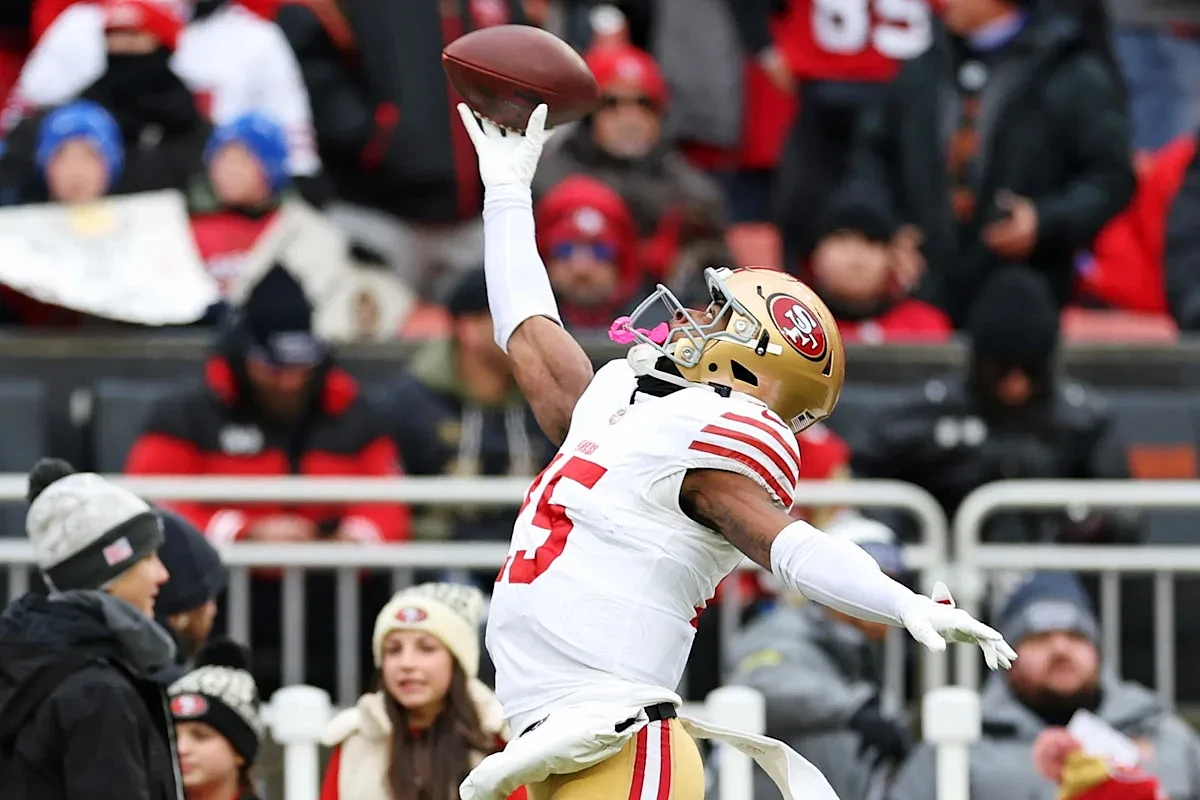
The San Francisco 49ers have officially parted ways with wide receiver Jauan Jennings, who inked a one-year, $13 million deal with the Minnesota Vikings on Tuesday. While the move bolsters a Vikings receiving corps that was thin on proven talent, the real story here is what the 49ers won't get in return: a compensatory draft pick.
For San Francisco, losing Jennings isn't a devastating blow to their on-field depth. The 49ers have been busy this offseason, adding three impact receivers: veteran Mike Evans, Christian Kirk, and Ole Miss rookie De'Zhaun Stribling. Add returning wideout Ricky Pearsall into the mix, and the team has a deep, competitive receiving room that can easily absorb Jennings' departure. In fact, over the last three seasons combined, Jennings has been less productive than what the Vikings are hoping to get from their new addition.
But here's where it stings: the 49ers were hoping to recoup value through the NFL's compensatory pick formula, which rewards teams that lose more or more valuable free agents than they sign. According to David Bonilla of 49ers Webzone, however, San Francisco won't receive a compensatory pick for Jennings—and the reason comes down to a simple timing technicality.
The NFL's formula considers a player's salary, playing time, and postseason accolades, but it only applies to unrestricted free agents who sign with new teams before the NFL Draft. Since Jennings remained unsigned until after the 2026 draft concluded, his departure doesn't factor into the 49ers' future compensatory selections. It's a classic case of bad timing: a solid player leaves, but the books don't balance in the team's favor.
For the Vikings, this is a low-risk, high-upside move. Jennings adds experience and physicality to a receiver room that needed a boost. For the 49ers, it's a reminder that even in a deep receiver market, timing can be everything—especially when draft picks are on the line.