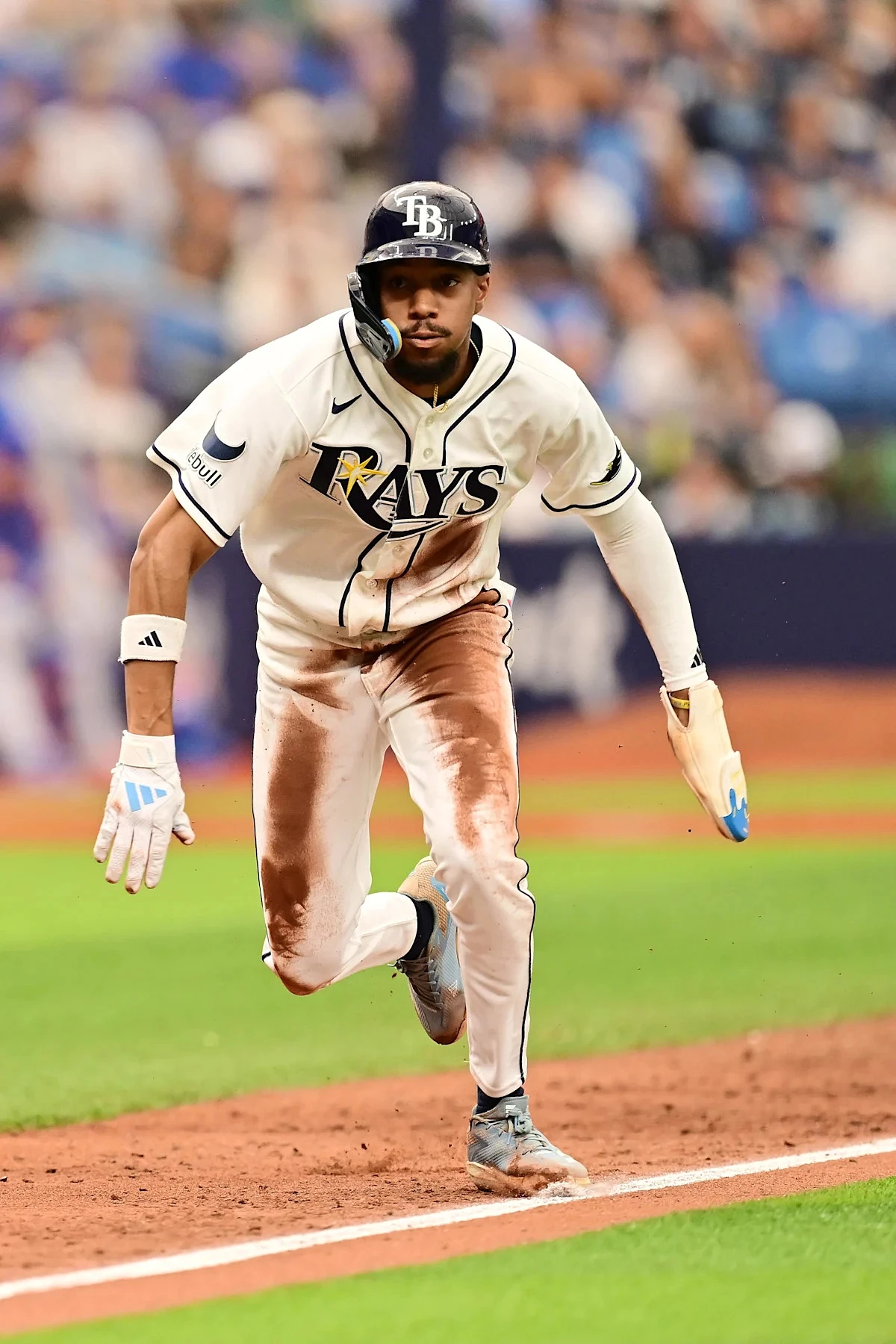
In baseball, lineup protection is a time-honored theory: a dangerous hitter behind you makes pitchers think twice about pitching around you. But the Tampa Bay Rays are flipping that script in 2025, and it all starts with Chandler Simpson's legs.
When the blazing-fast Simpson reaches first base, something unusual happens. Instead of the expected bump in fastballs for the next batter, Junior Caminero—the Rays' premier power threat—is actually seeing fewer heaters. It's a reverse lineup protection that's turning heads in the analytics community.
Here's the breakdown: league-wide, a runner on first base barely moves the needle on fastball usage. Hitters see about 48% fastballs in those situations. The Rays as a team hover near that mark too. But when Chandler Simpson is that runner? The number jumps to 54.4%. Pitchers are suddenly pumping fastballs—just not to Caminero.
In 19 of 36 games this season (and 18 of the last 24), Caminero has hit directly behind Simpson. You'd expect that to mean more fastballs to attack. Instead, Caminero is getting pitched around more, with breaking balls and offspeed stuff coming his way at higher rates. The typical in-zone rate for fastballs sits above 55%, while breaking pitches hover under 43%. Caminero's seeing the opposite.
But here's the twist: this might actually be working in Tampa Bay's favor. While Caminero isn't feasting on fastballs, he appears to "level up" in these situations—finding ways to produce even when pitchers are avoiding him. It's a subtle shift that shows how one player's speed can reshape an entire at-bat, even if it doesn't follow the traditional protection playbook.
For a team built on creative matchups and unconventional thinking, this Simpson-Caminero dynamic is just another example of how the Rays find edges where others see problems. And for fans watching at home, it's a reminder that in baseball, the most dangerous weapon isn't always a bat—sometimes it's the threat of what happens next.