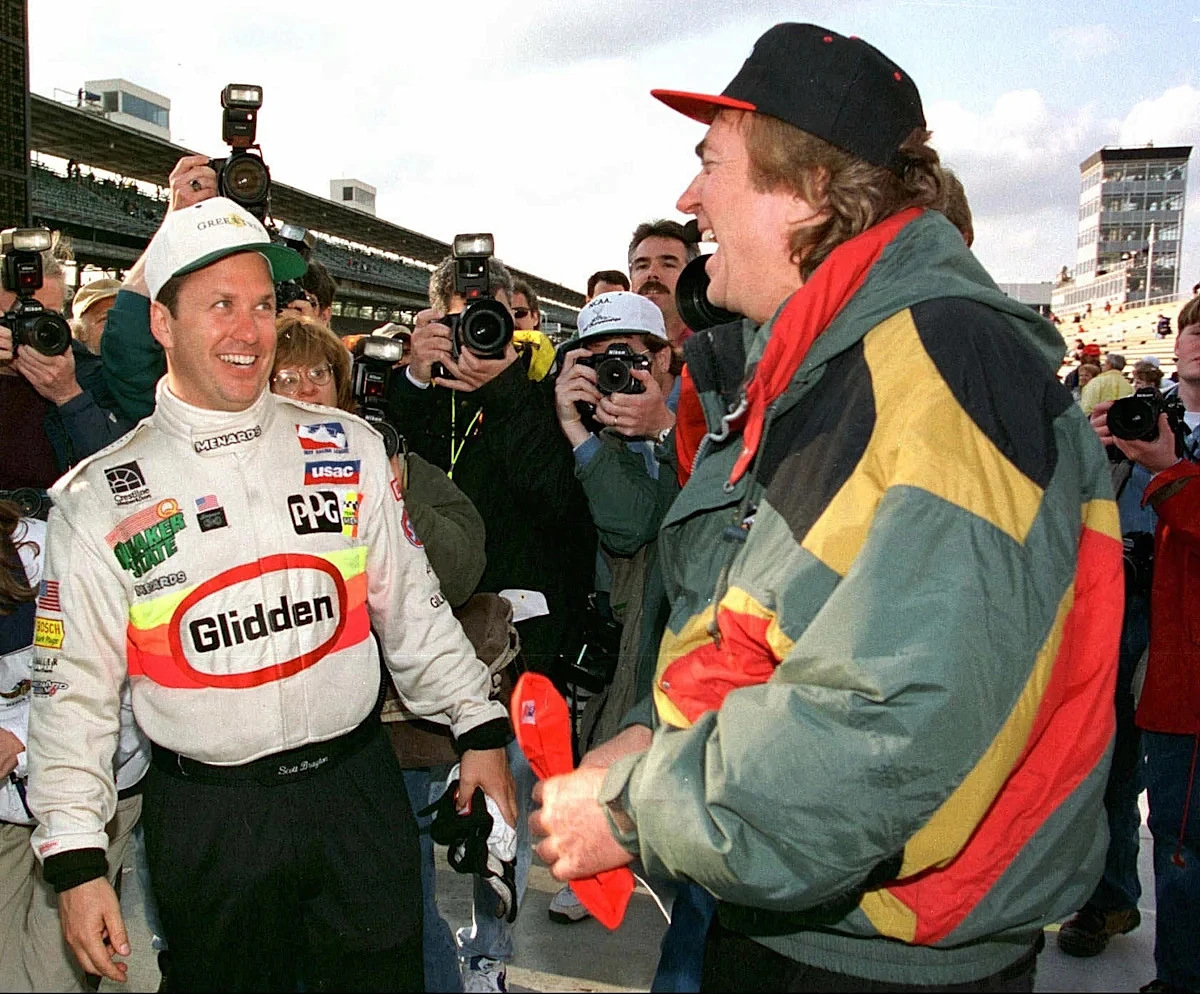
It's not every day that the Indianapolis 500 is remembered as a "dark day" in racing history. But the 1996 running of the iconic race wasn't just unusual—it was a full-blown mess that even the sport's greatest legends would rather forget. In one of the most bizarre moments in American open-wheel racing, the best drivers in the world found themselves tangled in a chaotic event dominated by rookies, leaving a permanent mark on the sport's legacy.
To understand the madness, you have to look at Mario Andretti. The man is a force of nature—small in stature but huge in personality, always cracking jokes and seeing the glass half full. At 81, he still straps into two-seater open-wheel cars and zips fans around at 180 mph, just to share the thrill. So when something gets under his skin, you know it's serious. And in 1996, the mere thought of the Indianapolis 500 left him filled with disgust and despair.
Andretti, a legend who won the 500 in 1969, made a choice that still stings: he skipped the race entirely. Instead of soaking in the pomp and ceremony of Memorial Day weekend at the Indianapolis Motor Speedway, he drove to Michigan International Speedway. "It was worse than second-best," Andretti recalled in 2021. "But we'd been left with no choice. We didn't choose that. We were pushed. I was sad—not only not to be at IMS, but to have to watch a race up against Indianapolis. But we had no choice."
That feeling of helplessness echoed through the paddock on May 26, 1996. Drivers who competed that day—whether at the Indy 500 or the rival U.S. 500—firmly believed they had no other option. The split between the two races was born from "The Split," a painful chapter in open-wheel racing sparked by Tony George's desperate attempt to save the prototypical American racecar driver and the oval tracks that defined the sport's roots. What resulted was a fractured field, a diluted spectacle, and a day that racing insiders still call one of the weirdest in history.