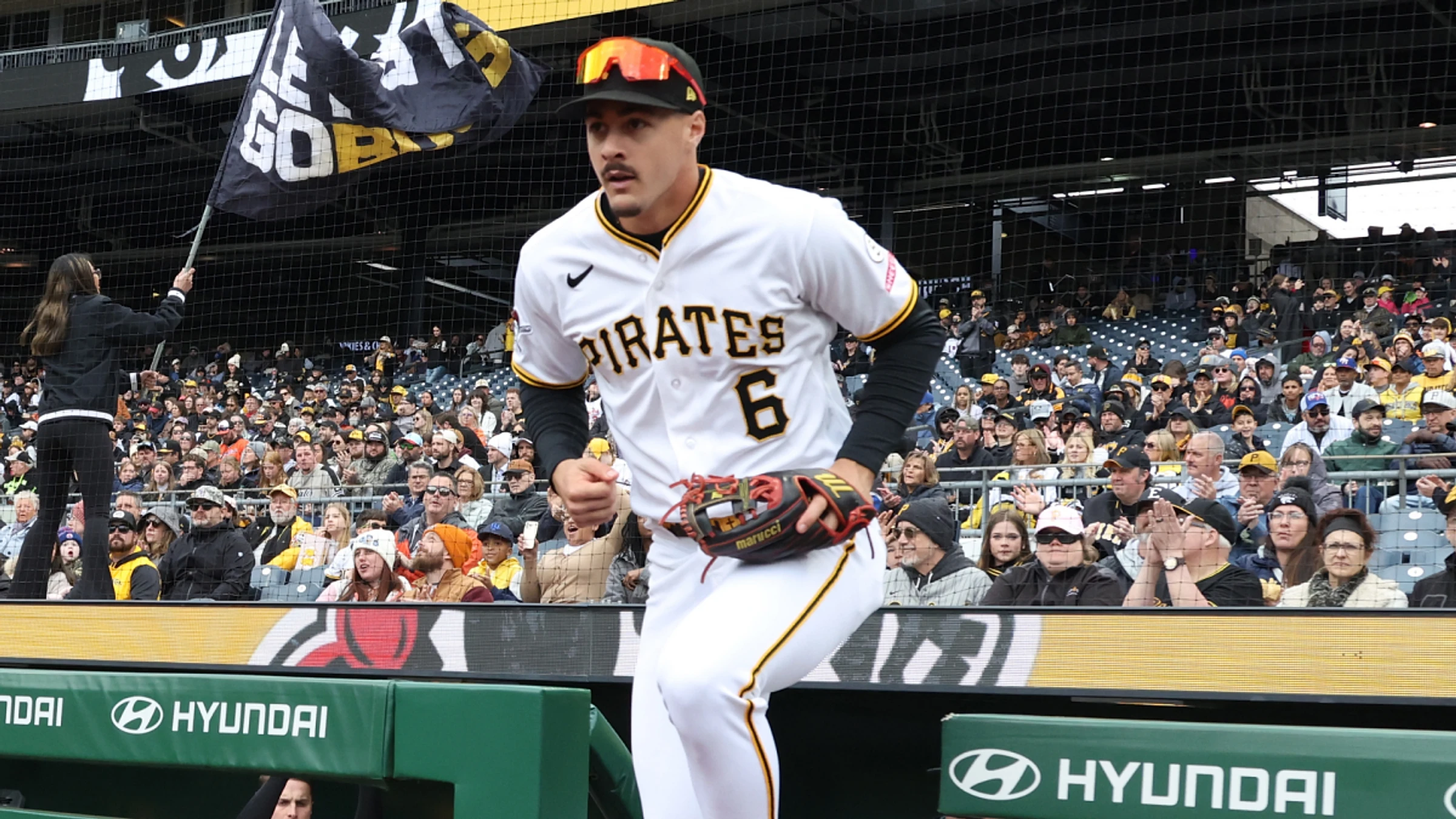
Major League Baseball's financial landscape is undergoing a seismic shift, and the latest tremor came from Pittsburgh this week. The Pirates signed 19-year-old shortstop Konnor Griffin—a player with just five big-league games and 22 plate appearances to his name—to a staggering nine-year, $140 million contract. It's the largest deal ever for a player with so little MLB experience, signaling a bold new era where potential is valued as highly as proven performance.
This move is far from an isolated incident. It's the latest and most eye-catching example of a growing trend where teams are aggressively locking up their top prospects long before they hit free agency. The strategy is a calculated gamble: secure a future superstar at a relative discount today to avoid a bidding war tomorrow. For context, even a phenom like Paul Skenes is earning just over $1 million in his third season under the traditional arbitration system. By contrast, Griffin's deal buys out those arbitration years and delays his free agency, giving Pittsburgh cost certainty on a player they believe will be a cornerstone.
Why are front offices so willing to bet millions on projection over proof? Industry insiders point to a perfect storm of factors: improved player development models, more accurate long-term projections, and the skyrocketing cost of elite free agents. "Paying a pre-arb player $5 million in his first year to get him for $18 million in a free agent year is totally worth the gamble," one prominent agent noted. It's a financial model that prioritizes identifying and investing in talent early, hoping to reap massive rewards down the line.
The blueprint for this approach was drawn up by teams like the Atlanta Braves, who famously secured Ronald Acuña Jr. and Ozzie Albies on team-friendly long-term deals in 2019. San Diego Padres president A.J. Preller has also been a pioneer, signing Fernando Tatis Jr. to a 14-year megadeal at age 22 and inking Jackson Merrill last year after just one season. While these deals carry inherent risk—Tatis faced a PED suspension and Merrill had a sophomore slump—the potential payoff of securing a franchise player for a decade is too compelling for many teams to ignore.
As one executive put it, these moves often come in waves. When a few early extensions for young stars pay off, other teams quickly follow suit, creating a copycat effect across the league. For fans, it means watching the careers of players like Konnor Griffin unfold entirely with one team, building a narrative of loyalty and long-term planning. For the players, it means life-changing financial security before their 20th birthday, allowing them to focus purely on their game. This high-stakes bet on the future is fundamentally changing how baseball teams are built, making the business of developing young talent more critical—and more lucrative—than ever.