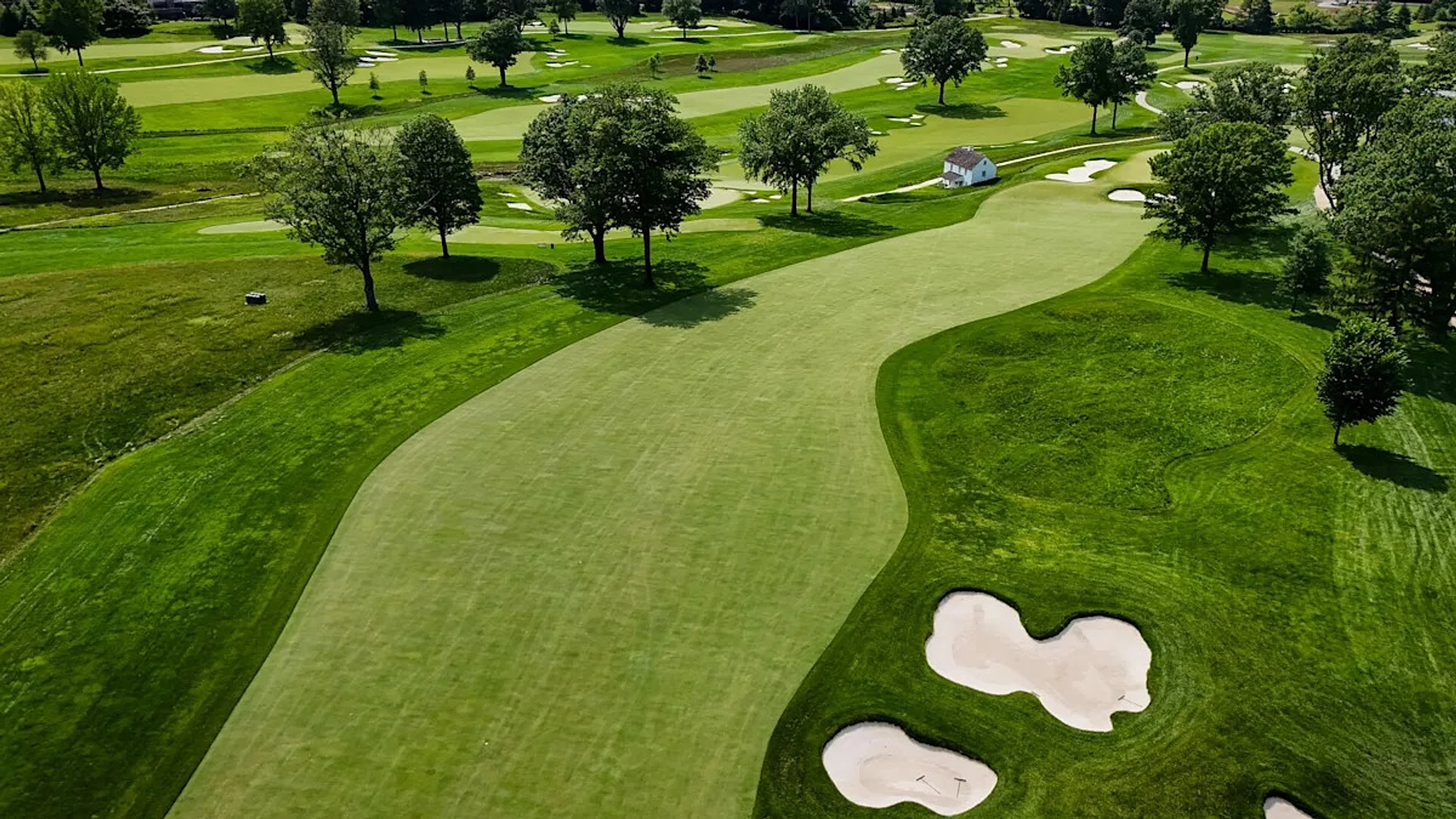
The countdown to the 108th PGA Championship is on, and golf fans have a lot to be excited about. Set against the historic backdrop of Newtown Square, Pennsylvania, Aronimink Golf Club will host the season's second major from May 14-17, 2026. Known for its classic design and challenging layout, this course promises a thrilling test for the world's best players. Let's take a closer look at what awaits them, hole by hole.
Hole 1: The journey begins with a dramatic downhill tee shot from the clubhouse, followed by an uphill climb to the green. Four bunkers line the right side of the landing area, punishing any drive that strays too far. The green itself is well-protected by two bunkers on each side, ready to catch shots that misjudge the elevation change. With a tilt that slopes back and to the left, putting here will require a steady hand.
Hole 2: A dogleg left that demands precision off the tee. The landing area is partially blind and slopes from left to right, with a cluster of six bunkers waiting at the turn. The large, contoured green is guarded by two front bunkers, while a collection area behind will swallow up any overly aggressive approaches. It's a hole that rewards smart course management.
Hole 3: Strategy is the name of the game here, with a dozen bunkers scattered across the landscape. Staggered on both sides of the fairway, they offer players multiple options off the tee. The final two bunkers sit just in front of the green, making the approach shot a true test of accuracy.
Hole 4: An uphill tee shot sets the stage, with bunkers flanking both sides of the landing area. Most players will have the firepower to drive over these hazards, leaving a wedge or short iron into a two-tiered green. It's a chance to attack, but only if you commit to the shot.
Hole 5: Four bunkers form a semi-circle around the front of this heavily contoured green. The putting surface is tricky, with subtle breaks that can catch even the best putters off guard. Par is a solid score here.
Hole 6: A short dogleg right that tempts aggression but punishes mistakes. Several bunkers guard the right side of the fairway, starting where the hole bends and continuing all the way to the green. The smart play is an iron off the tee, staying short of three bunkers on the left, which leaves a short iron into the green. It's a classic risk-reward scenario.
Hole 7: Another dogleg right with a blind fairway that adds an element of mystery. A well-placed tee shot will leave just a wedge to the green, but the severely sloped putting surface is guarded by deep bunkers on the left and front right. Expect this to be one of the easier holes on the front nine—if you can find the fairway.
Hole 8: A downhill par 3 that offers plenty of flexibility. With a long green and multiple tee boxes, the PGA of America can adjust the length to suit their strategy. The green nearly connects with the 10th green behind it, separated only by a narrow strip of fairway. It's a visual treat and a scoring opportunity.
Hole 9: The front nine closes with the first par 5, a long and straight challenge. Bunkers border the landing areas for both the tee shot and the layup, demanding precision on every swing. For those who can navigate the hazards, a birdie chance awaits—but one misstep could quickly derail the round.