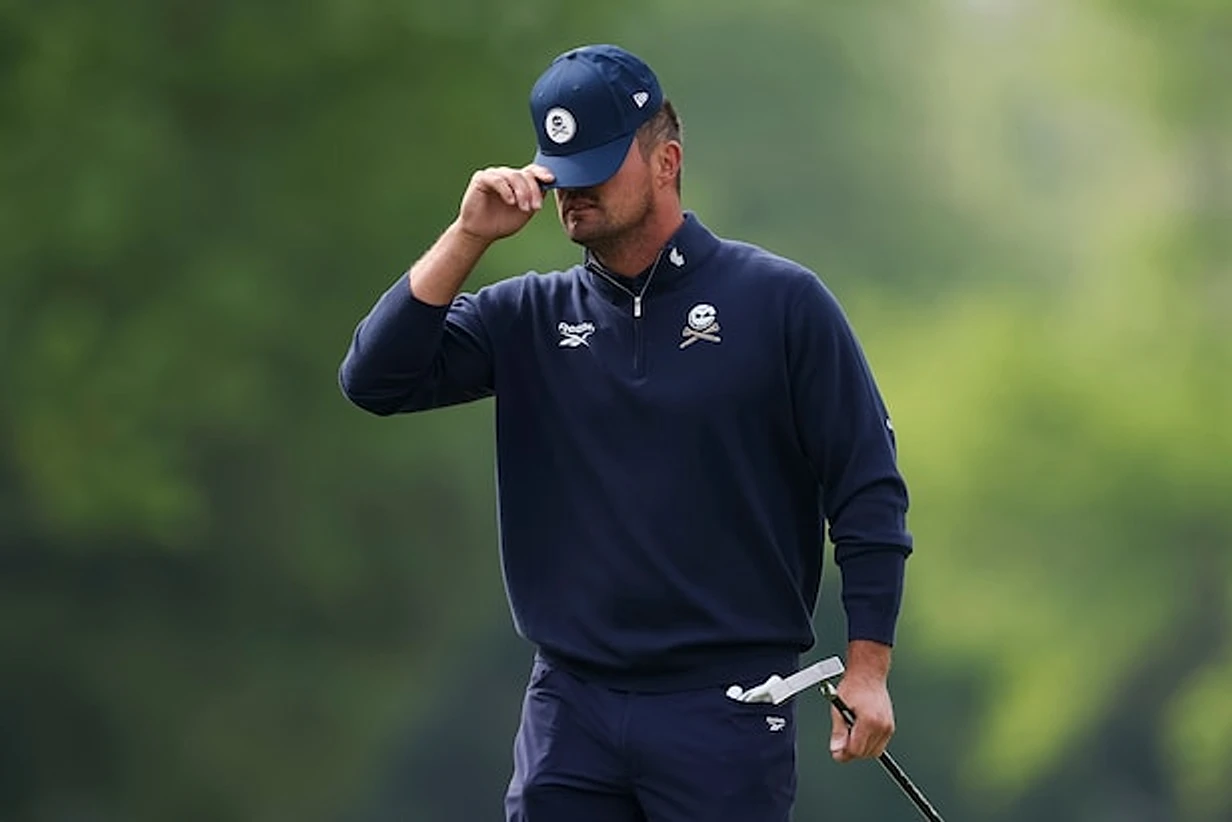
NEWTOWN SQUARE, Pa. — The train had left the tracks before Bryson DeChambeau even reached the turn. On a sunlit Thursday at Aronimink Golf Club, the two-time major winner arrived with something to prove. He left with a six-over 76 that tells a story far bigger than one bad round.
It started poorly and somehow got worse. At the par-3 eighth, DeChambeau's tee shot sailed wide right, his right hand dropping off the club in resignation before the ball even landed. His chip flew over the green. His third was the kind of chunk shot reserved for weekend hackers, not the most popular man in professional golf. When the ball finally found the hole, it was for double bogey—dropping him to a spot on the leaderboard shared only with club professionals. He looked skyward, wearing that expression every golfer knows, the one that asks: how did we get here?
A closing birdie at the 18th offered little solace. Walking off the course, mumbling about how poorly he'd played, DeChambeau now stares at what would be his second straight missed major weekend.
Here's the thing: Aronimink was supposed to be his playground. It's a Donald Ross design—the same architect DeChambeau once apologized to for bombing and gouging his Detroit layout, the same genius whose Pinehurst masterpiece yielded DeChambeau a U.S. Open title. Ross called Aronimink his finest work. With early-week chatter focused on the course's forgiving tee shots, DeChambeau arrived primed to once again paint his own masterpiece on Ross's canvas.
Instead, he came out cold. Bogeys on two of his first four holes. No birdies to recover. Another bogey at the seventh. Then the eighth finished him off. Through the first two waves of play, he's nine shots back and effectively a bystander.
On its own, this is just one bad round. But context matters. This comes after DeChambeau missed the cut at Augusta. After another falling-out with a club manufacturer, forcing him to build his own equipment from scratch. After contract negotiations with LIV Golf dragged into the new year, making him a free agent. And after—with the Saudi Public Investment Fund no longer eager to lose billions on LIV, and the league's future genuinely uncertain—DeChambeau publicly argued that the PGA Tour, the very tour he sued, should welcome him back. His advice to everyone involved: check your egos.
Perhaps he should start with his own. In a sport where momentum is everything, DeChambeau came to Philadelphia to make a statement. He made the wrong one.