Aronimink Golf Club has always been a fascinating puzzle for golf architecture enthusiasts, and as the 2026 PGA Championship approaches, the story behind its design is more compelling than ever. When the club moved to its stunning Newtown Square property outside Philadelphia in 1926, they hired none other than Donald Ross—arguably the most prolific and respected golf architect of his era. Ross was at the peak of his powers, juggling projects nationwide, so he relied on trusted associates like Walter Hatch, Walter Johnson, and Frank Maples to oversee construction in his absence.
Ross had a crystal-clear vision for Aronimink. His routing cleverly wove through the property's corners and leveraged the site's long, natural slopes to create strategic challenges. He planned fewer than 80 hand-built bunkers, each cut into the terrain with precision, and left detailed hole-by-hole field notes for the construction crews to follow.
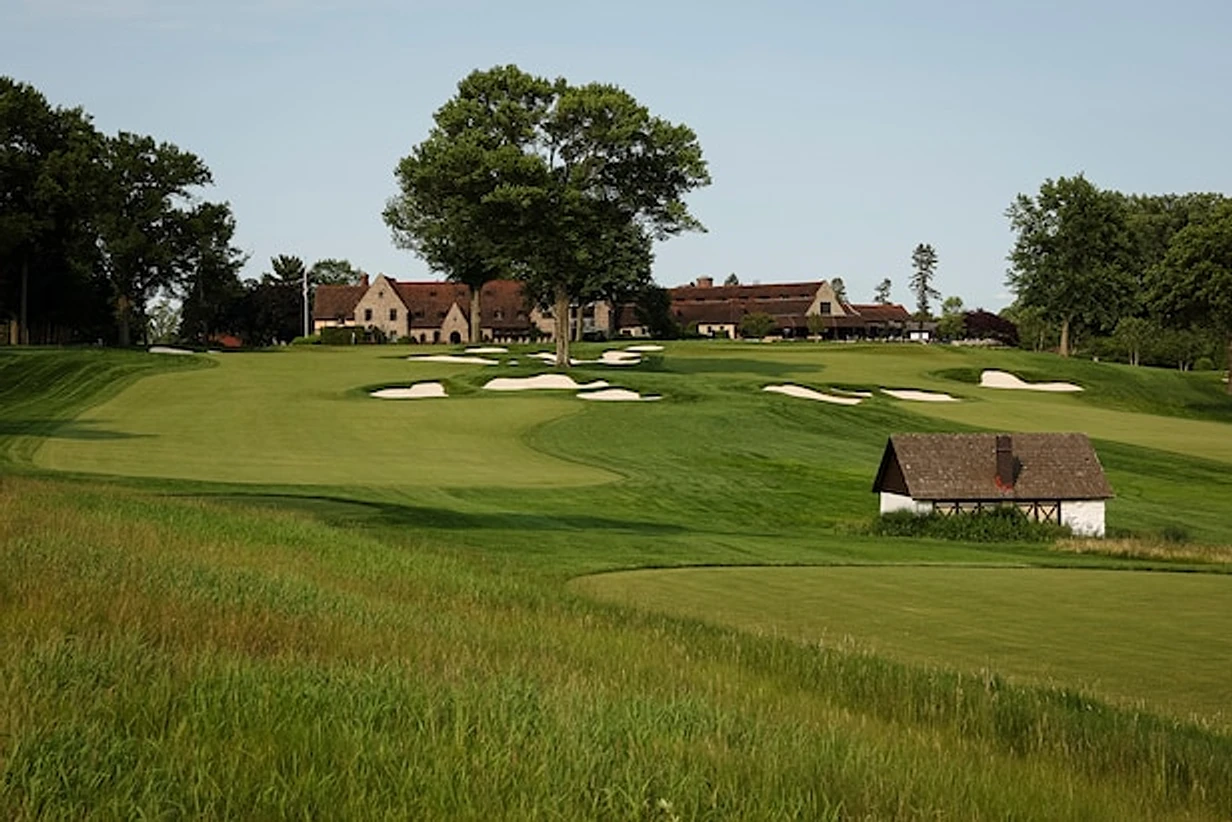
When the course debuted in 1929, however, something unexpected happened. The bunkering had changed dramatically. Instead of Ross's standard-sized bunkers, the course featured clusters of two or three smaller bunkers with lower faces, pushing the total count to over 200. Ron Prichard, who served as Aronimink's consulting architect from 1994 through the late 2000s, believes that Ross's associate and foreman, J.B. McGovern—who also happened to be a club member—made these alterations without Ross's approval.
Over the decades, those smaller clusters were gradually eliminated or combined into larger, more conventional bunkers through several remodels. Prichard's work aimed to restore the course to Ross's original blueprints—the design that was intended but never actually built.
Then came 2015, and a bold new chapter. Aronimink brought in the celebrated team of Gil Hanse and Jim Wagner for another restoration. But instead of following Ross's plans, they made a controversial choice: they reconstructed the course as it was actually built in 1929, using vintage aerial photos as their guide. In doing so, they brought back those signature cluster bunkers, once again pushing the bunker count past 200.
This decision—honoring what was built versus what was planned—has sparked debate among purists and historians. But one thing is certain: when the world's best players arrive for the 2026 PGA Championship, they'll face a course with a rich, layered story etched into every fairway and bunker. For fans of the game, it's a reminder that sometimes the most compelling architecture is the one that tells the truth about its own history.