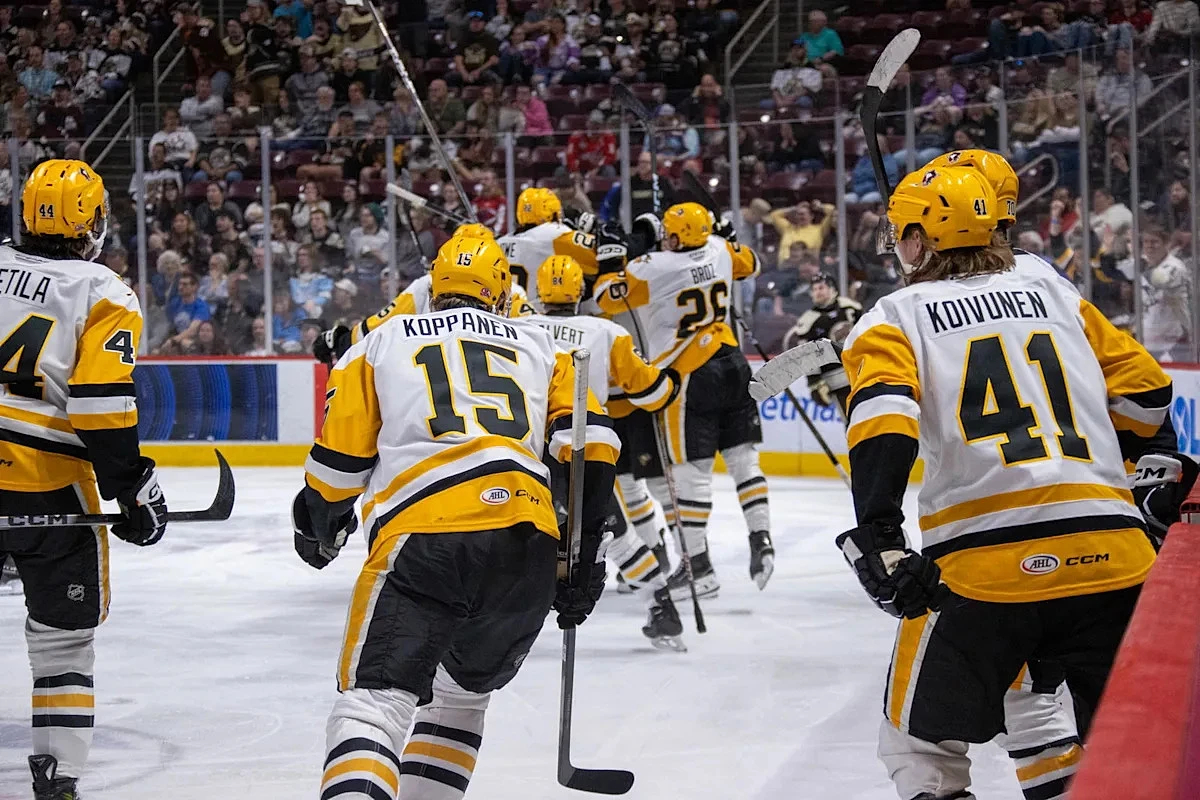
In the high-stakes world of playoff hockey, sometimes the difference between a win and a loss comes down to a fortunate bounce. For the Wilkes-Barre Scranton Penguins, that bounce—and the team's resilience—has been the story of their postseason run.
"Good teams find a way to win, and that was a big goal late," said Rutger McGroarty, whose overtime winner in Game Three was as much about persistence as it was about puck luck. The goal came after a deflected shot from the point found its way into the net, bouncing out before officials could even signal the score. Earlier, Avery Hayes tied the game with just three minutes left in regulation when his shot caromed off a Hershey Bears skater and into the back of the net.
Yes, luck played a role. But in the playoffs, luck favors the bold. The Penguins put themselves in position to capitalize on those bounces, crashing the net and firing pucks on goal. "Sometimes the key is putting the puck on the net for deflections and loose pucks," McGroarty explained. "It's not pretty, and it doesn't have to be in the playoffs."
For most of Game Three, it looked like the Penguins would fall short. After jumping out to a 2-0 lead in the first period, they surrendered three unanswered goals to the Bears, who seized control of the momentum and the game. Hershey's physical, heavy style of play—a hallmark of their identity—seemed to overwhelm the smaller, more skilled Penguins, who struggled to win puck battles and generate chances in the dirty areas of the ice.
But playoff hockey is about adjustments, and the Penguins made them. Leveraging their speed and ability to create space, they found ways to get into shooting lanes and win loose pucks by outskating the Bears. "There's not a lot of time and space," McGroarty noted. "If you can beat the guy to the net and get an opportunity like that, you have to take advantage."
That speed and determination turned the tide. It's how the Penguins clawed back, tied the game, and ultimately secured the overtime win. In a series defined by contrasting styles—Hershey's brute force versus Wilkes-Barre's finesse and speed—the Penguins proved that finding a way to win is what separates good teams from great ones.
For fans watching at home or at the rink, this series is a reminder that hockey is as much about heart as it is about skill. And whether your team is built on power or pace, the goal remains the same: put the puck on net, create chaos, and never stop believing in the next bounce.