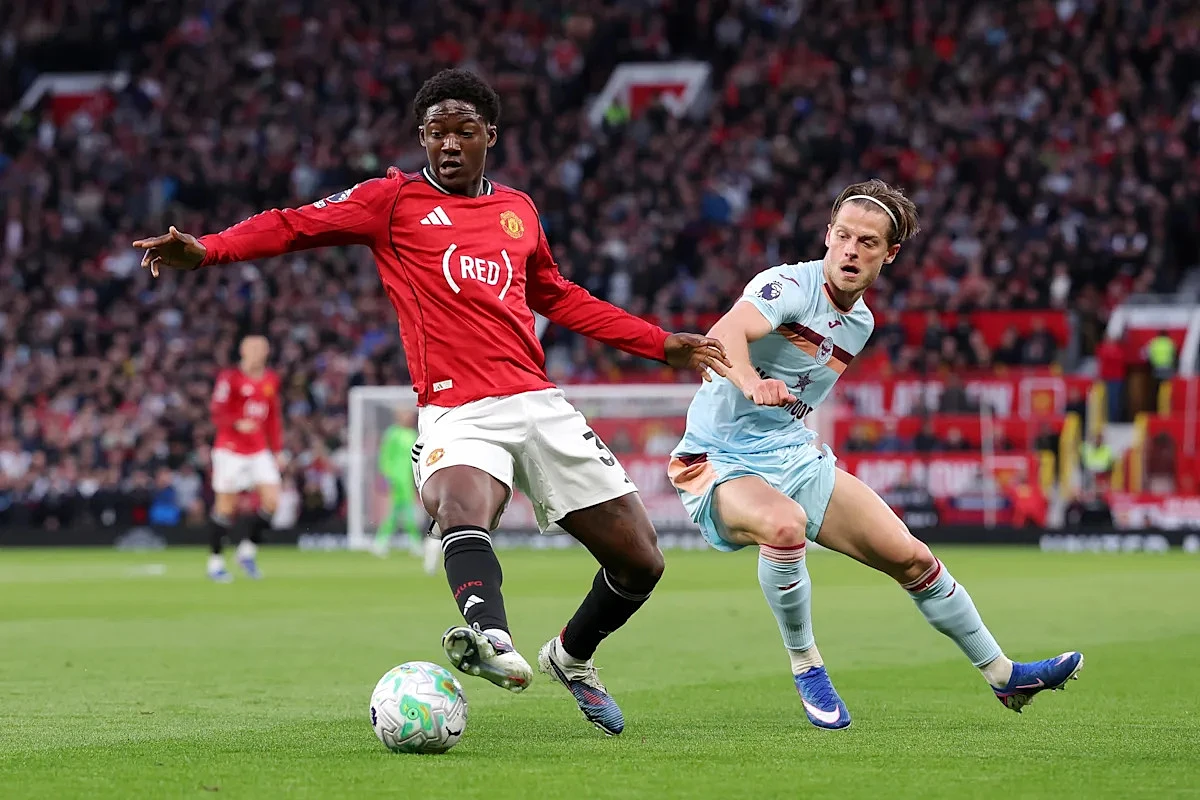


Kobbie Mainoo put in one of his finest displays in a United shirt against Brentford this week. He didn’t make a direct contribution with a goal or an assist, but his excellent run with the ball at the start of the game set United in motion, and he never looked back from there. He also made some notable recoveries, which is a positive development in his game.
The academy graduate looked more like himself in the game against Chelsea as well, receiving passes with his back to goal, playing incisive passes to break the opposition’s shape, and more. Getting back into the side after being out of favour under Ruben Amorim has certainly helped, but he has shown a certain assuredness in the last two games; the same confidence and belief that excited so many United and England fans when he first broke into the respective sides.
Mainoo, like most United midfield graduates, is difficult to pigeonhole into a single position. There are many interviews that suggest United coaches push their young midfielders to become comfortable with various demands, rather than specific positions. Instead of playing as a six, eight, or ten, the idea is to take pride in one’s defensive duties, but not to be limited to this; the same player is expected to take responsibility in the attacking areas as well. This is a larger tradition in English football, of course.
Unlike clubs like Ajax, which also demand versatility from their young players but use positional discipline at the heart of that philosophy, United’s coaches have historically emphasised individual responsibility. Positional football has many variants today, and discourse is usually dominated through that lens, which makes it particularly hard to define United graduates through that lens.
Take Scott McTominay or Paul Pogba, two Carrington graduates who have played under a positional coach like Antonio Conte. They’re not strictly speaking similar players, but because they offered different solutions, both were used in many different roles at United. They’ve had productive seasons in front of goal at Old Trafford comparable to, or even better in the case of Pogba, to those in Italy, but without a defined role, they seemed a bit rootless at times.
Their roles were defined under the Italian’s system, but both were offered great freedom within that to get into the box or score from distance without having to forego their defensive duties. It’s important to note that Conte has eased off on some of his positional tenets at Napoli, but they offer the ideological foundation for his teams.
Kobbie Mainoo, in his breakout season, showed that he has an eye for goal and can open up tight defences with his skills. In his first start for Everton, he showed that he can handle the ball under pressure and defend his own box. These are useful skills in different halves of the pitch. Like Pogba and McTominay, these aren’t skills that help run a game from the first to the final whistle, but help impact them.
It’s too soon to tell if Mainoo could run games like a Scholes or a Keane, but most players whose careers are defined by that quality tend to take that kind of responsibility later in their careers. For now, defining his role and offering him the freedom within that role is unlikely, so he’ll probably have to be used in the way Paul Pogba and Scott McTominay were. This might lead to inconsistencies in overall performance, but it shouldn’t mean that he won’t be able to impact games.
This will be easier if he has strong players around him who’ll allow him to develop through trial and error, which didn’t quite happen for McTominay and Pogba. Of course, defining his role would help him master it over time, and a manager with a positional brand might help in that regard, but it could also be an issue, as we saw under Ruben Amorim, if his qualities aren’t valued as much or if other qualities are prioritised. The impending decision on the permanent manager will be crucial for all the reasons we’re familiar with, but particularly for the young midfielder.