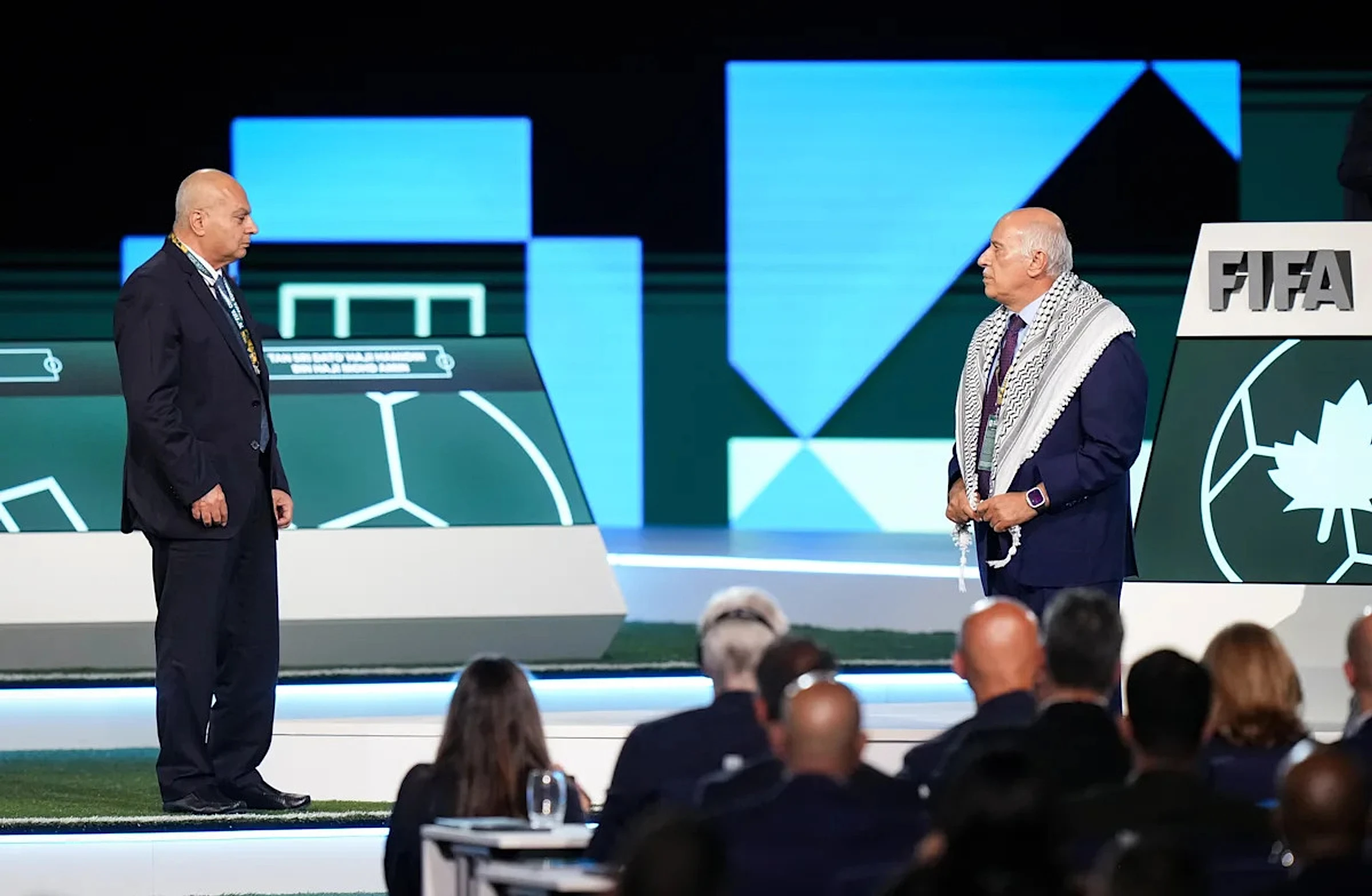
In a moment that underscored the deep divisions off the pitch, Palestine Football Association President Jibril Rajoub refused to shake hands with Basim Sheikh Suliman, the vice president of Israel’s soccer governing body, at the FIFA Congress on Thursday. The tension was palpable as the two officials addressed the delegates in Vancouver, only to be called on stage by FIFA President Gianni Infantino. Standing far apart, Rajoub protested loudly away from the microphones before abruptly leaving the stage, leaving the audience in a stunned silence.
Rajoub’s address to the congress focused on allegations that Israel has breached FIFA’s anti-discrimination regulations by allowing clubs based in West Bank settlements. He confirmed that the Palestine Football Association is taking the matter to the Court of Arbitration for Sport, following FIFA’s March decision not to suspend Israel over the issue. FIFA cited the unresolved and complex legal status of the West Bank as a key factor in its ruling. However, in a separate incident, FIFA fined the Israel Football Association $190,000 on disciplinary charges related to "discrimination and racist abuse," as well as "offensive behavior and violations of the principles of fair play."
After the two men left the stage at the Vancouver Convention Center, Infantino made an impassioned appeal for unity. "President Rajoub, Vice President Suliman, let's work together. Let's work together to give hope to the children. Let's work together for that," he said, hoping to bridge the gap between the two sides. But the sentiment was not echoed by Rajoub, who later gave an emotional plea, questioning whether Israel has "the right to even be part of FIFA." He added, "From my side, I still respect and follow all the legal procedures through FIFA institutions, but I think it's time to understand that Israel should be sanctioned because of the violations of the statutes of FIFA, the human rights."
Yariv Teper, acting general secretary of the Israel Football Association, declined to comment on the specifics of Rajoub’s remarks but indicated that the IFA would remain open to dialogue. The incident serves as a stark reminder of how sports can reflect broader geopolitical tensions, leaving fans and officials alike hoping for a day when the beautiful game can truly unite. As the soccer world watches, the question remains: can diplomacy on the field ever match the passion of the game?