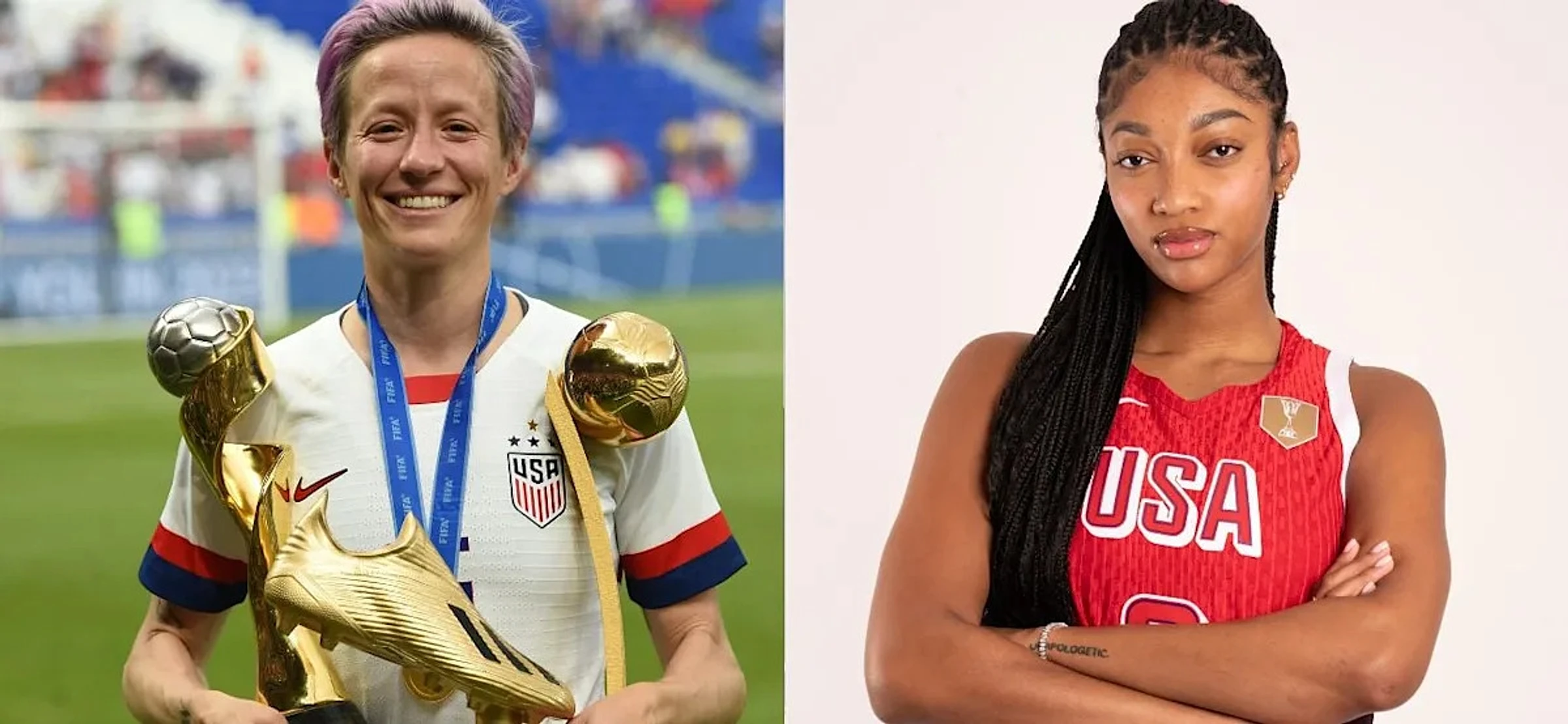
In a powerful show of solidarity, Olympic gold medalist Megan Rapinoe has stepped up to defend WNBA star Angel Reese against the false narratives that have followed her career. The soccer legend recently shared her thoughts on Reese's candid conversation with Michelle Obama, where the basketball standout admitted to avoiding the media to protect her peace—even saying she'd rather pay a fine than sit down with the press.
On her podcast "A Touch More," Rapinoe praised Reese's stance as a "really great example of her taking her power back." The two-time World Cup champion pointed out that Reese was unfairly cast as a villain before she even stepped foot in the WNBA, making her decision to prioritize her mental health all the more significant. "The media landscape is changing rapidly in women's sports, and of course, the W, as always, is out front," Rapinoe said.
Rapinoe clarified that Reese isn't completely shutting out the media—she's simply choosing to engage on her own terms. "Angel isn't saying that she's never gonna do media, but she is saying that she won't just stand up and take anything that's thrown at her," she explained.
This isn't the first time Reese has made headlines for her media stance. The former Chicago Sky star faced renewed scrutiny in 2025 after claiming her comments about teammates were taken out of context. For Rapinoe, the issue boils down to respect. "There needs to be a quality of journalism that is at the level of these athletes," she said.
Rapinoe sees Reese's approach as a blueprint for all athletes—especially women in sports. "I feel like this was obviously something Angel is doing for herself because of her personal experience, but I think this is a great example for all athletes and all female athletes of, 'I don't really have to do this,'" Rapinoe added. "It might mean I get a fine, but at some point, we have to adjust the expectations that journalists can just go up there and throw any kind of narrative."
As women's sports continue to grow in popularity and visibility, Reese's stand—and Rapinoe's support—highlights a crucial conversation about athlete autonomy, media responsibility, and the importance of protecting one's mental health in the spotlight.