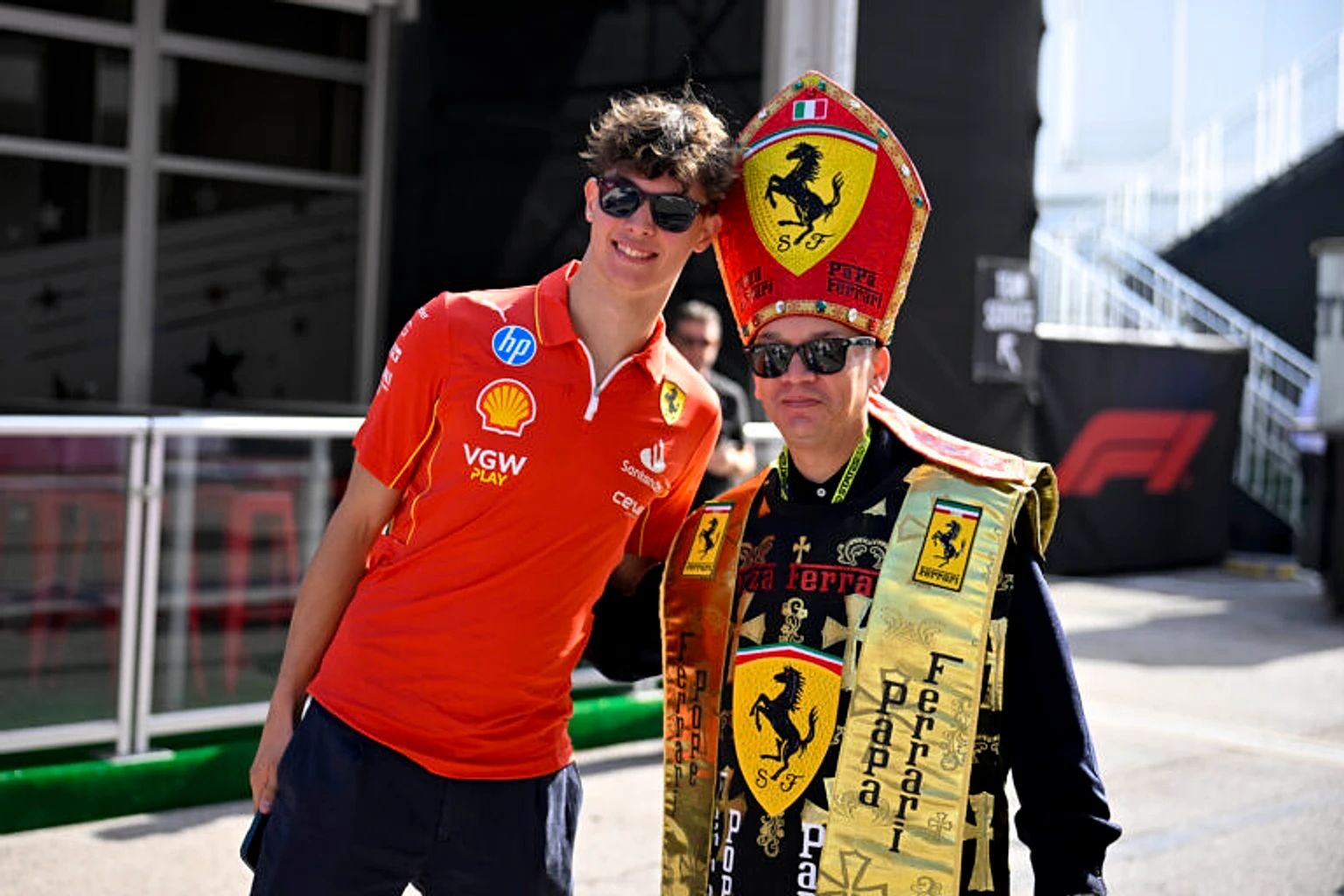
Remember when Ollie Bearman got the call to replace Carlos Sainz at Ferrari? It happened so fast—Sainz was diagnosed with appendicitis and rushed into surgery, leaving Ferrari to scramble for a reserve driver. In stepped Bearman, and what followed was nothing short of spectacular.
His surprise Formula 1 debut in Saudi Arabia was a masterclass in composure. Climbing into the Ferrari SF-24 with almost zero preparation, he still managed to secure a seventh-place finish. It was the kind of performance that screams "future star."
But here's the thing: Bearman's debut also exposed a massive blind spot in the F1 feeder system. Despite spending his entire career training to reach the pinnacle of motorsport, he admitted that Formula 2 completely failed to prepare his body for the brutal demands of the SF-24.
"F2 was easy physically," Bearman confessed when reflecting on his debut. But during his first full Grand Prix distance, his body began to betray him. "My neck was gone," he explained, adding that by the end of the 50-lap race on the grueling Jeddah street circuit, he was just "trying to hold on."
To understand why a highly conditioned athlete's neck muscles gave out so quickly, you have to look at the massive aerodynamic differences between the two chassis. Formula 2 is designed as the ultimate proving ground, but it simply can't replicate the sheer force of F1 machinery. The ground-effect downforce generated by a 1,000-horsepower car at 200mph is a different beast entirely.
No matter how much a junior driver trains their neck in a standard gym with weighted harnesses, there's no way to simulate the sensation of having your head forcefully pushed sideways lap after lap. While F2 cars are fast, they don't generate the same brutal, sustained G-forces that define F1 racing.
And honestly, that biological reality makes Bearman's debut even more impressive. While actively wrestling a car with zero head support, he still managed to miss knocking Lewis Hamilton out of Q2 by just a fraction of a second. If that's what he can do with a failing neck, imagine what he'll achieve once his body catches up to the speed.