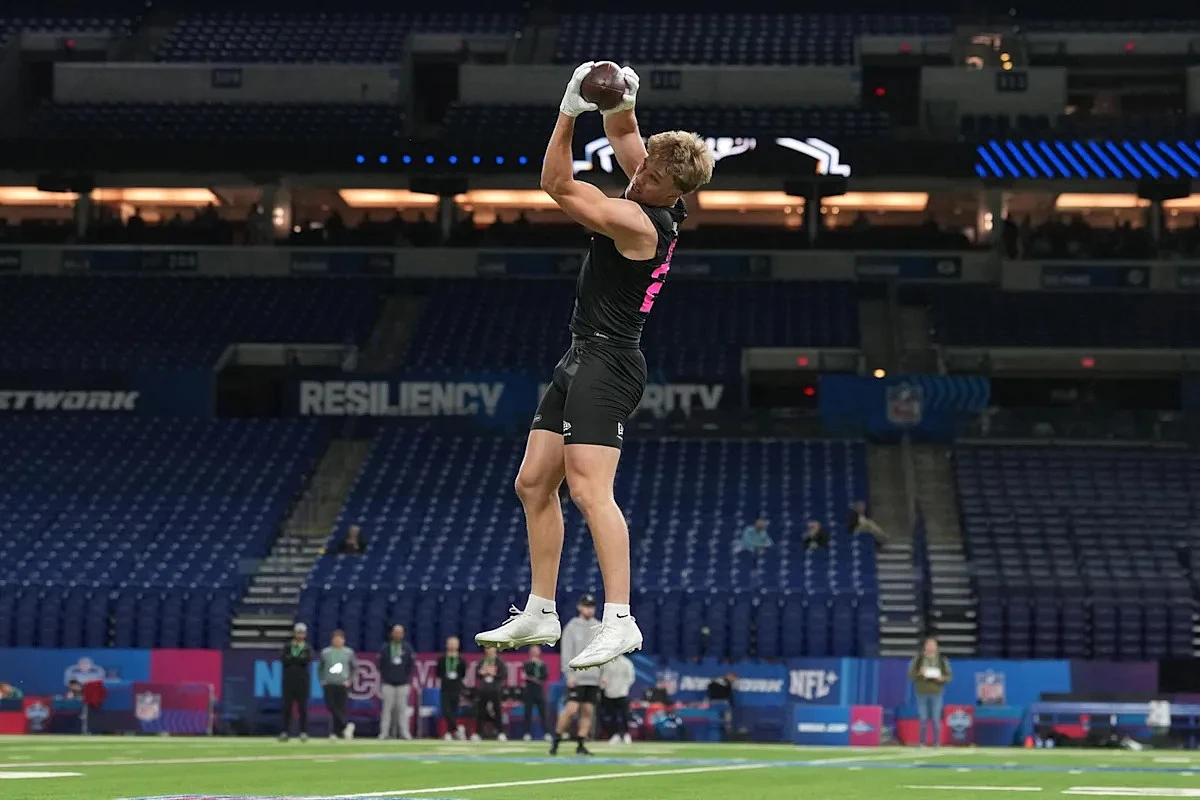
The Chicago Bears made waves with seven selections in the 2026 NFL Draft, but one pick in particular had fans buzzing—and not entirely in a good way. After snagging Oregon safety Dillon Thieneman at No. 25 overall, the Bears added Iowa center Logan Jones, Stanford tight end Sam Roush, LSU receiver Zavion Thomas, Texas cornerback Malik Muhammad, Arizona State linebacker Keyshaun Elliott, and Georgia Tech defensive tackle Jordan Van Den Berg. Yet it was the third-round choice of Roush that sparked debate among the faithful.
At first glance, the pick seemed puzzling. With Colston Loveland and Cole Kmet already forming a formidable tight end duo through at least 2028, why invest another high pick at the position? Some fans called it a reach, questioning the team's priorities. But NFL draft expert Matt Miller of ESPN recently appeared on 104.3 The Score to set the record straight—and his insights might just change how you see this move.
Miller didn't mince words. "It's not a reach," he said firmly. "Number one, it's not." He pointed to the Jaguars' second-round selection of Nate Boerkircher as the true head-scratcher, arguing that Roush's value was right in line with where he was taken. More importantly, Miller revealed the strategic thinking behind the pick: the NFL is evolving, and the Bears are ahead of the curve.
As defenses get smaller and faster, offenses are countering with bigger personnel packages—specifically 12- and 13-personnel sets that feature multiple tight ends. Roush, a standout blocker at Stanford, fills a critical need. "When you lose Durham Smythe, who's a really good blocker, yeah, you have Kmet," Miller explained. "But Loveland's like an extra receiver. He doesn't really count when we're counting tight ends in a lot of ways. You needed that blocker."
Think of it this way: Loveland is your dynamic pass-catcher, Kmet is your versatile veteran, and Roush is the bruising run-blocker who can clear lanes and confuse defenses with shifting personnel looks. It's a three-headed monster designed to exploit mismatches and keep opposing coordinators guessing. General Manager Ryan Poles has shown a knack for building with foresight, and this pick is another example of that long-term vision—even if it didn't immediately wow the crowd on draft day.