

The NFL Draft is supposed to be a celebration of a program’s ability to develop talent, a moment where years of recruiting, coaching, and player growth culminate on one of football’s biggest stages. For Nebraska, however, it has increasingly become an uncomfortable mirror.
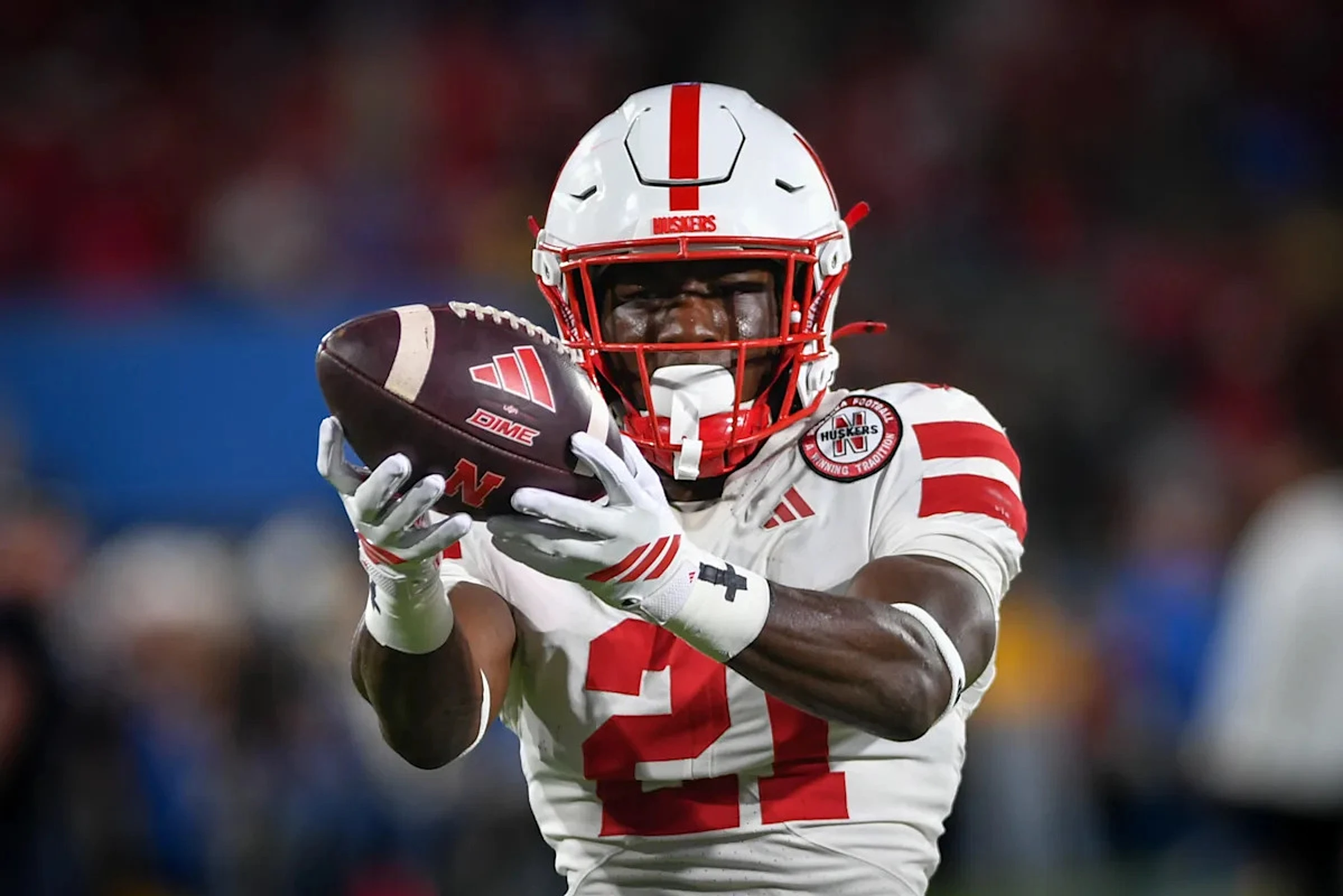
As this year’s draft unfolds, Nebraska players are once again largely absent from meaningful discussion. The spotlight, such as it is, falls almost entirely on Emmett Johnson and the question of which round he’ll hear his name called. Johnson did everything you could reasonably ask of a feature back, carrying the Husker offense with 1,451 rushing yards on 251 carries while adding another 370 yards on 46 receptions. He was production, reliability, and explosiveness rolled into one. And yet, the fact that the program hinges on a single prospect speaks volumes.
Round 3 is complete in the NFL Draft. Emmett Johnson is rated the third best available running back by ESPN heading into Saturday's rounds 4 through 7.DeShon Singleton is rated 12th among best available safeties.
— Brian Christopherson (@Husker247BC) April 25, 2026
If you want to understand where Nebraska stands, you don’t need advanced analytics or nuanced film breakdowns. The raw numbers paint a clear enough picture.
Since 2020, Nebraska has had just 11 players drafted. That number becomes even more concerning when you consider that three of those—Ochaun Mathis, Trey Palmer, and Samori Toure—were transfers, not young talent developed within the program.
Compare that to the rest of the Big Ten over the same period:
Nebraska isn’t just behind the conference’s elite programs—it’s stuck near the bottom, grouped with teams that lack its historical pedigree, financial backing, and facilities. That’s the jarring part. This isn’t a resource problem.
In fact, it makes the situation even harder to justify when you consider that Nebraska’s recruiting classes over this same span ranked around sixth in the conference. The talent, at least on paper, has been good enough to produce far more NFL prospects than this.
Somewhere between signing day and draft day, something is going wrong.
NEWS: Nebraska's $600 million renovation of Memorial Stadium has officially been approved by the Nebraska Board of Regents. Construction is set to begin following the 2026 football season. pic.twitter.com/sOIU1qcAVe
The NFL Draft is more than a talent showcase—it’s a developmental report card. It reflects how well a program takes raw recruits and turns them into polished, pro-ready players. Right now, Nebraska is failing that test.
It’s not that there are no good players in Lincoln. It’s that too few of them are getting better at the rate required to become legitimate draft prospects. That gap—between potential and outcome—is where programs either rise or stall.
For Nebraska, it has meant years of middling results on the field paired with underwhelming representation in the draft.
If Nebraska wants to return to being a consistent top-tier program, this trend has to change. And quickly.
That starts with coaching. Not just at the head coach level, but across the entire staff. Elite programs separate themselves by having position coaches who can take good players and make them great—who can refine technique, build consistency, and prepare athletes for the next level.
There’s a fair argument that Nebraska hasn’t consistently invested at that level. Too often, it has felt like the staff was built around availability rather than aggressively pursuing top-tier developers. That approach shows up in the results.
There are signs the current coaching structure may be stronger than in recent years, but that’s only meaningful if it translates into tangible outcomes—more draft picks, higher draft picks, and players who clearly improved during their time in the program.
Because right now, the NFL Draft isn’t just a missed opportunity for Nebraska—it’s a warning sign.