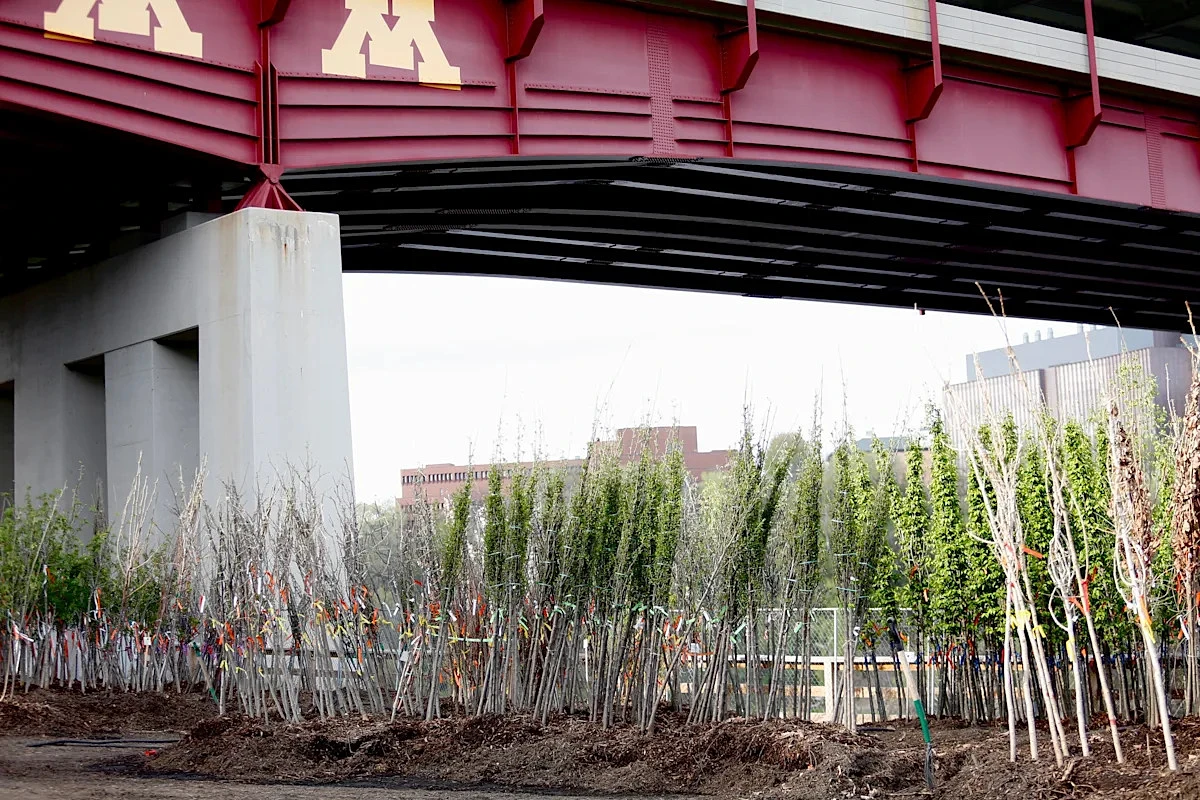
The Minnesota Wild are taking a creative approach to tackling one of hockey's biggest environmental challenges: the carbon footprint of cross-country travel. Instead of simply accepting the emissions from their road trips, the team is planting trees across the Twin Cities metro area to offset the impact.
In partnership with Grand Casino Arena, St. Paul RiverCentre, and the Minneapolis-based nonprofit Green Cities Accord, the Wild are investing in tree canopy infrastructure to create more climate-resilient communities. Green Cities Accord focuses on planting and restoring urban trees, which naturally absorb carbon dioxide through photosynthesis—a perfect counterbalance to the emissions from team flights and bus rides.
The Wild first teamed up with Green Cities Accord in 2025. Kate Setley, vice president and general manager of St. Paul RiverCentre, explained that the organization had been closely examining its environmental footprint. "We looked at the hockey side of our business and said, 'We've got to fly our team around. We can't avoid that,'" Setley said. "So how can we get creative to offset that impact from our organization?"
The scale of the challenge is significant. According to the U.S. Environmental Protection Agency, transportation was the largest contributor to nationwide greenhouse gas emissions in 2022, accounting for 28%—a category that includes cars, trucks, commercial aircraft, and railroads. For a professional hockey team constantly on the move, those miles add up fast.
Last season alone, the Wild offset more than 1,300 metric tons of carbon dioxide by purchasing carbon credits from Green Cities Accord. That's the equivalent of removing hundreds of cars from the road for an entire year. The nonprofit uses these funds to plant trees across the Twin Cities and restore the urban tree canopy, turning carbon emissions into living, breathing green spaces.
The success of the Wild's tree-planting initiative inspired St. Paul RiverCentre to launch a new program called Trees for Travel. This initiative allows events held at Grand Casino Arena, St. Paul RiverCentre, and Roy Wilkins Auditorium to offset their attendees' travel emissions by purchasing carbon credits from Green Cities Accord. Setley noted that the venue works with event planners to collect travel data from attendees, calculate the collective distance traveled, and then purchase the appropriate carbon credits—all without requiring any extra effort from the fans themselves.
It's a smart, sustainable play that proves even the biggest road trips can leave a positive mark on the community.