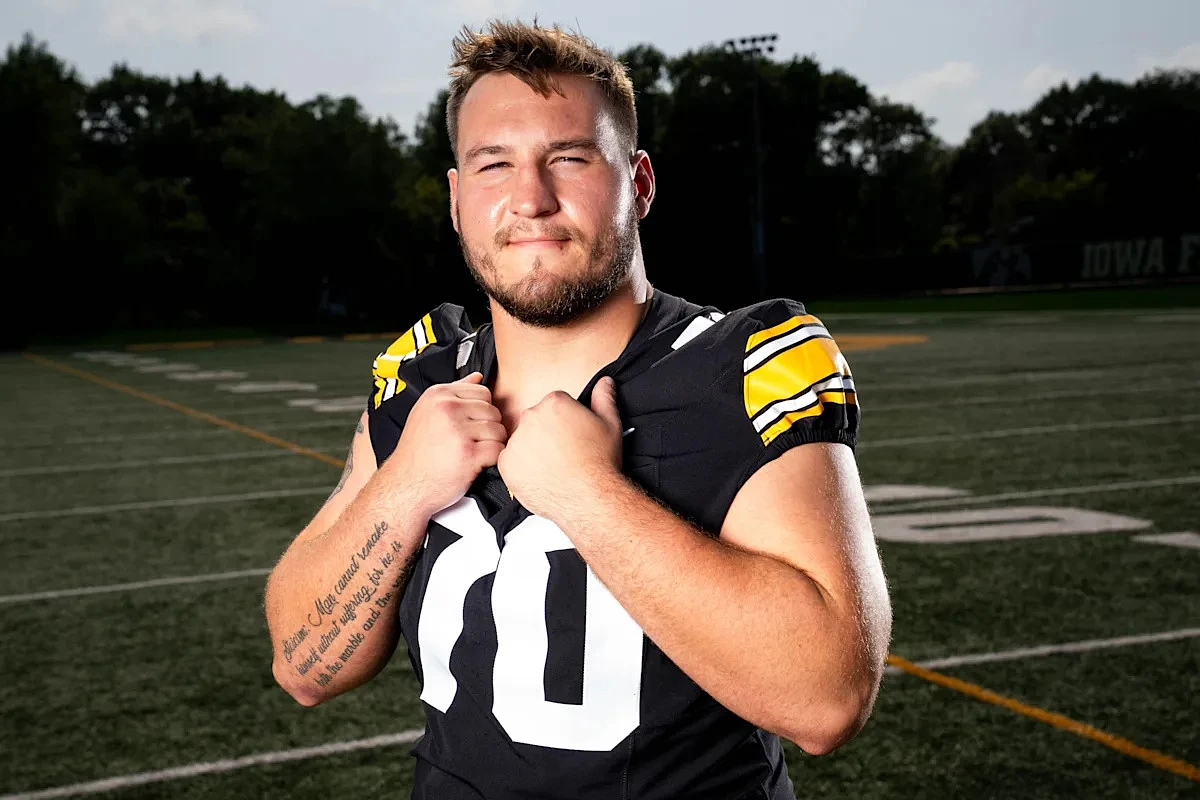
When the Seattle Seahawks traded 2027 draft capital to select Beau Stephens at pick 148 in last month's NFL Draft, it raised more than a few eyebrows. A fifth-round pick for a guard might not usually generate headlines, but for a team looking to solidify its offensive line, this move signaled something bigger.
Stephens arrives from Iowa, a program famous for churning out NFL-ready zone-blocking linemen and pass-catching tight ends—even if points on the scoreboard have been harder to come by. The immediate question for Seahawks fans: Could this rookie push Anthony Bradford for the starting right guard spot? Bradford's contract expires after this season, so the clock is ticking.
At rookie minicamp, Stephens lined up at right guard, and head coach Mike Macdonald confirmed the plan in his press conference. "Beau is on the right side, but we're going to train him at both spots," Macdonald said. "You need flexibility across the interior part of your line. He's played both in his career. Right now he's playing right guard, but we'll be training him right and left."
That versatility is key. At Iowa, Stephens started at left guard in 2024 and 2025, but in 2022 he was exclusively a right guard. He barely saw the field in 2023, but the experience on both sides is there. Left guard is locked down by Grey Zabel, so the right side is where the opportunity lies.
Anthony Bradford is coming off arguably his best season, but he's never been an unquestioned starter. As a rookie, he sat behind Phil Haynes, then replaced an injured Haynes for the remainder of the year. In subsequent seasons, he faced competition from Christian Haynes but still earned the starting nod each time. He's never been benched, yet he's never entered training camp without a challenger breathing down his neck.
With a depth chart full of promising, young offensive linemen, Stephens' role will be one of the most intriguing storylines of the offseason. There's no rush to hand him a starting job, but if he performs well, the Seahawks could have a tough decision on their hands—and that's exactly the kind of problem every team wants.