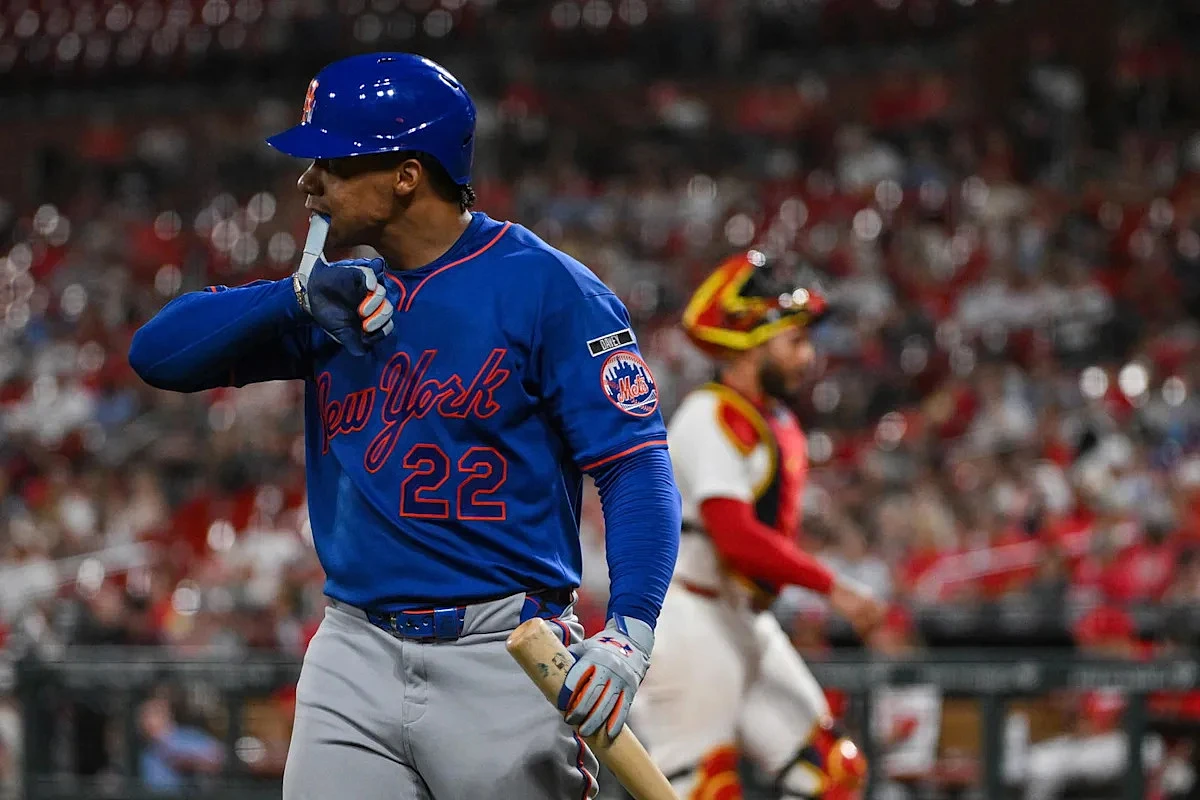
The New York Mets' lineup just lost its brightest star. With Juan Soto sidelined for 2-3 weeks due to injury, the immediate blow to their offensive firepower is undeniable. However, the ripple effects of his absence could create even more complex challenges for the team as they navigate a critical stretch of the season.
Beyond simply missing his elite bat, Soto's injury forces a cascade of adjustments. One significant domino effect involves Mark Vientos. Primarily a third baseman, Vientos has been thrust into regular duty at first base. While his bat has been scorching hot—posting a stellar .956 OPS—his defensive inexperience at the new position was exposed in a recent loss to Arizona. A crucial errant throw home highlighted how a positional shuffle, while solving one offensive problem, can create defensive vulnerabilities elsewhere.
Another layer of complexity involves rookie outfielder Drew Benge. His storybook Opening Day homer feels like a distant memory as he has struggled mightily at the plate, mired in a deep slump. Ideally, a trip to Triple-A for refinement would be the move, but the Mets' outfield depth is now too thin. They are forced to keep Benge on the roster for his defensive prowess, a stark reminder that injuries often force teams to prioritize filling a positional hole over a player's developmental timeline.
Finally, there's the intangible factor of individual accolades. While winning is the ultimate goal, stars like Soto also play for legacy. An extended absence could dent his candidacy for year-end awards like MVP, a meaningful pursuit for any competitor. For the Mets, the mission is clear: survive the next few weeks by patching holes and finding unexpected contributions, all while hoping their superstar returns as potent as ever. How they manage these side issues will be a true test of their roster's depth and resilience.