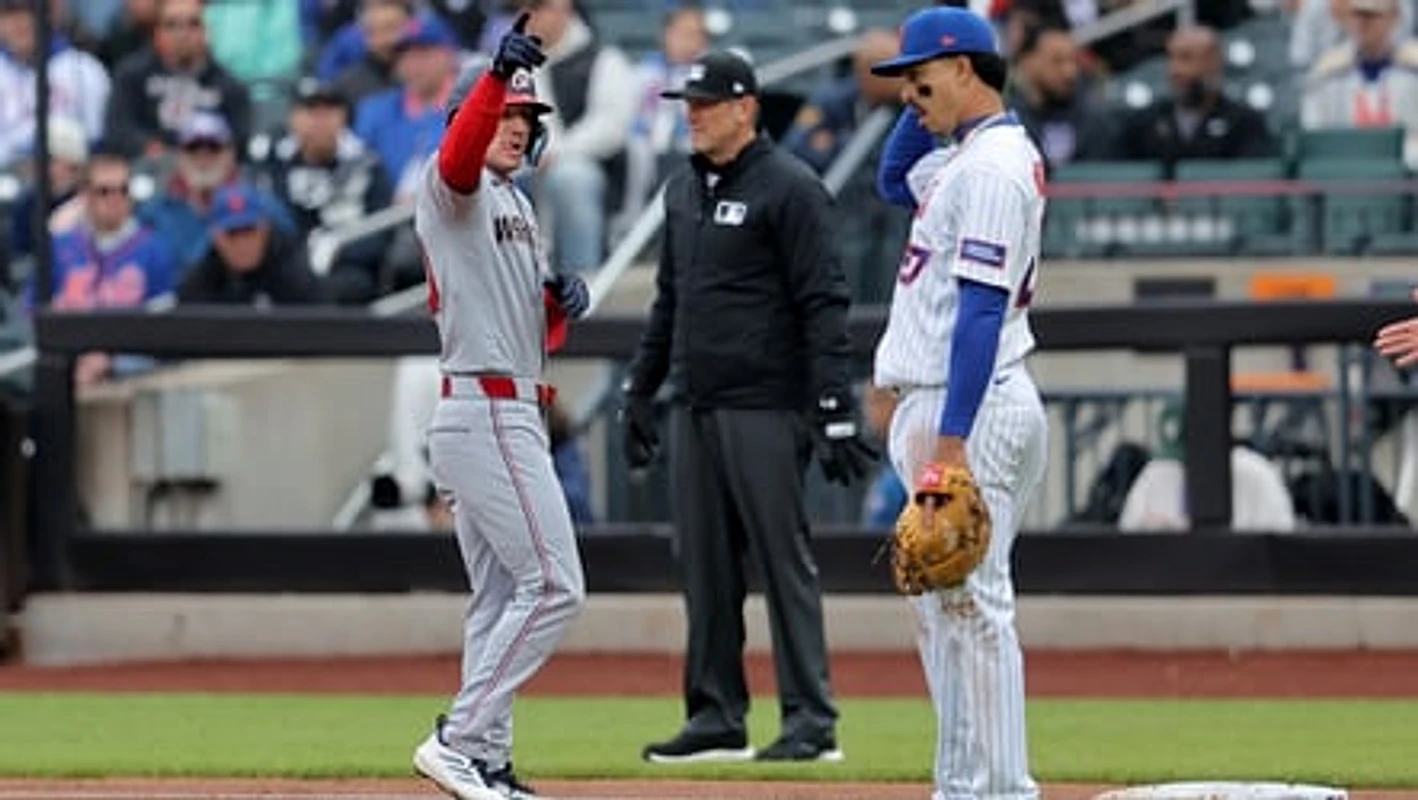
The New York Mets are teetering on the edge of a full-blown crisis, and Thursday’s 8th inning against the Washington Nationals was a perfect snapshot of their unraveling. With a one-run lead and their top three relievers ready to close the door, the Mets instead watched it slam shut—again.
Luke Weaver, who had been trusted to hold the line, served up a two-run homer to Nationals shortstop C.J. Abrams. Suddenly, the Mets were down a run, and the familiar feeling of another loss crept in.
But then came a flicker of hope. The Nationals made the curious decision to pitch to Juan Soto, and he made them pay with a ringing double off the center-field wall. The tying run was in scoring position with no outs, and the heart of the Mets’ order—their 3, 4, and 5 hitters—was due up. The momentum was shifting.
Then it vanished. Austin Slater grounded out. Mark Vientos lined out. Tyrone Taylor lined out. The chance evaporated, and so did another game. The Mets lost another series, and as May begins, they’ll wake up with the worst record in baseball.
“Not good enough, obviously. Not a secret,” manager Carlos Mendoza said. “That’s not gonna do it. We’ve gotta start winning series.”
It’s a familiar refrain for a team that just endured a 12-game losing streak and continues to sputter. Around the league, two other struggling teams have already fired their managers, sparking whispers about Mendoza’s job security. But so far, owner Steve Cohen and president of baseball operations David Stearns have signaled patience. They’ve pointed to broader issues, not just the manager’s leadership, as the root of the problem.
As reporters filed into a somber Mets clubhouse late Thursday, players quietly packed for a trip to Anaheim. No indications of a change were in the air. That 8th inning, though, told the story: even when things go right, they somehow go wrong. For a team that entered 2026 with high hopes, this is a crisis that demands more than patience—it demands a fix.