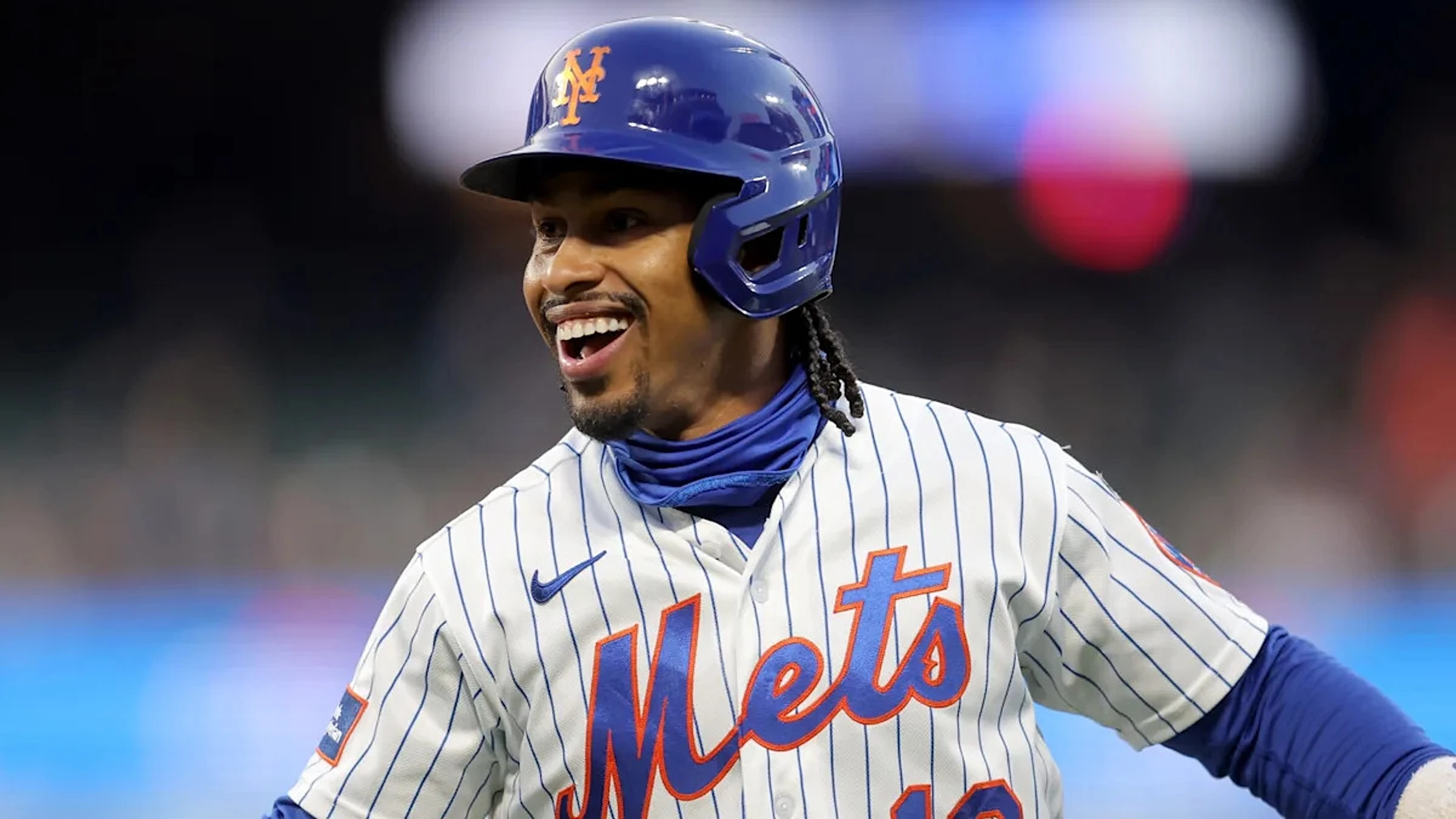


Even when the Mets finally taste victory in 2026, it’s mixed with a little bit of defeat.
On Wednesday night, the Mets finally got back into the win column, beating the Twins 3-2 to snap their 12-game losing streak, the fourth-longest losing streak in franchise history. However, they also may have lost star shortstop Francisco Lindor to an injury in the process.
On the same day that the Mets welcomed back $765 million man Juan Soto from the injured list with a calf strain, the team saw Lindor leave the game in the fourth inning with a calf injury of his own. It was another tough break for the organization, but this time, it was sandwiched in between moments of optimism and happiness. Lindor will get an MRI on Thursday to confirm the injury and recovery timeline, but the expectation from Mets manager Carlos Mendoza is that they'll be without their captain for at least a few weeks.
"It's what we're dealing with right now," Mendoza said after the game. "You know, can't sit here and make excuses. It's all part of it. We lost Soto, and we had a hard time. Now we're potentially dealing with losing another really good player, and we've got to figure it out. We gotta find a way."
They found a way on Wednesday, despite it looking at times like it might not happen. The day started on a high note when Soto was activated from the injured list and spoke to reporters in the locker room about his eagerness to get back on the field: "To be back on the field is always great,” he said. “That's what we do this for, you know, to be out there and share a good time with your teammates...to play the game you love."
When the game began, starting pitcher Clay Holmes needed just 10 pitches to set the Twins down in order in the first inning. Then Bo Bichette led off the bottom of the first with a double and later scored on an infield single by Francisco Lindor. The Mets had a lead, and Citi Field was as loud as you can imagine on a cold April night with rain in the forecast.
But the rest of the night wasn’t easy. It’s the Mets, so it can never be easy.
Even as Clay Holmes kept the Twins off the scoreboard, the Mets were unable to mount any consistent offense against left-hander Connor Prielipp, who was making his MLB debut. Holmes was great for the Mets, yet again. A lone bright spot in an otherwise disappointing start to the season. On the night, Holmes allowed two runs on five hits in seven innings while walking one and striking out three. It lowered his season ERA to 2.12, but he has just two wins to show for it. Tonight was not one of those wins.
Early on, Prielipp mostly matched Holmes. The rookie struck out the side in the second and then set the Mets down in order in the third. Prielipp displayed a 96 mph fastball that he kept up in the zone well all night and a solid changeup that he buried low in the zone. On the night, he allowed two runs on four hits in four innings, but also struck out six and kept the Twins in the game long enough for the offense to get to Holmes a little bit.
Trevor Larnach smoked a double down the first base line to start the fourth inning. After he moved to third on a Josh Bell groundout, Larnach scored when Victor Caratini smoked a lineout to center field, and Luis Robert’s throw was way up the third base line.
Still, the Mets responded. This night was going to be different. Lindor smoked a one-out single off the glove of Royce Lewis and into left field. He rounded the base hard, thinking about going for two, but ultimately held up. On the very next pitch, Francisco Alvarez hit a double into the gap in right center, and Lindor raced around from first base to score and put the Mets up one. After he slid in safely at home, Lindor stayed down on the dirt for a few seconds before slowly walking off the field. When the Mets went back into the field in the fifth inning, Lindor was not out there. It was Bo Bichette at shortstop and Brett Baty at third base.
Calf tightness was the announcement made to the press room.
"I knew right away when he was running third base that something wasn't right there," said Mendoza. "He wasn't running the way he normally does. I knew something was up because it wasn't because he thought it was an easy play at the plate, you know, and right away you could see his face walking towards the dugout. I knew something wasn't right."
Lindor left the game and was not in the clubhouse after the final pitch, but his teammates couldn't focus on losing another star player yet. There was a game to win. Only, things didn’t get much better once Lindor was forced from the game.
Byron Buxton launched a massive solo home run in the sixth inning, his fifth of the season, to tie the game. Then the Mets sent batters up to bat in their half of the sixth. They put together two walks and a double, but they didn’t score because Mark Vientos ran through a clear stop sign on Marcus Semien’s double and was easily thrown out at the plate.
"He just went through the stop sign," said Mendoza after the game. For his part, Vientos didn't offer a different take.
"I was just following my instincts," he explained after the game. "Once I saw the ball that was hit off the wall, I was like, I'm gonna go score on that. [Tim Leiper] gave me the stop sign, but I followed my instincts, and I went home." When asked to clarify, he repeated, "I saw the stop sign, but, like I said, I was following my instincts."
Fortunately for Vientos. He would get another chance.
In the top of the eighth inning, Mets reliever Brooks Raley got two outs but allowed two base runners, so Mendoza called on Luke Weaver to get his team out of the mess. Weaver walked the first batter he faced to load the bases with two outs.
"No one can really replicate jogging in [from the bullpen," Weaver explained. "It just feels rushed. Everything's kind of heightened a little bit. It's about calming the heart rate and getting settled in as quickly as possible. I didn't quite do that as well early, but then I'm also not trying to just down the middle of the plate either, right?"