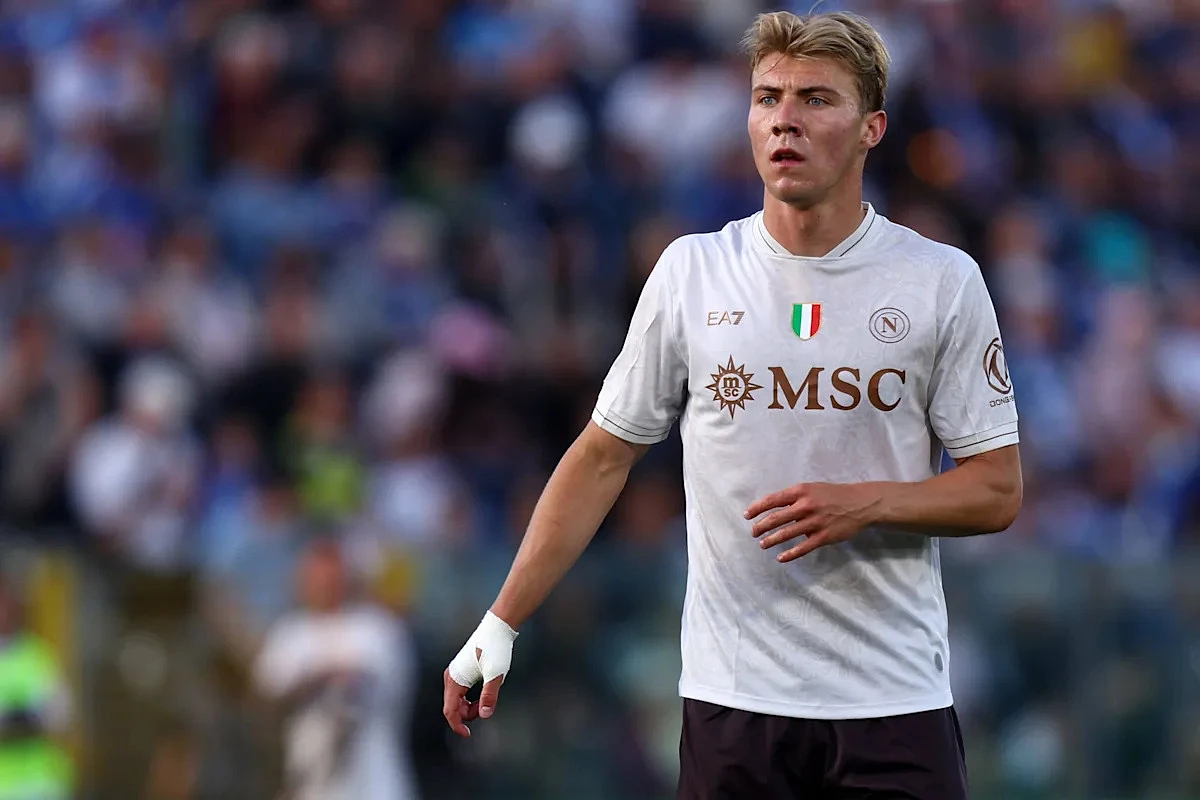
Manchester United are set to receive around £38 million this summer as Napoli finalise their permanent move for Rasmus Hojlund, according to reports from the Mirror. On paper, it's a sensible financial move for a club navigating Financial Fair Play constraints. In reality, it's another stark reminder of how quickly promising talent can slip away at Old Trafford.
Hojlund arrived from Atalanta in 2023 carrying the weight of a £76 million price tag and the burden of leading United's attack as a 20-year-old. He leaves with 26 goals in 95 appearances—a respectable return for a young striker adjusting to the Premier League—but not enough to escape the "disappointment" label that has followed him since day one.
At Napoli, the picture looks entirely different. Antonio Conte has provided Hojlund with structure, confidence, and a role that plays to his strengths. Eleven Serie A goals in 30 appearances suggest a player finding his rhythm rather than one suddenly transformed overnight. The calm environment in Naples stands in sharp contrast to the pressure cooker he left behind.
Napoli's sporting director, Giovanni Manna, left no room for doubt when discussing the deal. "We have an obligation to buy from Manchester United in case of Champions League access, but he is in our plans regardless of this condition." Those words speak volumes: Napoli see Hojlund as part of their future, while United saw him as a problem to solve.
Peter Schmeichel's recent comments capture the wider frustration around United's recruitment and player development. "A bit of a shame because I like Hojlund by the way and think he could have been absolutely fantastic. But I don't think he wants to come back. What they did with Hojlund was wrong because they brought a young boy in who's not got any Premier League experience and asked him to carry Manchester United."
That observation cuts through the noise surrounding modern transfers. United didn't sign an emerging striker to nurture his development—they signed him to rescue a faltering attack instantly. For a club that once built dynasties around patient growth, this feels like a lesson in what happens when potential meets impatience.