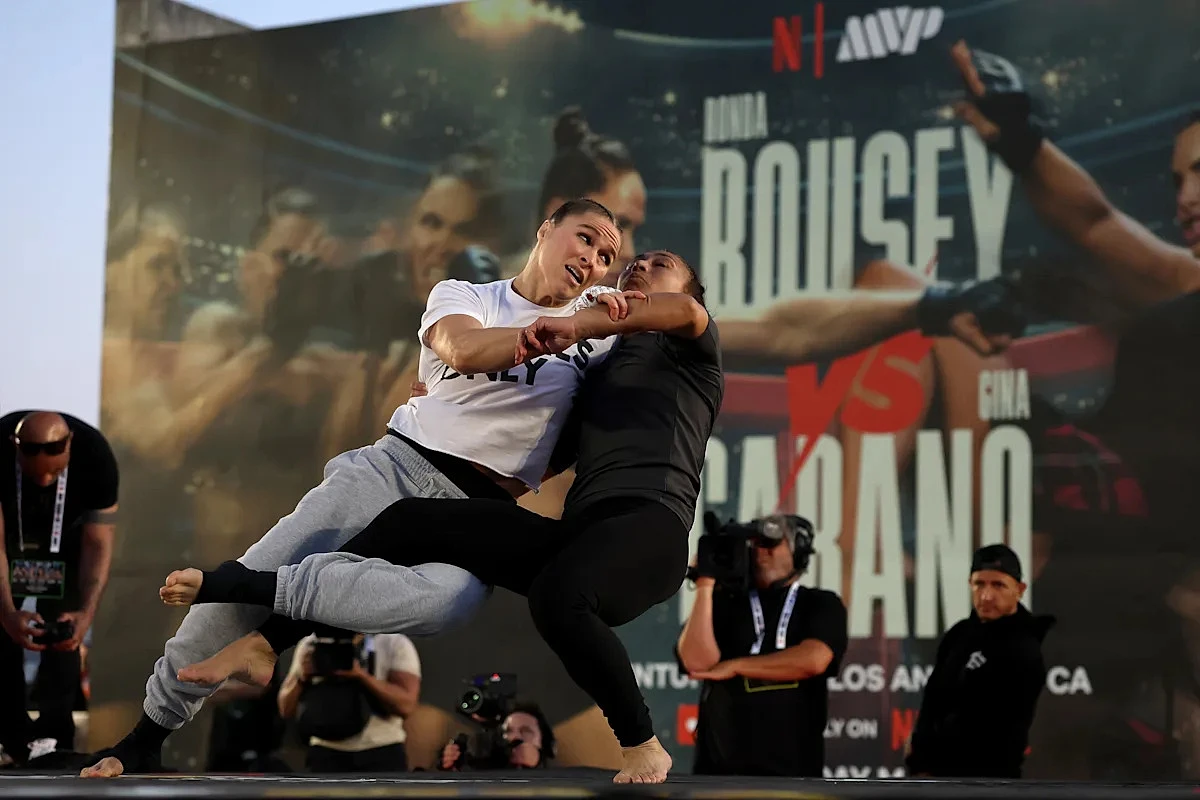
This Saturday, MVP MMA makes its debut on Netflix with a main event that has the entire combat sports world talking: Ronda Rousey vs. Gina Carano. But what does success—or failure—actually look like for this groundbreaking event? Let's break it down, along with your burning questions from this week's mailbag.
First, let's talk expectations. One reader asked about interest level on a scale of 1-10, and honestly, we're sitting at a solid 7.5 or 8. That's high, but it has almost nothing to do with expecting elite-level MMA technique. Instead, it's all about novelty and curiosity. These Netflix events—whether boxing or now MMA—have a unique ability to feel like a shared cultural moment. Remember when Jake Paul fought Mike Tyson? Or when Anthony Joshua shattered his jaw? For a few hours, it felt like the entire world was watching and talking about the same thing. In today's fragmented media landscape, that's rare. And it's fun, even when the event itself is weird or underwhelming.
So what's the best-case scenario for MVP MMA 1? A massive audience that tunes in, engages, and leaves wanting more. Success means Netflix sees the numbers, the buzz carries into the next week, and this becomes a legitimate platform for MMA—not just a one-off novelty. It means Rousey and Carano deliver a compelling, if not technically perfect, fight that reminds fans why they fell in love with the sport in the first place. It means the undercard surprises us, and the production value makes us feel like we're part of something big.
On the flip side, failure would be a dud. A boring main event, technical glitches, or a lackluster undercard that fails to capture attention. Worse, if the event feels like a cash grab with no heart, it could damage the credibility of MVP MMA before it even gets started. The UFC Fight Night happening the same night—featuring Arnold Allen vs. Melquizael Costa—will almost certainly deliver better technical fights. But it won't have the anticipation or the cultural pull of a Netflix spectacle. MVP's success hinges on being more than just another fight card; it needs to be an event.
And what about Ronda Rousey? For her, success means proving she still belongs in the conversation. After years away from MMA, returning against a familiar name like Carano—who also hasn't fought in ages—is a high-risk, high-reward move. A dominant win could reignite interest in her fighting career. A loss, or even a sloppy performance, could cement the narrative that her time has passed. For Carano, it's similar: a chance to rewrite her combat sports legacy after a long hiatus in Hollywood.
Ultimately, MVP MMA 1 is a gamble. But in a sport that thrives on drama, unpredictability, and shared experiences, it's a gamble worth taking. Whether it's a knockout success or a cautionary tale, we'll all be watching—and talking about it together.