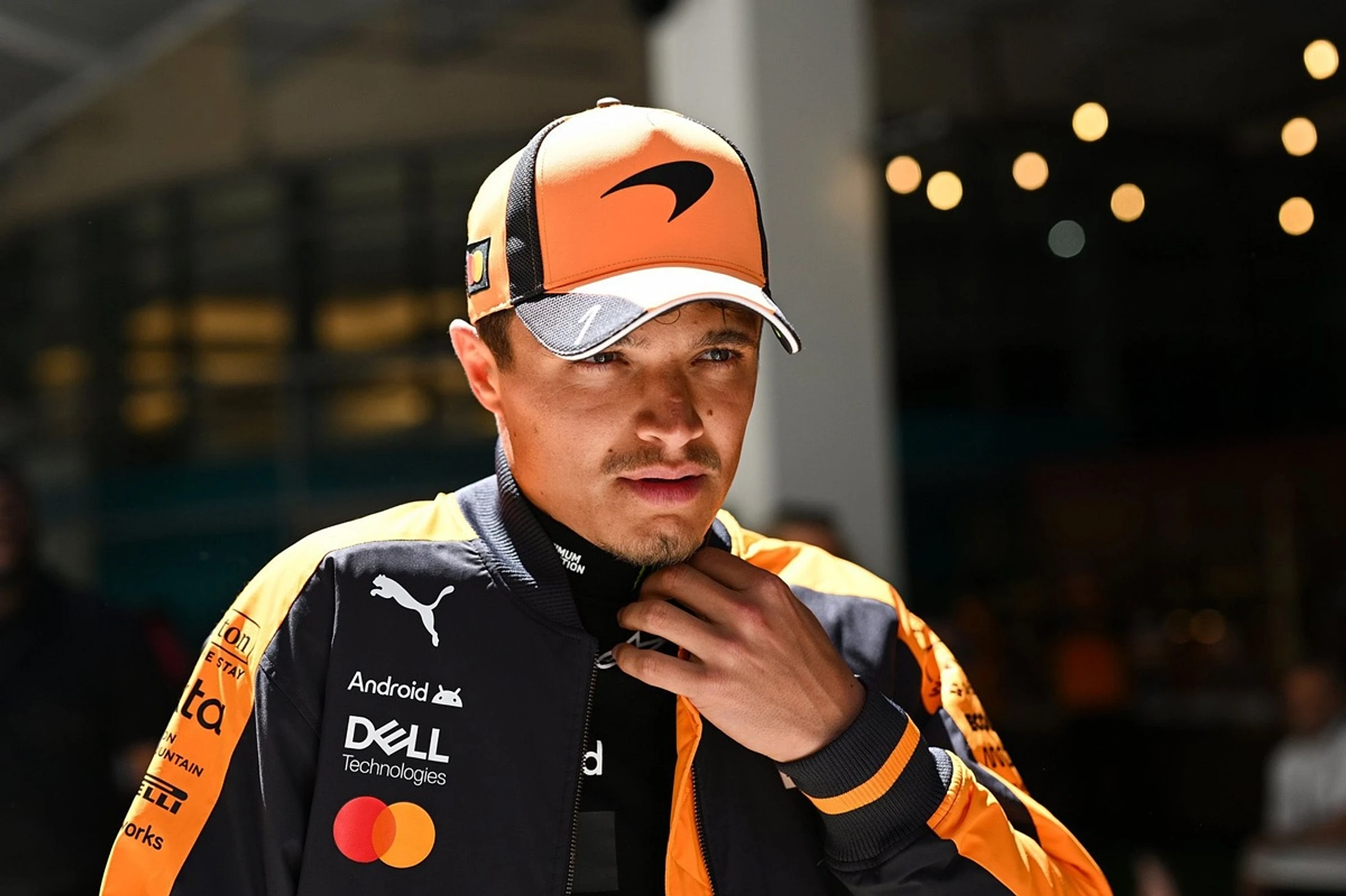
Lando Norris has a radical solution for fixing Formula 1's current challenges: just get rid of the battery entirely.
The McLaren star and reigning world champion was speaking after the Miami Grand Prix, where he finished third, and while he welcomed recent energy management tweaks as "a small step in the right direction," he made it clear that the current regulations still fall short of what F1 should be about.
For context, F1 recently introduced changes to energy deployment rules aimed at allowing drivers to push harder during qualifying laps—reducing the frustrating need to lift and coast just to manage battery levels. The full impact of these tweaks remains unclear, especially at circuits with trickier energy recovery demands than Miami's stop-start layout.
But Norris isn't convinced these fixes go far enough. His frustration is simple: drivers who push flat out still get penalized for it.
"If you go flat out everywhere and you try pushing like you were in previous years, you still just get penalised for it," Norris explained. "You still can't be flat out everywhere. It's not about being as early on throttle everywhere. You should never get penalised for that kind of thing, and you still do."
His blunt conclusion? "Honestly, I don't really think you can fix that. You just have to get rid of the battery. So hopefully in a few years, that's the case."
F1 stakeholders have already agreed in principle to shift the power balance for 2027—increasing combustion engine output by 50kW through higher fuel flow while reducing electric energy equally. That would bring the power split closer to 60-40, moving away from the original 50-50 target.
Meanwhile, Norris's teammate Oscar Piastri offered another glimpse into the challenges drivers face. He noted that Miami was the first time he truly experienced the wild closing speeds between cars deploying and running out of energy—the same phenomenon that led to a major crash for Haas driver Oliver Bearman in Japan. Piastri described the current situation as "pretty crazy."
For fans who love the raw speed and wheel-to-wheel racing that defines F1, Norris's comments strike a chord. The question now is whether the sport's decision-makers will listen to their champion and pursue a future that prioritizes pure performance over battery management.