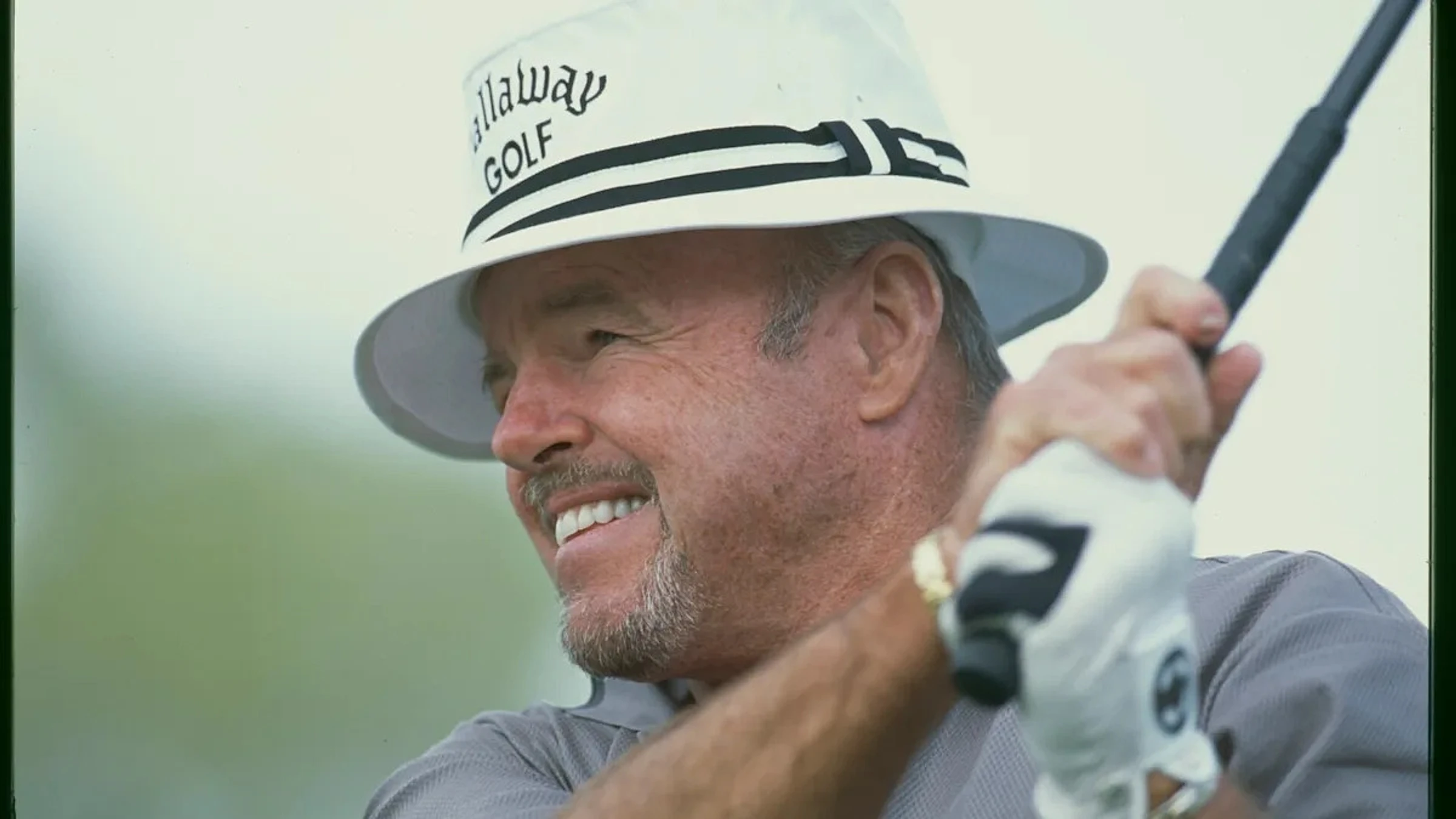
Jim Colbert, the eight-time PGA Tour winner instantly recognizable by his signature bucket hat, has passed away at the age of 85. The PGA Tour confirmed his death on Sunday, though no cause was given.
Colbert's iconic headwear wasn't just a fashion statement—it was born from necessity. As a teenager playing a tournament in Kansas, he nearly collapsed from sunstroke. Doctors insisted he start wearing a hat for protection, and he chose a bucket hat. It became his trademark throughout a career that spanned decades.
A New Jersey native, Colbert initially attended Kansas State on a football scholarship. After an injury sidelined him on the gridiron, he turned his full attention to golf. He was runner-up in the NCAA Championship in 1964, and by 1966, he had earned his PGA Tour card.
His first PGA Tour victory came at the 1969 Monsanto Invitational Open. In 1974, he delivered standout performances in major championships, tying for fourth at the Masters and tying for fifth at the U.S. Open at Winged Foot. His finest season came in 1983, when he won twice and finished 15th on the money list.
Colbert's resilience was remarkable. Diagnosed with prostate cancer in 1996, he underwent surgery and returned to competition just two years later to win The Transamerica on the PGA Tour Champions, where he amassed 20 victories.
Off the course, Colbert built a business empire. According to the PGA Tour, he purchased his first golf course in Las Vegas in 1980. His company, Jim Colbert Golf, eventually owned 23 courses, employed 700 people, and generated $50 million in annual revenue.
He spent his later years in Las Vegas but never forgot his roots. The men's and women's golf teams at Kansas State play at Colbert Hills Golf Club in Manhattan, Kansas—a course he helped design and which opened in 2000. His legacy is enshrined in multiple halls of fame, including the Kansas State Athletic Hall of Fame (1991), the Kansas Sports Hall of Fame (1998), and the Las Vegas Golf Hall of Fame (2019).
Jim Colbert's bucket hat may have been his calling card, but his enduring impact on the game—both on the course and through the courses he built—is his true legacy.