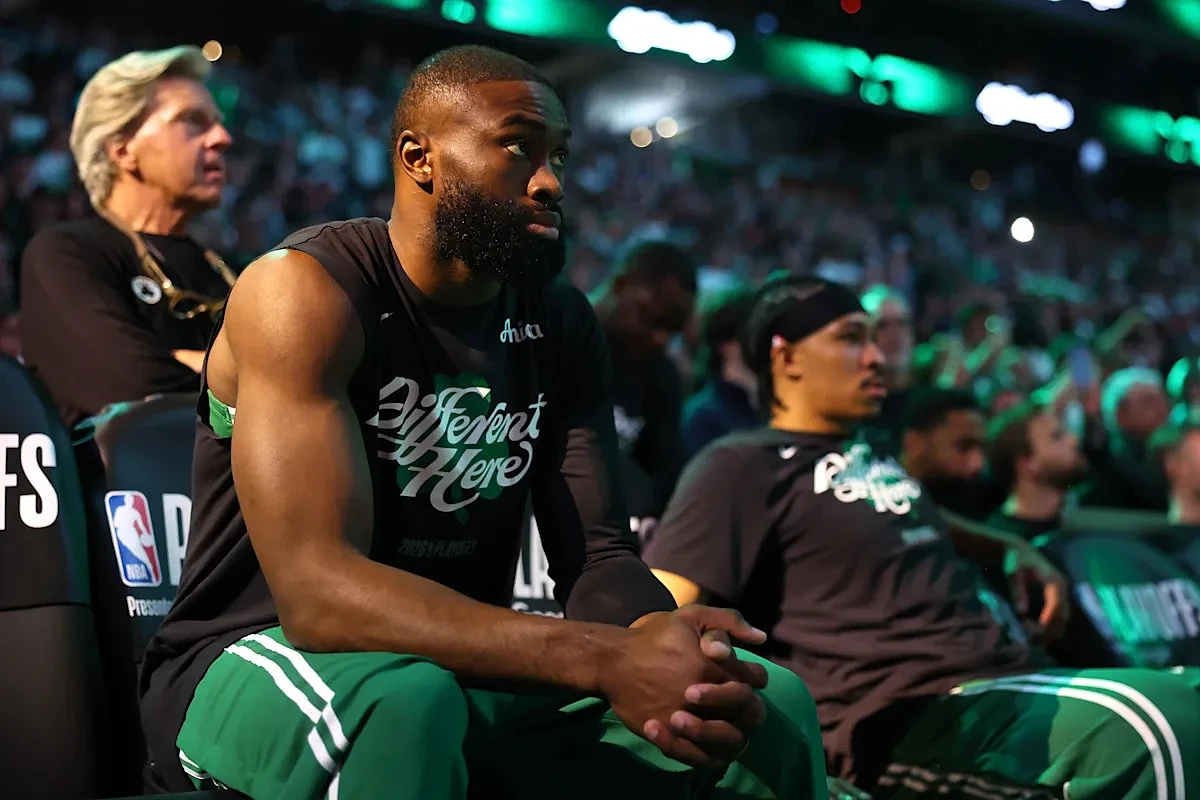
Jaylen Brown has never been one to shy away from a big conversation. Long before he became a Celtics cornerstone and NBA champion, the Georgia native was already making headlines—and raising eyebrows—with his thoughtful, sometimes provocative takes on the role of sports in society.
In a recent appearance on the NBPA "State of the Game" podcast, Brown revisited a moment from his rookie season that set the tone for his career as one of the league's most outspoken voices. "I was in Boston, thinking I’m talking to a normal beat writer," Brown recalled. "It turned out to be a big writer for The Guardian. Next thing I know, I’m on the cover of the newspaper with the headline: ‘Jaylen Brown says sports is a mechanism for control.’"
Brown was just 19 at the time. The article went viral, and soon after, he received an invitation that would change his trajectory off the court. "Harvard invited me to come speak about it," he said. "That’s how I became the youngest Harvard lecturer."
The idea that sports could be used as a tool for social control wasn't exactly a new one—it's a concept that stretches back to ancient Rome, where gladiatorial games entertained and distracted the masses. But hearing it from a teenager who had just signed a multimillion-dollar NBA contract? That sparked debate.
"I got a lot of pushback, even from my own organization," Brown explained. "Danny Ainge came and talked to me like, ‘What is this?’ Here I was, 19 years old, just drafted, changing my family’s life through basketball—and I’m criticizing the very system that made it possible?"
The tension was real. But Brown stood his ground, showing early signs of the thoughtful leadership that would define his career—both on and off the court. And while Ainge may not have fully understood where his young star was coming from at the time, history has proven that Brown was onto something worth discussing.