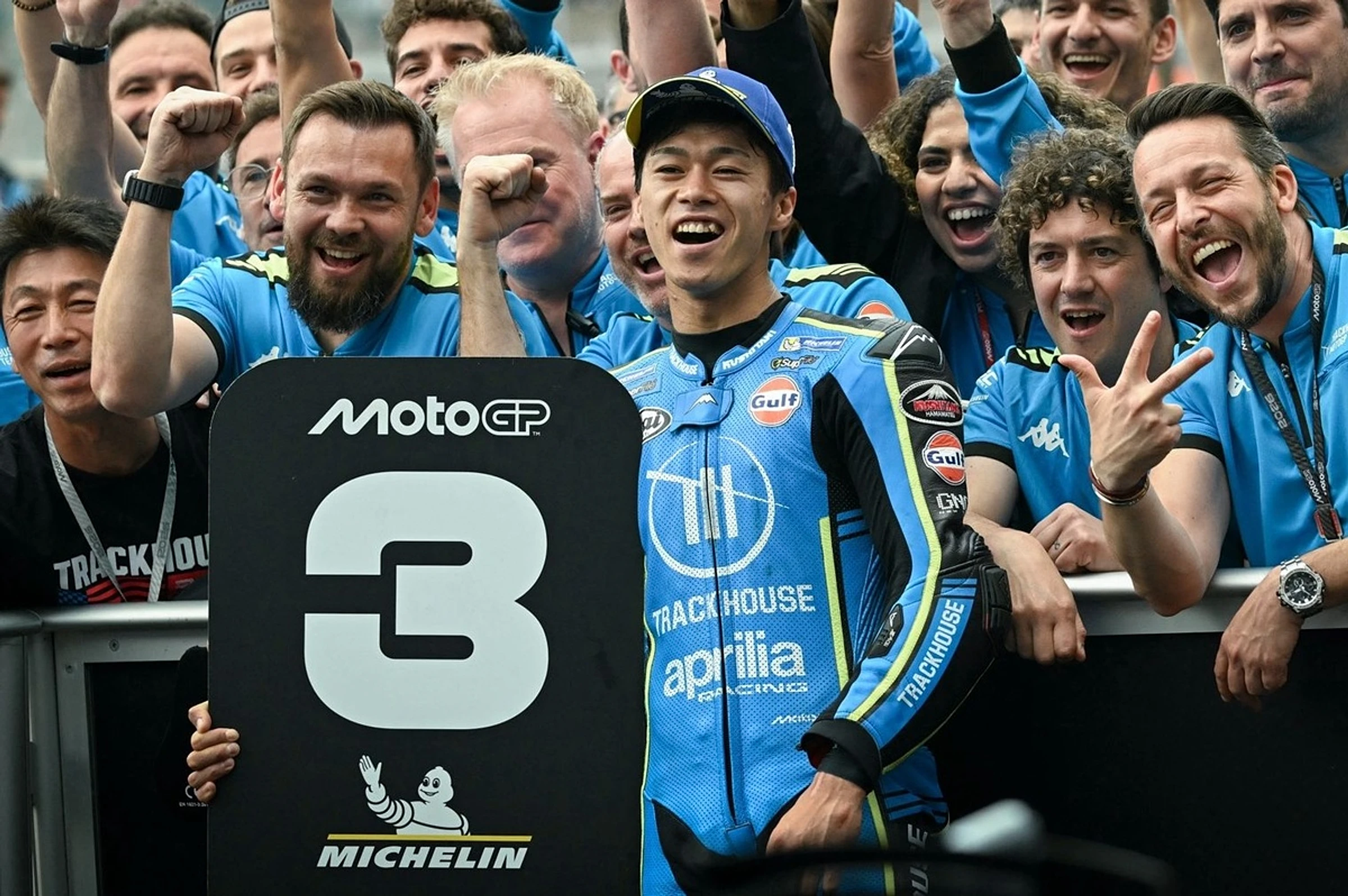
For over a decade, Japanese riders watched from the sidelines as MotoGP podiums became an increasingly distant memory. That all changed at the French Grand Prix, where Ai Ogura's stunning third-place finish ended a 14-year drought that had left the nation's rich racing heritage feeling like ancient history.
To understand the magnitude of Ogura's breakthrough, we need to rewind the clock. The last time a Japanese rider stood on a MotoGP podium was 2012, when Katsuyuki Nakasuga charged to second place in a rain-soaked Valencia finale. That was 93 podiums into Japan's top-class story—a tally that had grown steadily since Hideo Kanaya opened the account at the very same French GP back in 1973.
Japan's journey in the premier class has been anything but linear. The 1970s and '80s saw sporadic success, with Kanaya collecting five podiums and Takazumi Katayama adding eight more. But it was the 1990s that truly announced Japanese riders as forces to be reckoned with. Names like Shinichi Itoh, Norick Abe, Tadayuki Okada, and the Aoki brothers became household names in the 500cc era, almost always riding for their homeland's powerhouse manufacturers.
The momentum carried into the new millennium. Tohru Ukawa and the late Daijiro Katoh led a new wave, while Makoto Tamada became a regular podium contender for Honda. His 2004 home victory at Motegi felt like business as usual—especially with Shinya Nakano completing a Japanese 1-2-3 for Kawasaki. At that moment, no one could have imagined it would be Japan's last grand prix win for over two decades.
Tamada managed one more podium in 2005, Nakano scored a second-place at Assen in 2006, and then... silence. The Japanese factories increasingly turned to European talent, and the pipeline of homegrown riders dried up. What followed was the longest barren stretch since Kanaya's pioneering podium 14 years earlier.
Ogura's bronze at Le Mans doesn't just break a drought—it reignites hope. For a nation that helped define the sport's modern era, this podium feels less like an ending and more like a new beginning.