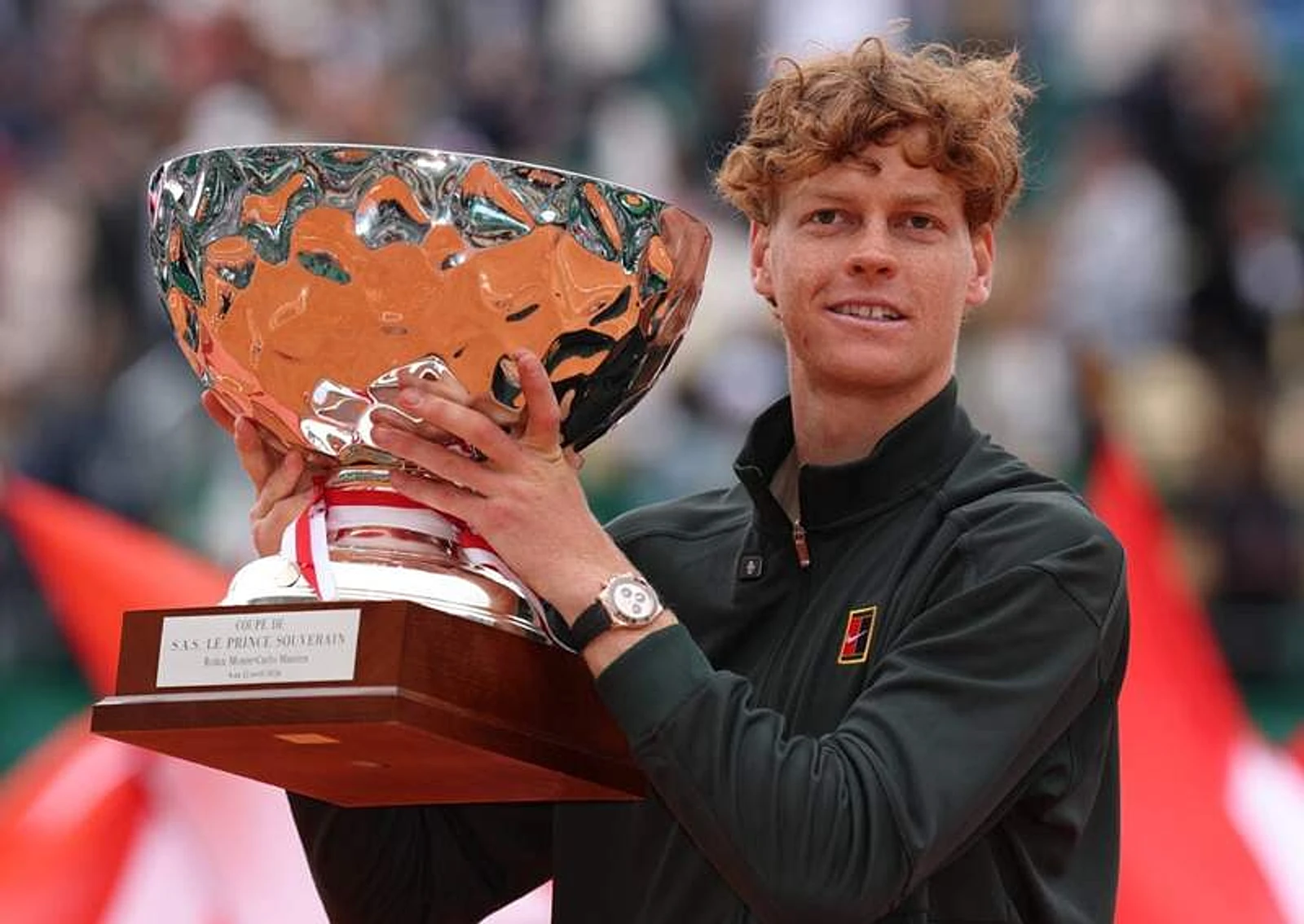
Jannik Sinner's triumph at the Monte-Carlo Masters was a masterclass in composure and tactical evolution. By defeating his great rival Carlos Alcaraz in a gripping final, Sinner didn't just claim his first major clay-court title; he also reclaimed the world number one ranking, a monumental achievement on the demanding red dirt.
The victory showcased Sinner's remarkable adaptability, as he expertly navigated tricky, windy conditions that tested every player's resolve. This win, following his hard-court success in Miami, proves his game is truly surface-versatile, a key trait for any modern champion.
Behind this success is a clear development plan from his coach, Simone Vagnozzi. In the aftermath, Vagnozzi revealed that strategic adjustments were key, noting they worked on adding more spin, drop shots, and variety to Sinner's game specifically for the clay. "This type of champion senses the trophy," Vagnozzi said, crediting the confidence from American hard courts as fundamental to conquering the clay of Monte Carlo.
Interestingly, Vagnozzi shared a perspective that might surprise some fans. "When I arrived I thought he played better on clay than on hard courts," he admitted, highlighting Sinner's innate feel for the surface. This belief was validated by a performance built on intelligent point construction and physical resilience.
Looking ahead, the team is weighing its schedule, with a decision pending on the Madrid Open. The focus remains on continuous improvement. Vagnozzi pointed to return of serve as a specific area for growth, emphasizing that even at the pinnacle of the sport, a champion's work is never done. For Sinner, this clay-court breakthrough is not an endpoint, but a powerful statement of intent for the rest of the season.