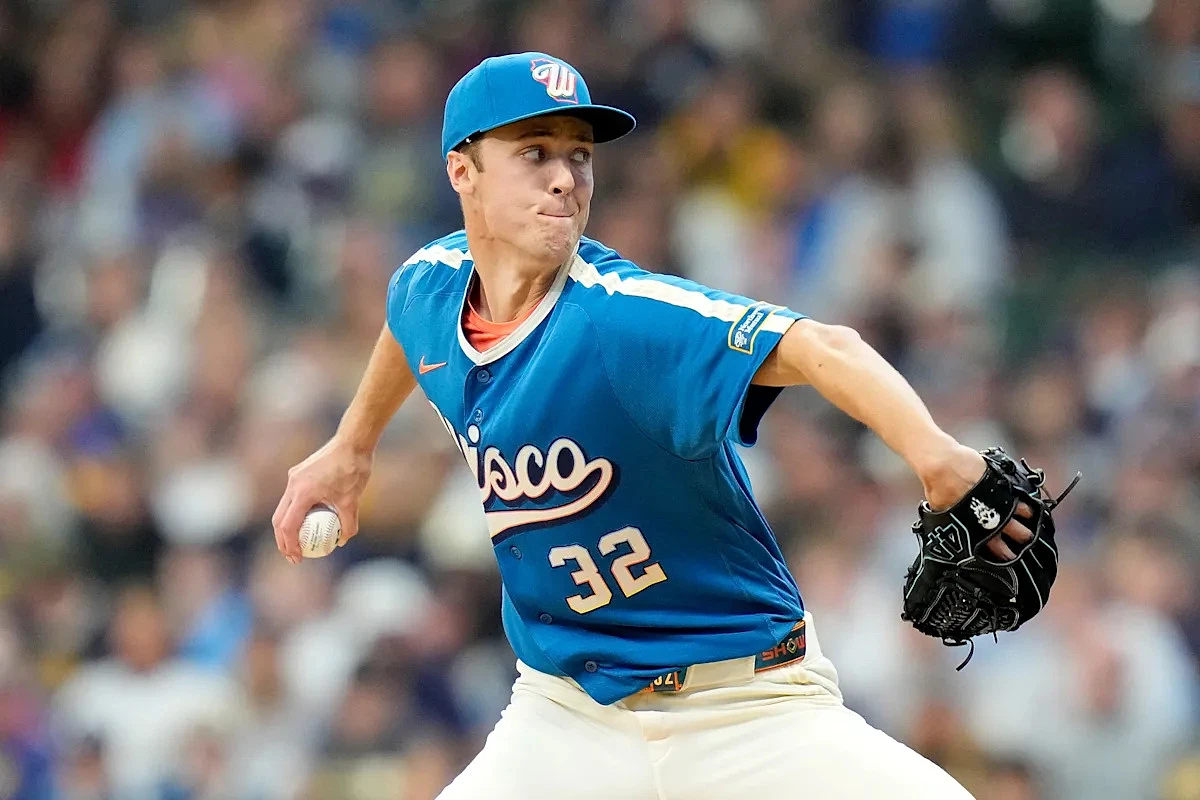
The baseball world is still buzzing after Milwaukee Brewers phenom Jacob Misiorowski delivered a performance for the ages against the New York Yankees on Friday night. The young starter didn't just pitch—he made history, unleashing the hardest fastballs ever recorded by a starting pitcher in MLB's Statcast era.
From the very first pitch, it was clear something special was brewing. Misiorowski opened the game with a 102.4 mph fastball for a called strike, setting the tone for a night that would see him fire off an astonishing 36 pitches at 100 mph or faster. Ten of those came in a jaw-dropping first inning alone, as he blew through the top of the Yankees order with ease.
According to MLB.com's Sarah Langs, the previous record for hardest pitch by a starter belonged to Jordan Hicks, who hit 103.2 mph on July 12, 2022. Misiorowski shattered that mark not once, but seven times, topping out at an eye-popping 103.6 mph. The sequence in the first inning read like a velocity showcase: 102.4, 103.0, 102.8, 102.7, 103.2, 103.3, 103.3, 103.5, 103.1, and finally 103.6 mph.
But this wasn't just about raw power—the results were equally impressive. Misiorowski struck out 11 Yankees over six scoreless innings, allowing just two hits and two walks. That's a strikeout for every letter in his last name, a fitting statistic for a pitcher who dominated from start to finish.
The most memorable moment came in the second inning, when Yankees prospect Spencer Jones stepped to the plate for his MLB debut. Misiorowski didn't hold back: 103.6 mph up and in for a called strike, 102.3 mph for a swinging strike, another 103.6 mph fouled off, and then an 89 mph curveball that froze Jones for a foul-tip strikeout. Four pitches, one very rude welcome to the big leagues. To his credit, Jones bounced back with a walk in his second at-bat.
For context, the hardest pitch ever tracked by MLB remains Aroldis Chapman's 105.8 mph fastball from 2010. But for a starter to consistently hit triple digits—and break records doing it—is a feat that has fans and analysts alike rethinking what's possible on the mound. If this is the future of pitching, we're in for a wild ride.