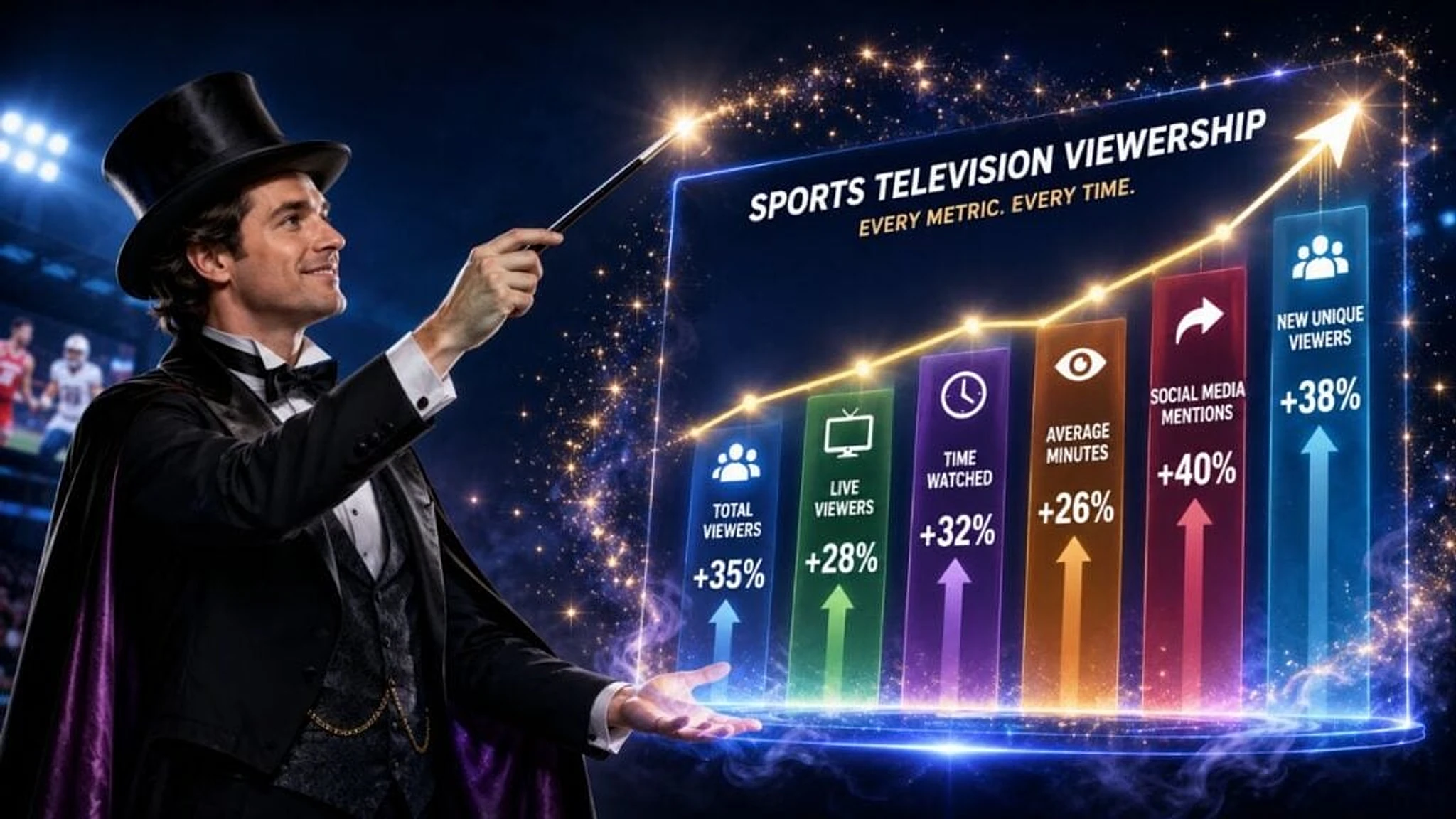
In the world of sports media, data is king. Whether you're tracking podcast downloads, social media engagement, or YouTube watch time, numbers tell the story of what audiences truly care about. For those of us in the industry, viewership figures are more than just statistics—they're the roadmap to understanding fan behavior, guiding content strategy, and driving revenue.
But here's the catch: recent viewership numbers across nearly every sport have been soaring, and it's raising eyebrows. Since Nielsen introduced its Big Data + Panel system just before the NFL season kicked off, leagues, teams, and regional networks have all reported significant audience gains. On the surface, this sounds like a slam dunk for the sports industry. After all, live sports have long been a cornerstone of entertainment. But is this growth as genuine as it seems?
Let's break it down. From a talent and content perspective, these numbers tell us what fans are gravitating toward. If viewers are spending hours watching a particular league or game, it makes sense for media professionals to double down on that coverage. It's a feedback loop: the more you feed the beast, the more engagement you get. From a business standpoint, higher viewership translates to bigger advertising dollars, stronger revenue streams, and greater confidence in the product you're investing in.
Yet, there's a cautionary tale here. Every trend deserves a healthy dose of skepticism. Think of it like the vinyl record revival: sure, there's a nostalgic spike in sales, but does anyone genuinely believe it will overtake digital streaming in the long run? Probably not. The same logic applies to sports viewership. The recent surge isn't necessarily driven by a sudden cultural shift toward live sports—it's largely a result of a change in how we measure audiences.
Nielsen's updated system was designed to better capture modern viewing habits, but it's also inflated the numbers. The danger lies in accepting these expanded definitions of "viewership" without context. If we bake these inflated expectations into rights fees, ad sales, and long-term business strategies, we could be setting ourselves up for a hard landing when the digital age continues to evolve.
So, while it's tempting to celebrate the boom, it's worth asking: is this growth sustainable, or is it just a short-term spike masked by a new measuring stick? For sports media professionals and fans alike, the answer matters more than ever.