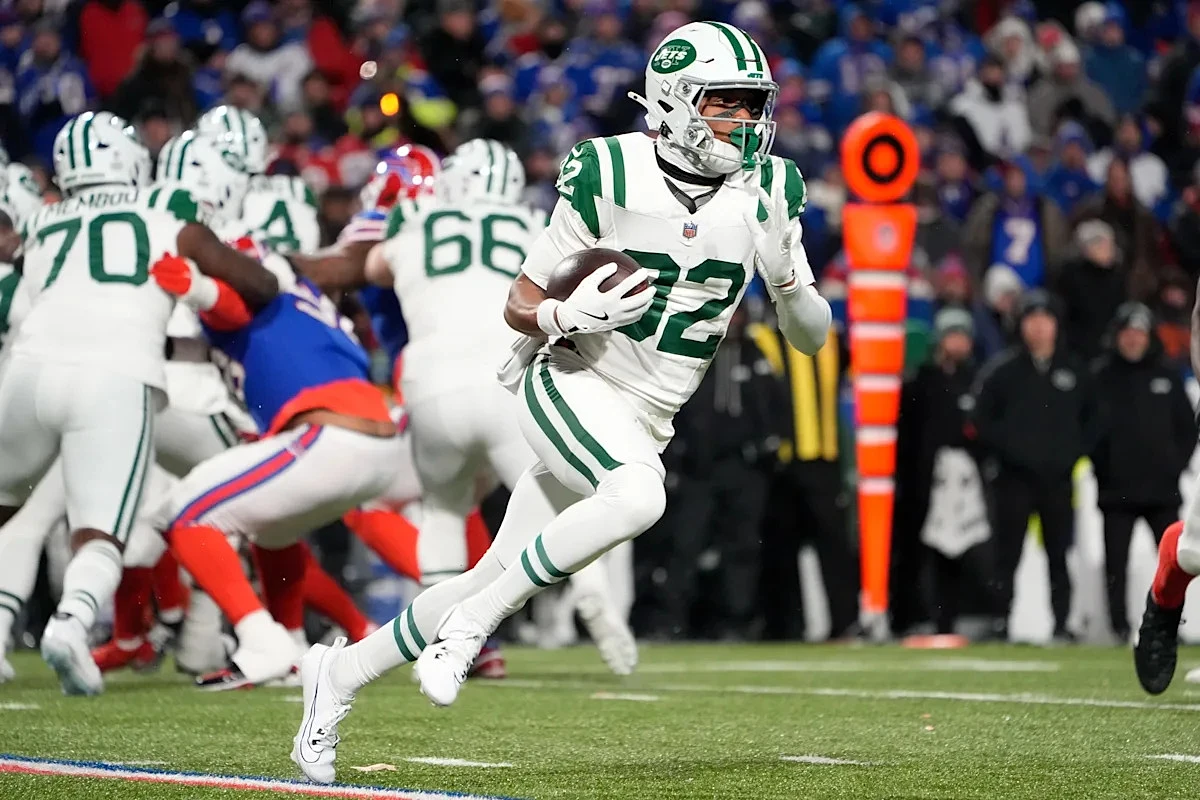
Every NFL player knows the clock starts ticking the moment they step onto the field, but for New York Jets wide receiver Arian Smith, the 2026 season feels like a make-or-break moment. Drafted in the fourth round of the 2025 NFL Draft out of Georgia, Smith was viewed as a raw but promising talent—a speedster who could eventually develop into a reliable target opposite star receiver Garrett Wilson. But after a rookie campaign that fell well short of expectations, the pressure is mounting.
Smith's debut season was a quiet one: just seven catches for 52 yards, averaging a modest 7.4 yards per reception. The Jets tried to get creative, feeding him manufactured touches near the line of scrimmage to ease his transition. Yet those efforts yielded little, leaving questions about his ability to stretch the field or create separation at the NFL level.
Fast forward to 2026, and the wide receiver room looks nothing like it did on draft day. Head coach Aaron Glenn and general manager Darren Mougey have reshaped the offense around Wilson, adding firepower at every turn. Midseason trade acquisition Adonai Mitchell has emerged as a potential WR2, while the Jets traded up to snag former Indiana standout Omar Cooper Jr. with the 30th overall pick in the 2026 NFL Draft. Even rookie tight end Kenyon Sadiq is expected to command targets, further crowding the pecking order.
For Smith, the path to consistent playing time has narrowed significantly. Once viewed as a developmental project with upside, he now faces the reality of a depth chart stacked with new talent. It's hard to see how he carves out a meaningful role unless he makes a dramatic leap in his second season.
If Smith doesn't show significant growth this year, the Jets might be staring at their first glaring draft mistake under Mougey's leadership. For a team with playoff aspirations and a revamped offense, there's little room for patience. The sophomore season isn't just important for Smith—it's critical.