

Dan WolkenSenior writerMon, April 27, 2026 at 4:58 PM UTC·13 min readLOUISVILLE, Ky. — About 45 minutes after the Kentucky Derby ends on Saturday, the owner and trainer of the winning horse will be escorted into a small room underneath the grandstand, sit behind a table and finally get to watch a replay of the race.
Then they will be asked questions by the media, one of which will inevitably be whether they intend to enter the Preakness Stakes in two weeks and continue to take their shot at the Triple Crown.
This little routine is as much an annual Derby tradition as mint juleps and roses. And decade after decade, the connections have given a variation of the same answer: As long as the horse comes out of the race healthy, why not?
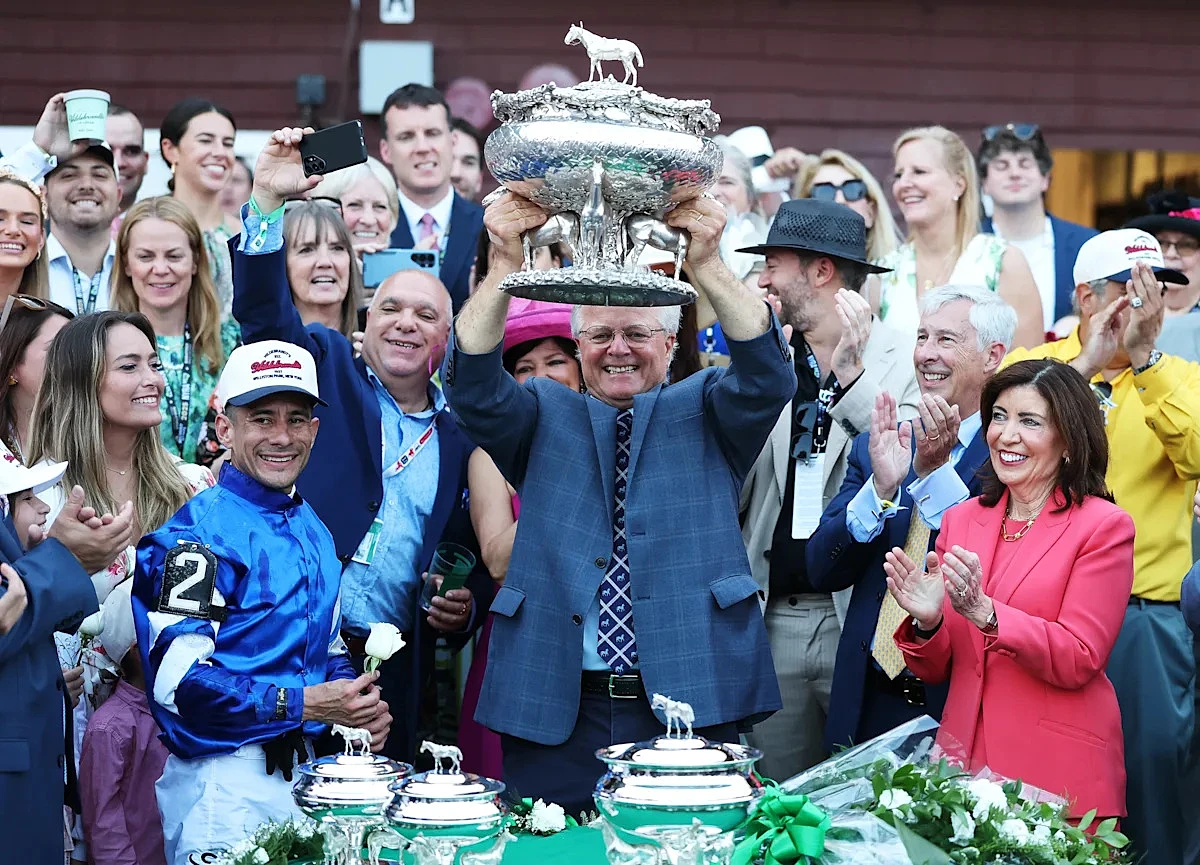
After Sovereignty won the Derby, trainer Bill Mott and Michael Banahan, the director of bloodstock for global racing giant Godolphin, were suspiciously non-committal.
“We’ll enjoy today; today was the goal,” Banahan said.
“I don’t think we’re dead set on it,” Mott said the next morning. “I don’t think that’s the only thing we’re thinking about.”
It was then no surprise that Sovereignty skipped the Preakness and instead waited five weeks for the Belmont, which he won impressively. Whether he would have been the sport’s 14th Triple Crown winner is now forever a matter of conjecture.
But Mott’s decision appears to be the opening of a floodgate that could forever change horse racing. Not only has the taboo been lifted for horsemen to say publicly what they’ve been whispering for several years now — that five weeks simply isn’t enough time for the modern Thoroughbred to run three long, demanding races — it seems that the industry might finally be on the verge of responding.
“I know the historians are rolling in their graves,” said trainer Doug O’Neill, who won the Derby with I’ll Have Another in 2012 and Nyquist in 2015. “But at the same time, it’s just a different era. So I think eventually, probably sooner than later, we’ll see that for sure.”
On the heels of an April 13 report in Sports Business Journal that the Preakness was likely to move a week later in 2027 as a result of negotiations for the race’s television rights, Churchill Downs, Inc., announced last week that it had acquired the intellectual property rights to the Preakness for $85 million in an unusual deal that in some ways links the first two legs of the Triple Crown.
While Churchill chief executive Bill Carstanjen said on a subsequent quarterly earnings call that the state of Maryland “is in control of the destiny of the Preakness,” it’s a complicated and somewhat opaque arrangement because it’s not totally clear what controlling the intellectual property for a horse race means.
The one thing that seems certain is the race staying in Baltimore — at least for the foreseeable future.
Pimlico, the longtime home of the Preakness, is currently being renovated and is set to reopen in 2027 under the control of a state-run board after the track’s previous ownership decided to dump the property and exit the racing business in Maryland.
What has resulted, sources told Yahoo Sports, is a quagmire of government bureaucracy and budget issues that one industry insider called “messy and haphazard,” leaving some to wonder how much direct involvement Churchill will have in the execution and operation of an event in Baltimore that has regularly drawn 100,000 people itself.
“It’s been a complete political boondoggle,” the source said. “Now you feel like somebody that has a real long-term interest in a healthier overall ecosystem has stepped in. You can say a lot of things about Churchill, but it feels like the adults are at the table.”
One of the issues with the Triple Crown is that for most of its history, it has been a concept rather than a business venture. In fact, when Sir Barton became the first horse to win all three American classics in 1919, there was no mention of winning a Triple Crown. That phrase only took hold in 1930 thanks to sportswriter Charles Hatton, who put it into the lexicon after Gallant Fox became the second to do it.
Since then, there have been brief periods where the three races were linked under one TV deal or a corporate sponsor offering a $5 million bonus to anyone who could sweep them — a development that resulted from the owners of 1985 Derby winner Spend A Buck skipping the Preakness to instead chase a $2 million bonus tied to the Jersey Derby.
For the most part, however, the three entities in charge of the Triple Crown races have worked together on a more informal basis — at least until now. It seems likely that Churchill’s financial involvement in the middle jewel will help eliminate some of the decision-making friction between them for a potential change this significant.
After all, moving the Preakness even a week later has a knock-on effect for the New York Racing Association, which is also planning to debut its own $455 million renovation of Belmont Park before the 2027 Triple Crown. Not only would changing the Preakness date potentially impact the Belmont, but moving the Belmont further into June or maybe even July has implications for other big race days later in the year at other racetracks.
"At the moment, we're open to this dialogue," NYRA president and CEO Dave O'Rourke told Yahoo Sports. "I know there's a lot of movement going on in Maryland but we look forward to talking with everyone on what best fits. I think if there is going to be a change, it probably should be more in moderation than anything extreme because we're playing with something that works so well."