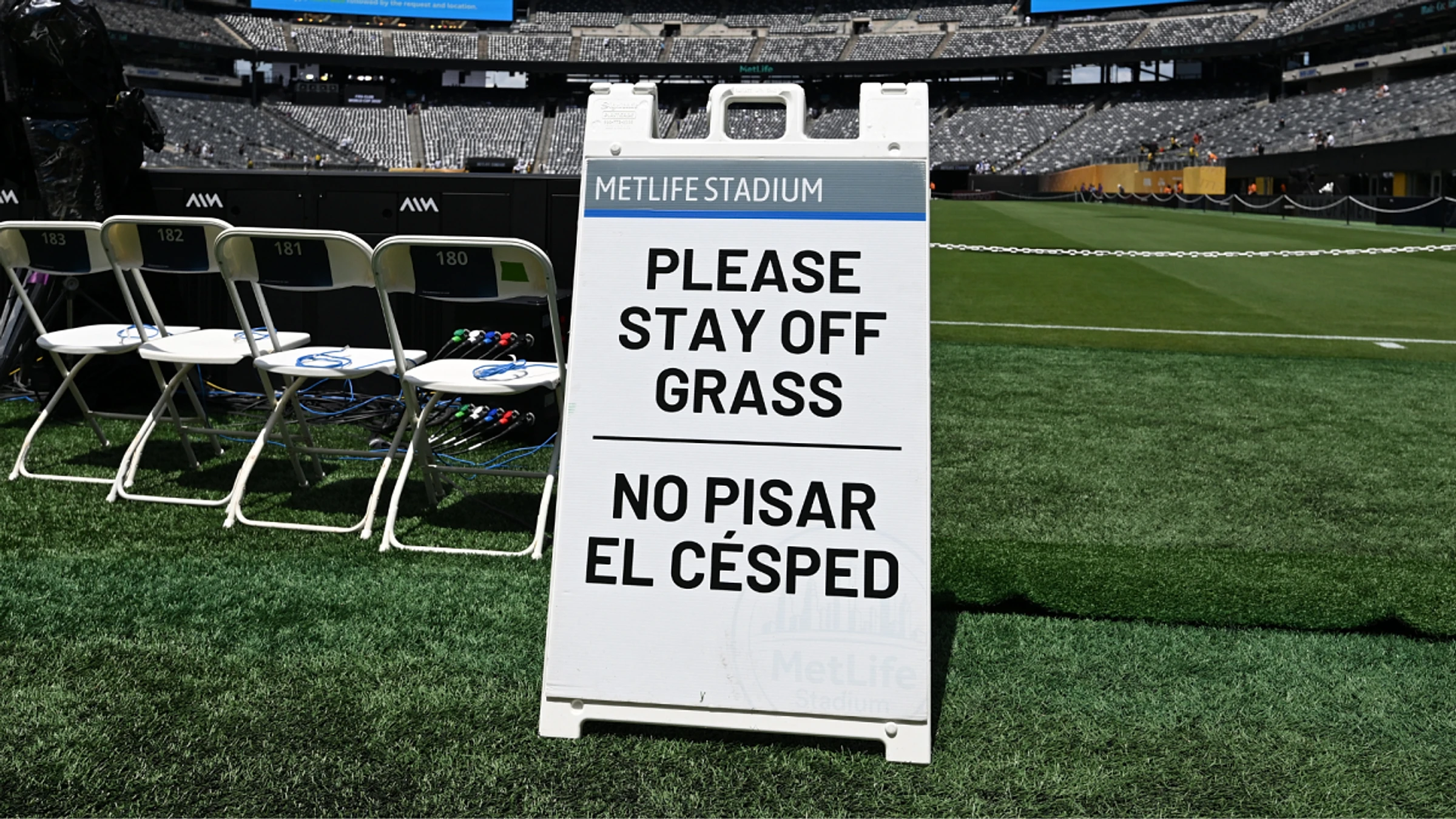
EAST RUTHERFORD, N.J. — The countdown to the World Cup is officially on, and the evidence is growing—quite literally—at MetLife Stadium. The unmistakable roar of leaf blowers recently echoed through the venue, now adorned with signage reading "New York New Jersey," signaling that a massive transformation is underway. But the real game-changer? A natural grass pitch is being installed for the first time, marking a monumental engineering feat that's been a decade in the making.
This isn't your average lawn job. The installation process kicked off Wednesday, with crews working tirelessly until 2 a.m. to lay down roughly 20 truckloads of Tahoma 31 bermudagrass—a premium variety chosen for its resilience and playability. Sourced from Carolina Green Turf Farm near Charlotte, N.C., the grass spent about 10 months growing before making the journey to suburban New York. The goal? To have a perfectly playable surface ready when Brazil and Morocco open Group C play on June 13, kicking off a string of eight World Cup games at the venue, including the July 19 final.
But this isn't just about rolling out sod. Underneath the lush green surface lies a sophisticated system: the stadium's original artificial turf infrastructure remains at the bottom, topped by about two feet of sand, a full irrigation network, and a vacuum ventilation operation. For now, the field is dotted with HVAC units that pump hot air when it's cold and cold air when it's hot, ensuring the grass thrives during installation. Next week, a giant sewing machine on wheels will stitch everything together into a cohesive playing surface.
This massive undertaking is the result of over a decade of research by FIFA's pitch team, who studied conditions across North America—from Vancouver to Mexico City—to ensure every venue delivers world-class turf. "When it comes to delivering a field for the World Cup, having those numbers and that thought process has been very beneficial," said David Graham, FIFA's senior pitch manager overseeing all 16 tournament venues. "I couldn't do my job without any of that."
For fans and players alike, this isn't just grass—it's the stage for football's biggest moments. And for those of us who love the game, it's a reminder that even the playing surface gets a world-class upgrade when the World Cup comes to town.