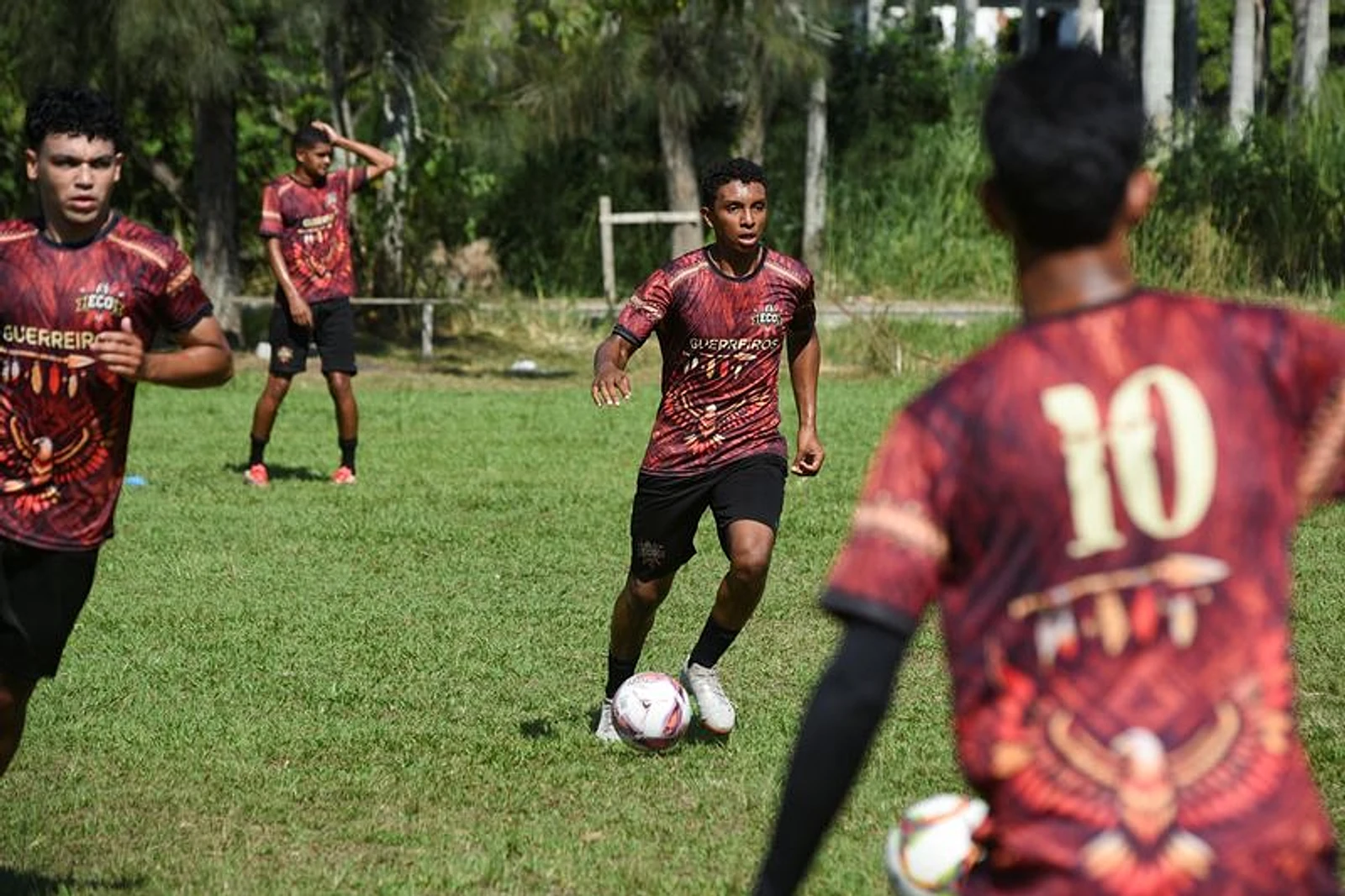
Deep in Brazil's football heartland, a groundbreaking team is rewriting the narrative of the beautiful game. Originarios, the first fully Indigenous professional soccer team to compete in an official Rio de Janeiro state championship, made their debut with a mission far greater than just scoring goals.
Hailing from the Mata Verde Bonita village on the coast of Rio de Janeiro state, this squad of players from Indigenous communities across Brazil is using football as a powerful platform. "The initial idea was not to become champions," explains club president Tupa Nunes, chief of the Guarani Mbya people. "It was to give visibility to a people who suffer greatly, directly defending their land."
For Nunes, the pitch is a stage for change. "From a young age, I believed that by playing great football, beautiful football, well-played football, you can break the stone hearts of those who failed to understand your dream, your project, your people."
The team's formation comes at a critical time. Indigenous people represent just 0.8% of Brazil's population yet face disproportionate violence, with hundreds killed annually in land disputes. Originarios turns every match into a statement of resilience and representation.
Head coach Huberlan Silva scoured the country to build the squad, reaching deep into the Amazon rainforest. "Wherever I know there was an Indigenous community, I call to find out where there is hidden talent, someone who didn't get the opportunity," he says. Players travel thousands of miles for the chance to compete at a professional level.
For forward Edilson Karai Mirim, a graphic artist from the village, each game is a cultural showcase. He adorns himself in traditional Guarani body paint, saying, "It means a lot to me because it represents my people and my history."
The dream doesn't stop at the Rio championship. Nunes envisions his "warrior eagles"—the bird emblazoned on the club's jersey—soaring to the heights of Brazilian giants, European leagues, and perhaps even the national team. With every pass, tackle, and goal, Originarios is proving that football can be more than a game—it can be a movement.