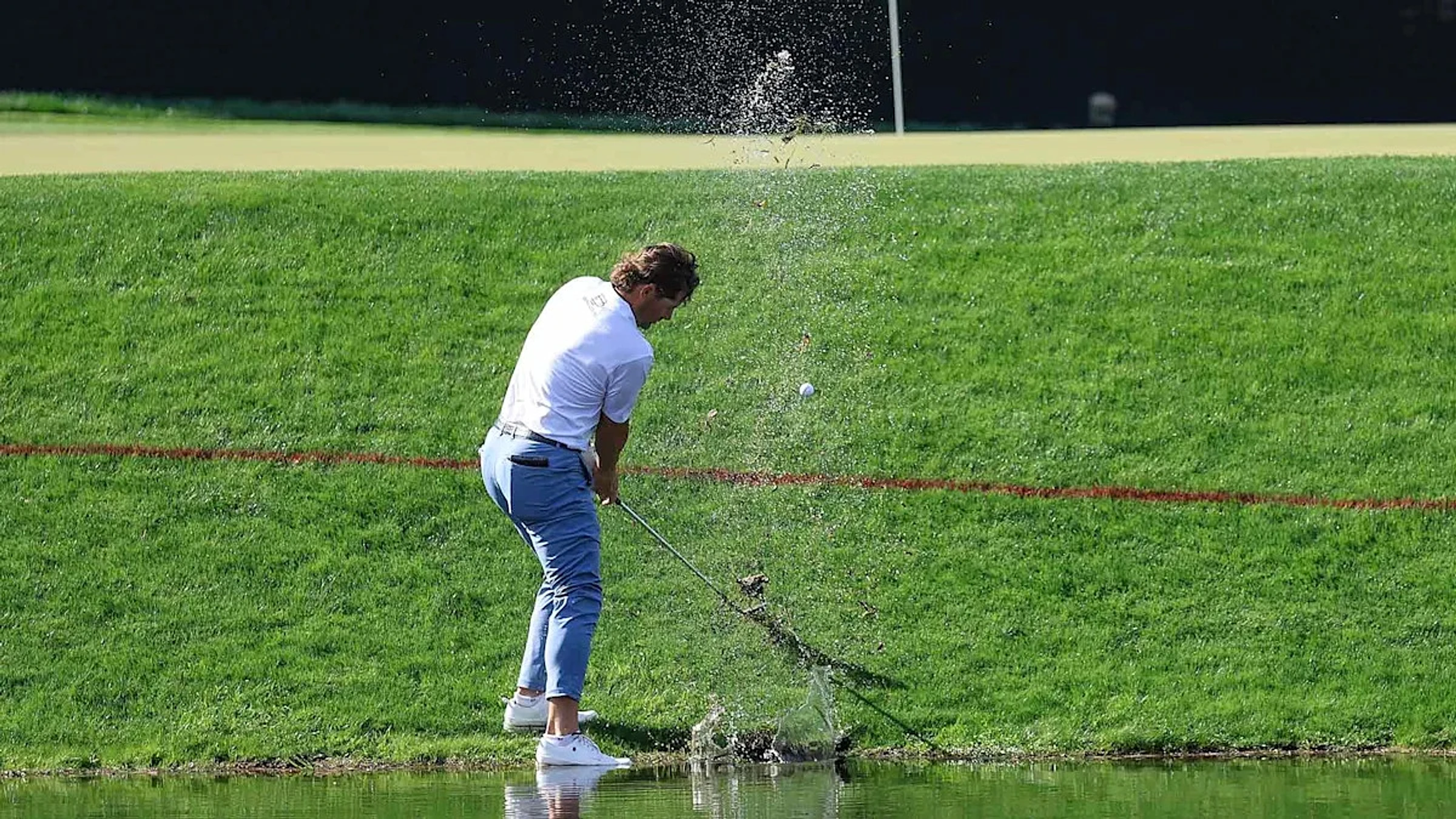
Few shots in golf are as tempting—or as treacherous—as the water ball. That glimmer of white just peeking above the surface can fill you with a dangerous mix of hope and hubris. But before you take the plunge, it's crucial to understand the physics at play. Knowing how water alters your shot is the key difference between a heroic recovery and a watery grave for your scorecard.
So, when is it worth the risk? Recent field testing provides a clear guide. The critical factor is ball depth. Think of it like this: a ball merely skimming the water behaves much like a heavy wet sand lie. With a 52-degree wedge, you can expect a relatively normal launch and enough carry to clear a standard hazard.
The game changes dramatically once the ball is even partially submerged. When a quarter of the ball is under, the water creates massive resistance at impact. Your club must displace water before it can strike the ball, sapping energy and forcing a major adjustment in your technique. To get any kind of launch, you'll need to increase swing speed dramatically and adopt a steep, chopping motion.
The final frontier is the fully submerged ball. Here, the water wins. Testing showed that a swing meant to produce a 60-yard shot with a wedge resulted in a mere 15-yard carry—a 75% loss in distance. The water simply absorbs too much energy, making a successful recovery nearly impossible for all but the most powerful swings.
The verdict? If the ball is sitting up, a calculated risk might pay off. If it's submerged, take your penalty drop, save the strokes, and trust that the right gear—from waterproof shoes to high-performance wedges—will help you conquer the next hole dry.