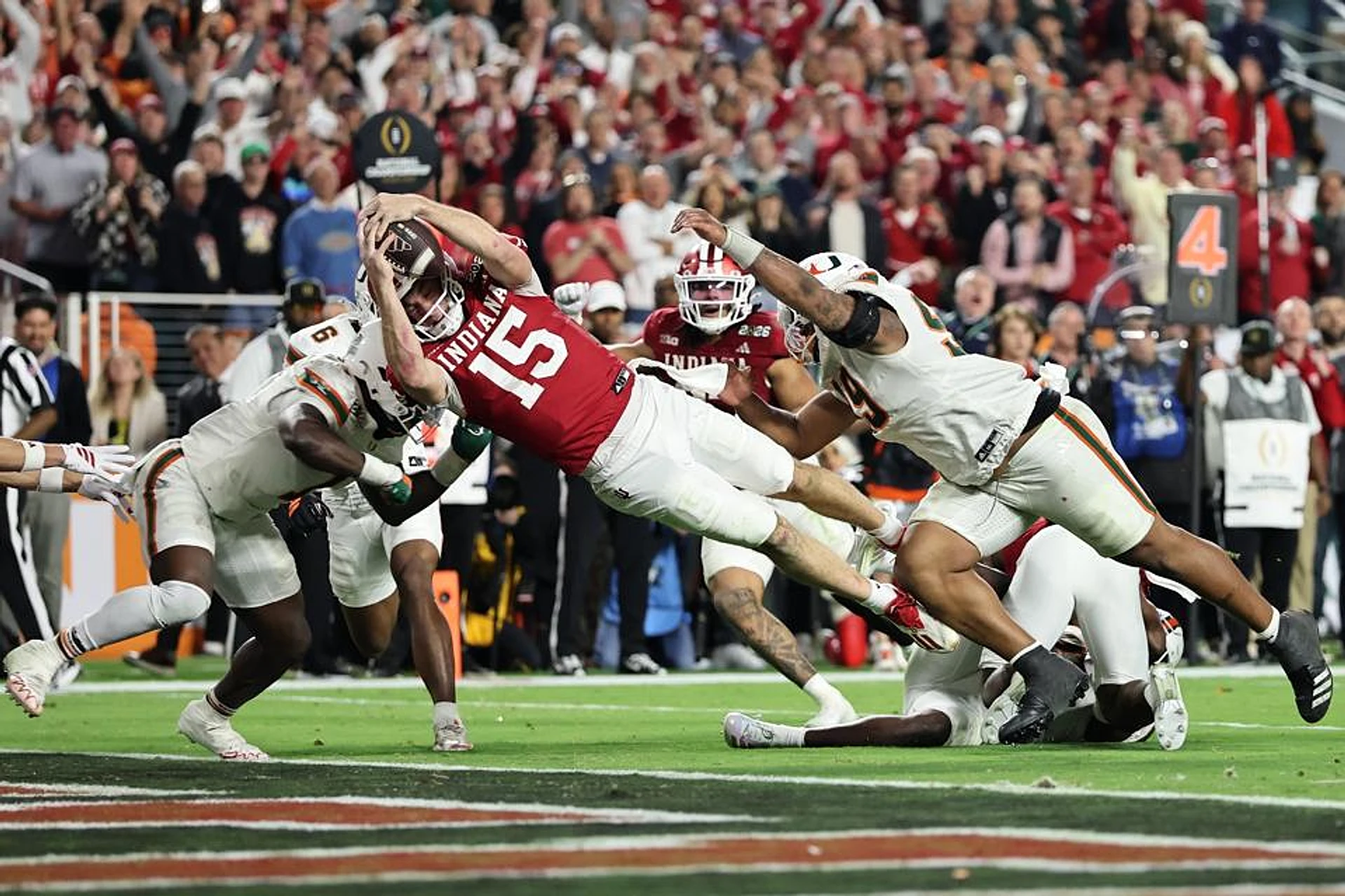


Week 18 of the NFL’s regular season saw the Las Vegas Raiders beat the Kansas City Chiefs to finish their season 3-14. While this win may have hurt the Raiders’ 2026 draft pick, earlier that day, the New York Giants defeated the Dallas Cowboys, locking the Raiders into the top pick in the upcoming draft. The real winner of this outcome was approximately 1,800 miles away in Bloomington, Indiana, where the presumptive number one draft pick in this year’s NFL Draft, Fernando Mendoza, of the Indiana Hoosiers, saw his after-tax income increase by millions due to the outcome.
NFL players must pay taxes in the U.S. based on their earnings. The vast majority of NFL players earn money a rate that puts them into the top income tax bracket at the federal level (37% in 2026). The taxing authorities tax income from athletes’ name, image, and likeness based on where the athletes earn their income. For example, if an athlete shoots a commercial in Los Angeles, then the athlete will pay federal income taxes as well as California state income taxes.
The taxation of the athlete’s salary and bonus is more complicated. While state income tax laws were have always been enforced, the 1991 NBA Finals reshaped how states impose the so-called Jock Tax. Since the Michael Jordan-led Chicago Bulls defeated the Los Angeles Lakers, states have widely levied income taxes based on the number of duty days spent in each state. For example, consider an athlete who works for a total of 200 days. Suppose this athlete works 150 days in State A and then 50 days in State B. In this situation, 75% (150 of the 200 duty days) of the athlete’s income would be subject to taxation in State A. The remaining 25% (50 of the 200 duty days) would be subject to taxation in State B.
Given the variation in income tax rates across states, the Jock Tax can substantially alter athletes’ after-tax income. For instance, athletes in the NFL and NBA who play for teams in low-income tax rate states face substantially lower income tax burdens than athletes who play for teams in high-income tax rate states. As athletes tend to spend a disproportionate number of duty days in the state where their team plays, the team the athlete plays for can alter their after-tax earnings.
MORE FROM FORBESThe Tax Advantage Of Playing In The NFL’s AFC South DivisionBy Nathan Goldman
As players end their collegiate careers and move to the NFL, they tend to do so via a draft system. In the NFL, the team that finished with the worst record in the prior year gets the first selection, and the team that wins the Super Bowl gets the last selection. All teams get picks two through 31 based on their record. The NFL Draft lasts for seven rounds.
Beyond the strict structure of who gets each pick, there is a pre-set pay scale for all picks. For instance, the first overall pick will be paid $54,565,500 over a four-year contract. The second pick will also have a four-year contract, but this amount will drop over two million dollars to $52,103,630. The overall contract value cascades all the way down to pick number 257, whose pre-set contract value over four years is $4,359,258.
One key factor about these contracts that is overlooked is that these pre-set values are based on pre-tax values. Once state income taxes and, in particular, the Jock Tax, are factored in, there can be large fluctuations in how much a player gets paid.
For instance, the Jacksonville Jaguars play their home games in the state of Florida (0% state income tax) and also have several games each year in other states with no (or low) state income tax rates. Assuming duty days are scattered evenly across their games, their player’s average state income tax rate across their set games is 0.26%. Meanwhile, the San Francisco 49ers play their home games in California (13.3% top state income tax rate) and also play several teams in a high state income tax rate jurisdiction. Their players’ average state income tax rate across their set games is 11.20%.
The 9.94% estimated difference in state income tax liabilities can make a substantial impact on a player’s after-tax income. For the number one pick in the 2026 NFL Draft, this state income tax rate differential equates to over five million dollars over the four-year contract (ignoring deductions, agents fees, signing bonus timing, and actual duty day splits).
Entering the final week of the 2025 NFL regular season, the race to the bottom of the league’s standings (thus, earning the number one draft pick) was down to just the Las Vegas Raiders and the New York Giants. If the Giants lost and the Raiders won, then the Giants would claim the number one pick. However, in any other scenario, the Raiders would keep their spot.
The presumptive number one pick in this year’s NFL Draft has long been Fernando Mendoza, the Heisman and national championship-winning quarterback out of Indiana University. While there is little doubt that Mendoza is thrilled to add being the number one draft pick to his long list of accomplishments, which team was selecting him would have a significant impact on his after-tax earnings.
If the Giants were to have prevailed and selected Mendoza, he would face a top income tax rate of 10.75% in New Jersey for the majority of his duty days. However, that is not what happened. Instead, Mendoza will likely become a member of the Raiders, where the majority of his duty days will take place in Nevada, a state that does not impose a tax on income. Thus, the Giants beating the Cowboys appears to have increased Mendoza’s after-tax pay by millions of dollars over the next several years.
Given the significant variation in state income tax rates and rules, and the discrete number of games played by football players, state income taxes continue to be a headline in the NFL. For instance, the Seattle Seahawks’ quarterback, Sam Darnold lost money while playing in this year’s Super Bowl. The reason for all this came down to the Jock Tax. The players face an additional seven duty days in the state of the Super Bowl, which, this year, was California. For a player like Darnold, who earns over $30 million annually, these duty days resulted in more tax liability than what a player makes for playing in the Super Bowl.
The result of the Jock Tax is a form of inequity for teams that play in high-income tax rate jurisdictions versus those in low-income tax rate jurisdictions. For instance, Seahawks players will soon be subject to a 9.9% income tax rate on income over $1 million. As the salary cap is the same for all teams, this means that a material portion of income accrued by the Seahawks will be worth less after tax than it was before, and in comparison to the rest of the league.
MORE FROM FORBESSam Darnold Won The Super Bowl — But Lost Money Due To The Jock TaxBy Nathan Goldman
While the NFL cannot change tax laws to suit its players, it can adjust the existing rules to remove these inequities. For instance, the NFL can allow teams in high-income tax rate jurisdictions to be able to spend more on their team’s roster. The NFL could also be more purposeful in locating the Super Bowl in low-income tax rate jurisdictions where the players would not be subject to as big a hit on the Jock Tax. Regardless of what can or cannot be changed, if the Raiders call Mendoza’s name first in the 2026 NFL Draft, he can already be considered the tax winner of this year’s newest NFL players.
This article was originally published on Forbes.com