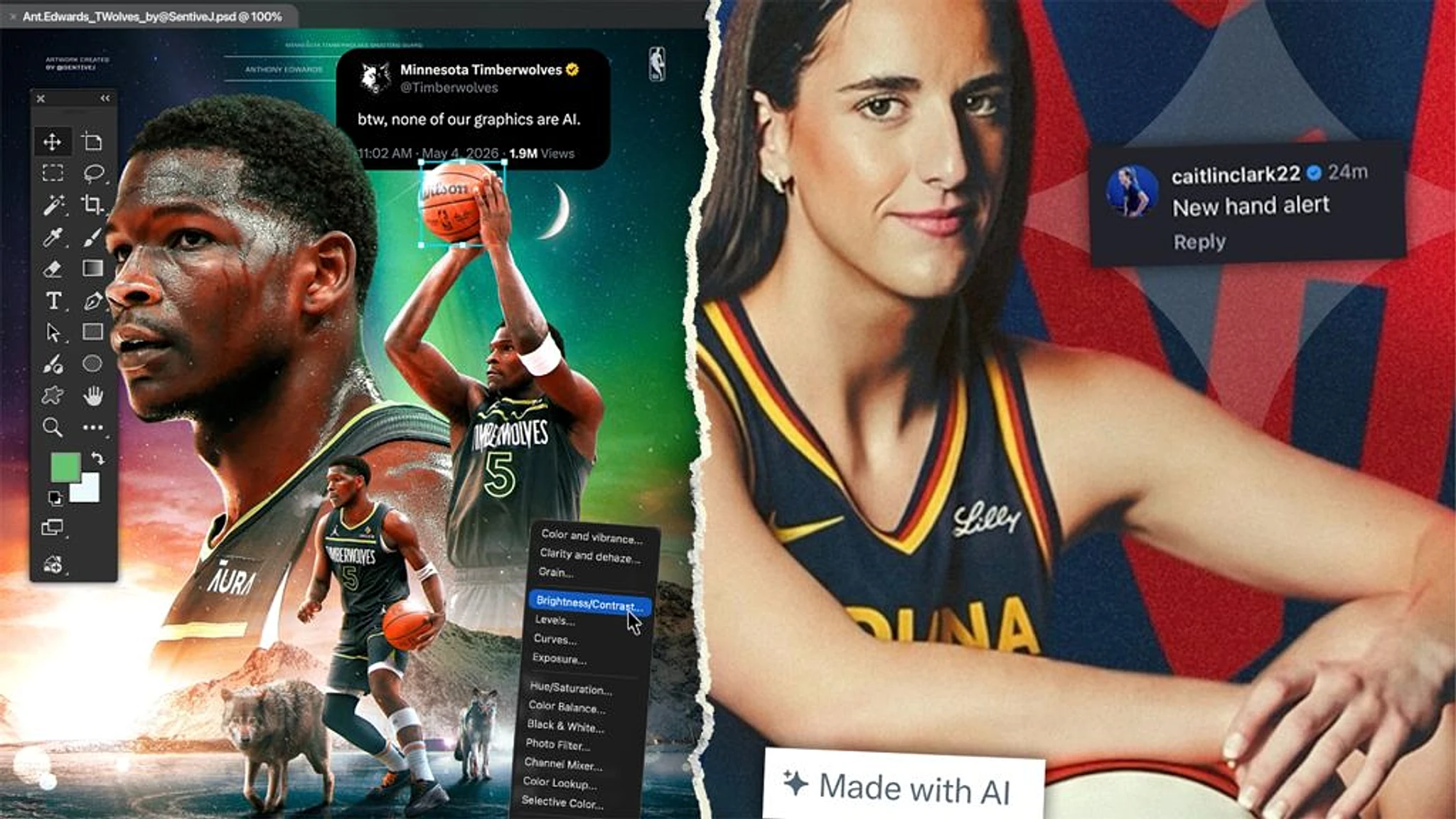
The latest leap in AI technology—ChatGPT 2.0 Images, launched April 21—has sent shockwaves through the sports design community. The software's enhanced ability to generate graphics went viral on social media almost immediately, but not for the reasons you might think. Instead of celebrating innovation, many users turned the conversation into a jab at human designers.
"Yeah man designers are about to be jobless," one X user wrote, sharing AI-generated jersey swaps of soccer stars Lamine Yamal and Eduardo Camavinga. The post racked up over 7,000 likes, reflecting a growing sentiment that machines might soon replace the artists behind your favorite team's visuals.
For graphic designers like John Osborn—whose resume includes work with Bleacher Report and Electronic Arts—the reaction was baffling and frustrating. "The fact that people are out there defending legitimate robots is beyond me," he told Front Office Sports. Osborn, who has built a following of 17,000 on X with his sports designs, has become a vocal critic of AI art. "I love negativity toward AI," he admits, leaning into the backlash.
The debate has even spilled into pro sports. Teams like the Minnesota Timberwolves, Borussia Dortmund, and the New Orleans Saints have publicly denounced AI-generated art. But behind the scenes, some franchises are quietly embracing the technology. The Indiana Fever faced criticism after Caitlin Clark joked about a graphic that distorted her hand using an AI tool. Meanwhile, the NHL's Winnipeg Jets and St. Louis Blues condemned AI graphics online—yet the Jets told FOS they plan to incorporate AI into future creative work, and a source confirmed the Blues are doing the same.
So, what does this mean for the designers who bring your favorite jerseys, posters, and social media graphics to life? For now, many believe their expertise and creative intuition can't be replicated by algorithms. "AI lacks the human touch—the understanding of emotion, culture, and the story behind a team," says Jason Matheson, director of college sports creative talent headhunter SkullSparks. But the real concern isn't whether AI can match human skill—it's whether cost-conscious bosses will care. With schools now able to pay athletes directly, Matheson worries college sports creatives could be next on the chopping block. Cal Athletics has already laid off dozens of employees, a stark reminder that in an era of consolidation, even the most talented designers might need to fight for their place.
As the sports world grapples with this new frontier, one thing is clear: the conversation isn't just about technology—it's about value. And for designers who pour their passion into every graphic, the stakes have never been higher.