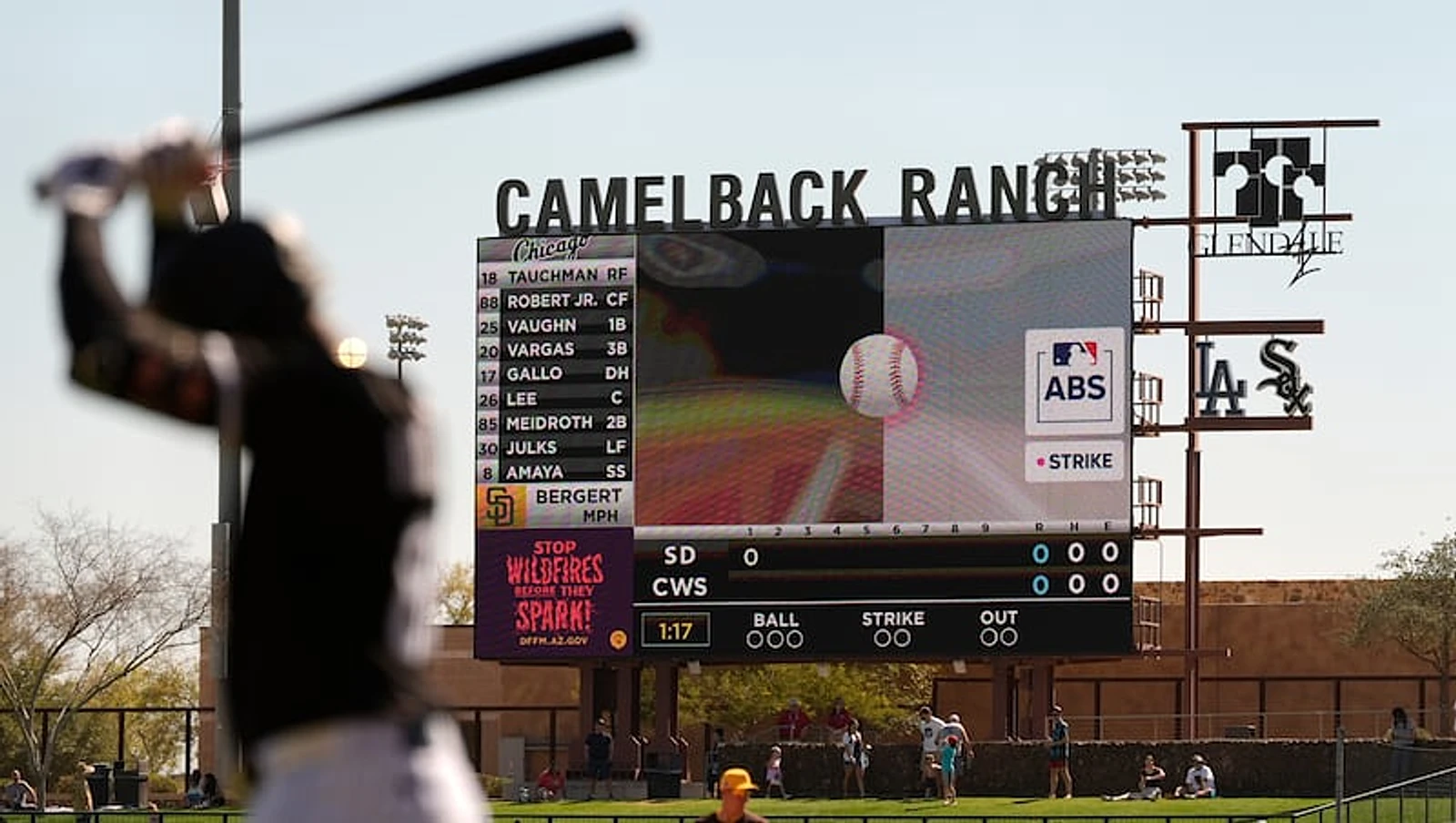
Baseball is changing, and it's happening faster than a 95 mph fastball. In 2023, Major League Baseball introduced the pitch clock, speeding up the game and boosting viewership. Now, in 2026, the league has rolled out its first-ever challenge system for balls and strikes—and it's already shaking things up behind the plate.
Known as the ABS (Automated Ball-Strike) challenge system, this technology made its debut in Triple-A back in 2023. Fast forward to today, and it's dramatically altering how calls are made. According to ESPN, the league's walk percentage has jumped to 9.9%—the highest it's been since 1950. Why? The ABS uses a player's official height rather than their crouched batting stance, creating a tighter, more consistent strike zone that leaves less room for interpretation.
For fans and stat lovers—and let's be honest, baseball fans live for their stats—the "robo" ump era is a goldmine of analysis. Take the first week of the season: Umpire Auditor, a popular X account tracking officiating, reported that umpires missed 850 calls. Of those, 155 were overturned. That's a lot of second-guessing, but it's also a sign of progress.
The ability to challenge calls instantly has been an adjustment for umpires, who've long relied on the human eye to judge whether a tiny ball traveling at triple-digit speeds "painted" the outside corner. So far this season, 53% of challenges have resulted in an overturned call, with 1,217 calls reversed and 1,058 confirmed, per Baseball Savant.
For players, the big question isn't just what to challenge—it's when. With only two challenges allowed per regular-length game, timing is everything. Use them wisely, and you can keep momentum on your side. Miss the mark, and you might watch a critical call slip away.
Of course, it hasn't been all smooth sailing. In a recent game between the Texas Rangers and New York Yankees, home plate umpire Quinn Wolcott had a rough day, with overturned ABS calls stacking up. And umpire Lance Barrett called what many considered the worst game of the day, ranking as the fourth-worst performance of the season. The learning curve is real, but the future of baseball is here—and it's more precise than ever.