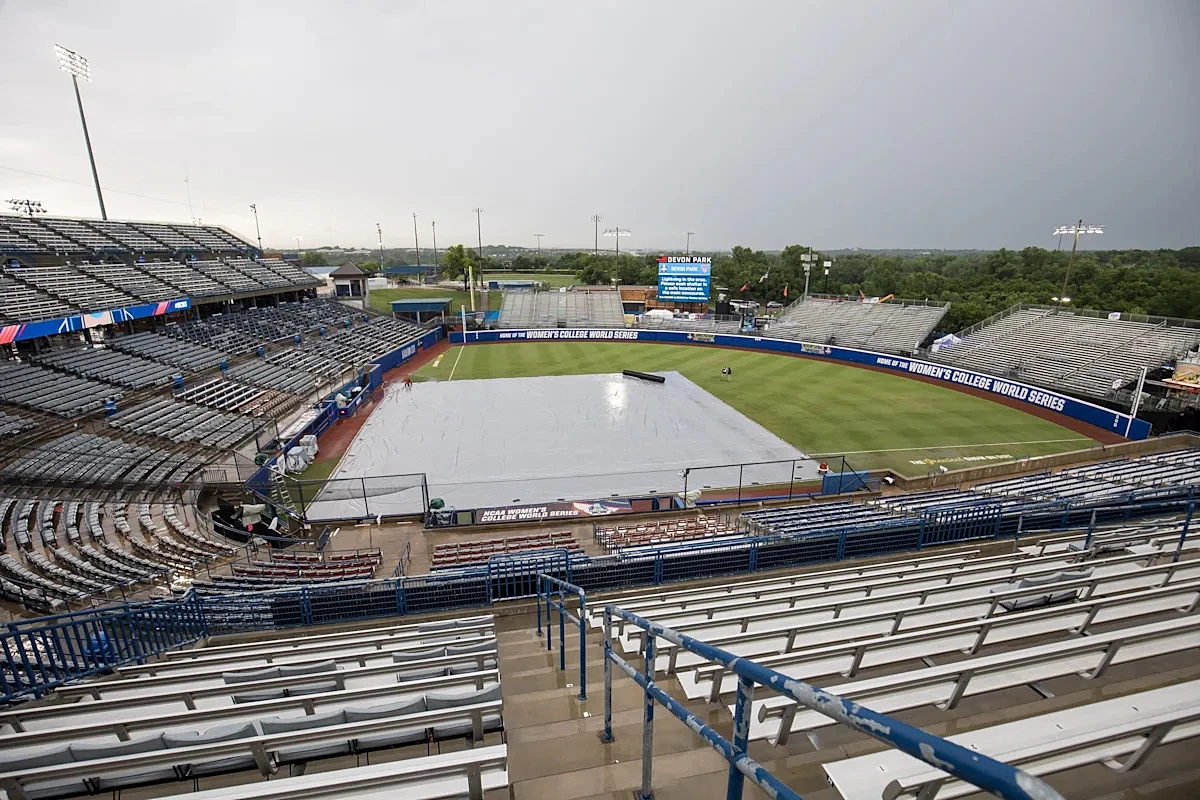
When the NCAA Softball Tournament heats up, so does the weather. As teams battle their way to the Women's College World Series in Oklahoma City, lightning delays and pop-up rainstorms are as much a part of the postseason as the crack of the bat. These interruptions can last anywhere from a few minutes to several hours, but with the tournament's high stakes, cancellations and postponements simply aren't an option.
Starting with regional play on Friday, May 15 and running through the championship series in early June, there's plenty of time for Mother Nature to make her presence felt. So, what happens when the skies open up? Here's a breakdown of the NCAA's weather delay protocols.
Once lightning is detected within a six-mile radius of the venue, the game is immediately delayed or suspended. The NCAA relies on the "flash-to-bang" method: officials count the seconds between a lightning flash and the sound of thunder, then divide by five to estimate the distance in miles. If that distance is six miles or less, it's time to clear the field.
The initial delay lasts 30 minutes, but here's the catch—every time lightning strikes within that six-mile zone, the 30-minute clock resets. That means a delay can stretch for hours if the storm lingers. According to the NCAA, "To resume athletics activities, lightning safety experts recommend waiting 30 minutes after both the last sound of thunder and after the last flash of lightning is at least six miles away."
For night games, keep in mind that lightning can be visible from much farther away than during the day, so officials stay extra cautious. Whether you're watching from the stands or gearing up for your own game, understanding these rules helps everyone stay safe and ready to play when the all-clear sounds.