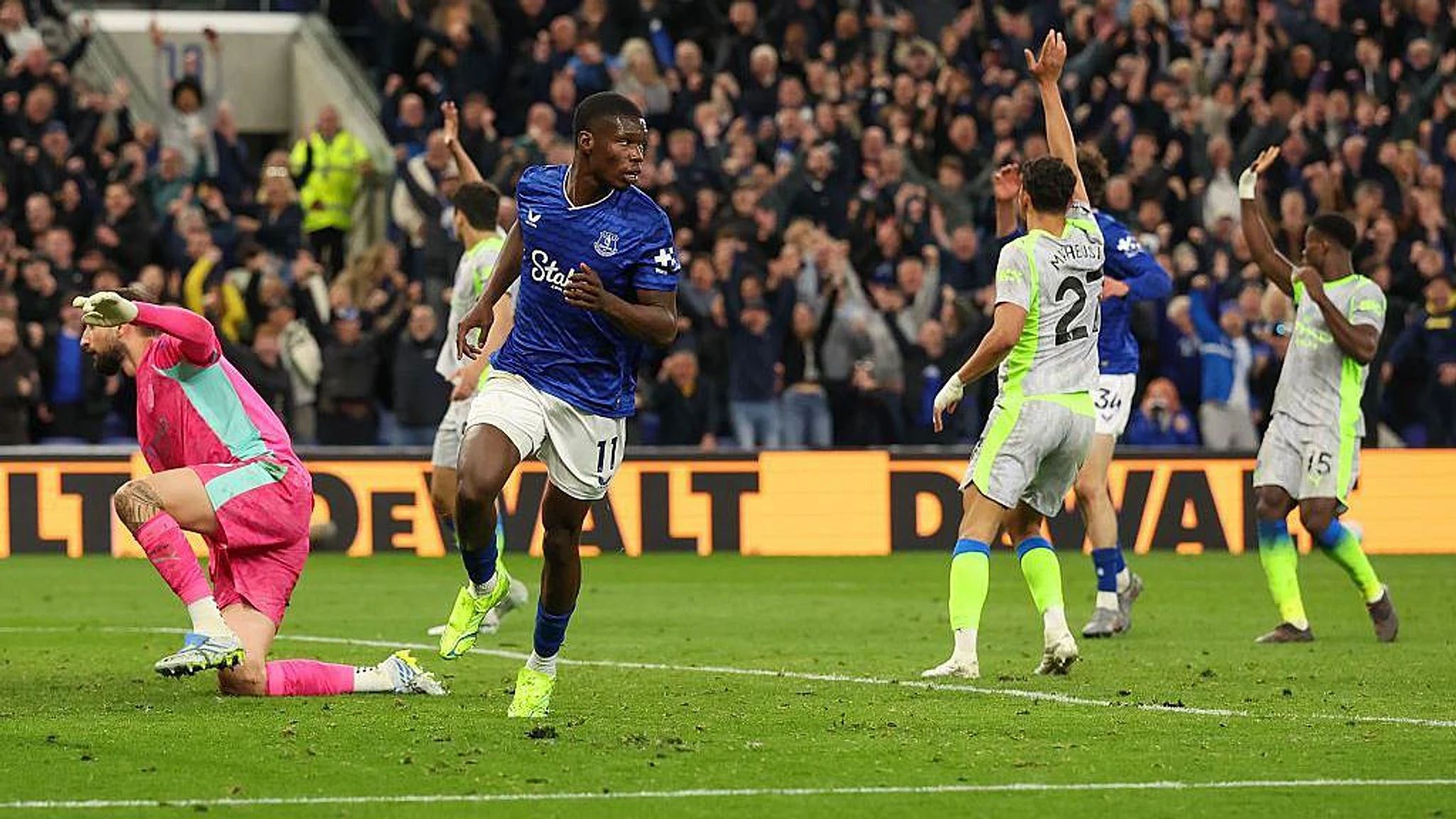
In a Monday night thriller that had everything—dramatic late goals, defensive blunders, and VAR controversy—Everton and Manchester City played out a pulsating 3-3 draw. But the biggest talking point came from a goal that left fans and pundits scratching their heads: how can a striker score from an offside position when the "assist" comes from an opponent?
Everton's Thierno Barry found himself in the right place at the right time, but only after a bizarre sequence that began with him standing in an offside position. As teammate Merlin Rohl played a through ball, Barry was lurking on the shoulder of City defender Marc Guehi. The pass itself was poor, rolling straight to Guehi's feet. But instead of clearing it, Guehi inexplicably underhit a back pass that Barry latched onto and slotted home.
The assistant referee initially raised his flag for offside, but referee Michael Oliver quickly overruled him—and VAR official Paul Howard backed the decision. So, what gives?
The key lies in the laws of the game, which ask two critical questions: Did Barry's movement influence Guehi's actions? And did Guehi have full control of his pass? According to former Manchester City and Everton defender Andy Hinchcliffe, the answer is clear. "Barry is in an offside position when the ball is played, but it's down to Guehi," he told Sky Sports. "He is in control of his actions, so suddenly the attacker goes from offside to onside. That is why the goal rightly stands. That is disastrous from Guehi."
In other words, if a defender makes a deliberate, controlled pass that goes wrong, the attacker is no longer considered offside—even if they started in an offside position. Without this subjective judgment, every player caught in an offside position would be penalized, regardless of whether they actually impacted the play.
But the controversy didn't end there. Everton boss David Moyes was left "amazed" that his side wasn't awarded a penalty when Bernardo Silva dragged down Rohl in the final five minutes. Then there was the potential red card for Everton defender Michael Keane after a heavy challenge on Jeremy Doku. VAR stayed out of all three decisions, leaving Oliver to handle the drama on the pitch.
For fans of the beautiful game, nights like these remind us why we love football—and why we'll never stop debating its rules. Whether you're a neutral or a die-hard supporter, one thing's for sure: this match had enough twists and turns to fill a season.