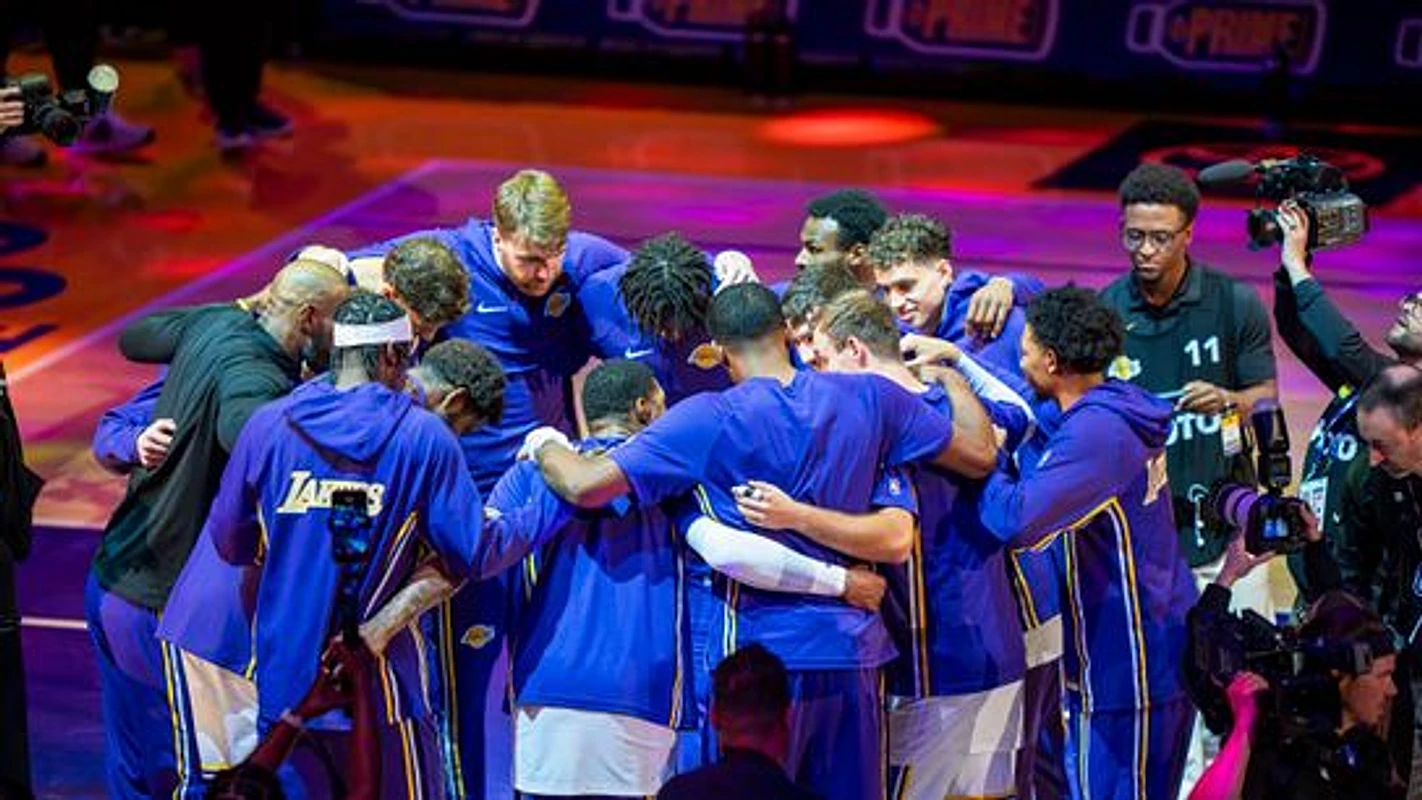
In the unforgiving glare of the NBA spotlight, a team's identity is forged not in perfect health, but in how it responds to being broken. The Los Angeles Lakers' season was supposed to be defined by a two-star engine: the electric scoring of Luka Dončić and the clutch play of Austin Reaves. When both went down with injuries, the lights didn't dim. Instead, they illuminated a stunning transformation.
What emerged from that fracture was not a team waiting to be saved, but a collective force built on resilience. The Lakers finished the regular season with a formidable 53-29 record, a testament to a new identity. This wasn't a top-heavy superteam anymore; it was a braided cord, drawing strength from its interwoven parts.
The philosophy, echoed by Coach JJ Redick, is simple yet powerful: a cord of three strands is not easily broken. With their primary scorers out, the load was distributed. LeBron James, the league's most experienced fiber, provided the tensile strength. Against the Utah Jazz, he played with a veteran's poise, racking up 18 points, 6 assists, and 3 steals in just 17 minutes, setting a tone of controlled aggression.
But the true revelation was in the supporting weave. Players stepped into larger roles, creating friction and strength where there was once potential weakness. The victory over Utah was a blueprint: shared playmaking, relentless defense, and trust in the system. It was a win built not on individual brilliance, but on collective grit.
This hard-earned cohesion is what makes the Lakers a dangerous puzzle for the Houston Rockets in the playoffs. They are no longer a predictable, star-reliant outfit. They are a battle-tested unit that has already faced its worst-case scenario and thrived. The question for Houston isn't just how to stop a superstar; it's how to unravel a team that has learned, through adversity, how to hold together when everything tries to pull it apart.