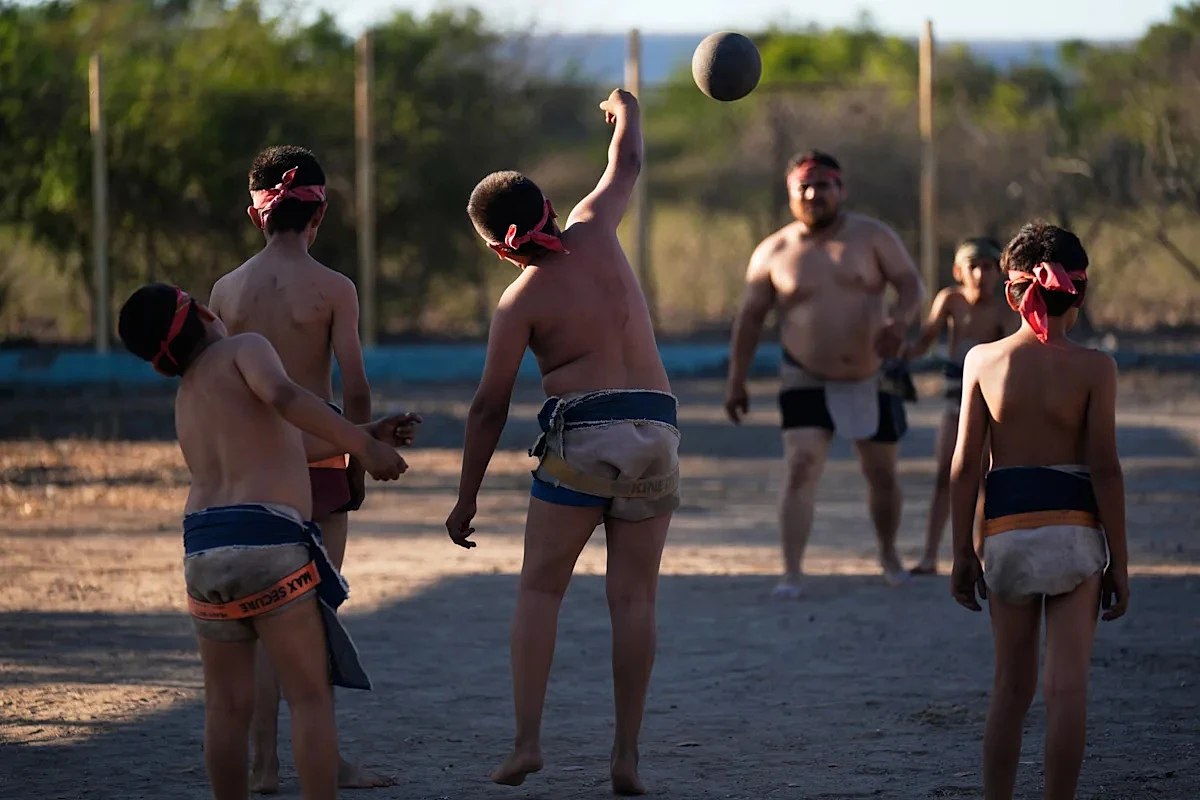
In the dusty outskirts of Mazatlán, Mexico, a remarkable tradition is alive and kicking—literally. The Osuna children grab a rubber ball weighing 3.2 kilograms (about 7 pounds, or seven times heavier than a soccer ball) and begin to play. But this is no ordinary game. Only the hips may touch the ball, forcing players to leap through the air or dive low as it skims the ground. This is ulama, a 3,400-year-old Mesoamerican ballgame that has survived against all odds.
As Mexico prepares to co-host the 2026 FIFA World Cup, the nation is looking back to its sporting roots—way back. Ulama, one of the oldest team sports in the world, was nearly erased during the Spanish conquest. For centuries, it survived only in remote pockets of northwestern Mexico, passed down through generations in small communities. But the late 20th century saw a rebirth, and today, young players like Iker Salgueiro and the Osuna family are keeping the tradition alive.
Dressed in pre-Hispanic-style leather belts called fajados, players gather in Los Llanitos, a community on the outskirts of Mazatlán, to compete. The game is intense, requiring agility, strength, and precision. The heavy rubber ball demands respect—one wrong move can leave a bruise. But for these players, ulama is more than a sport; it's a connection to their ancestors and a symbol of resilience.
While the world's attention will soon be on Mexico for the World Cup, the spirit of ulama reminds us that the country's love for the game runs deep—far deeper than modern soccer. Whether you're strapping on a leather belt for an ancient ballgame or lacing up cleats for a match, the passion for play is timeless.