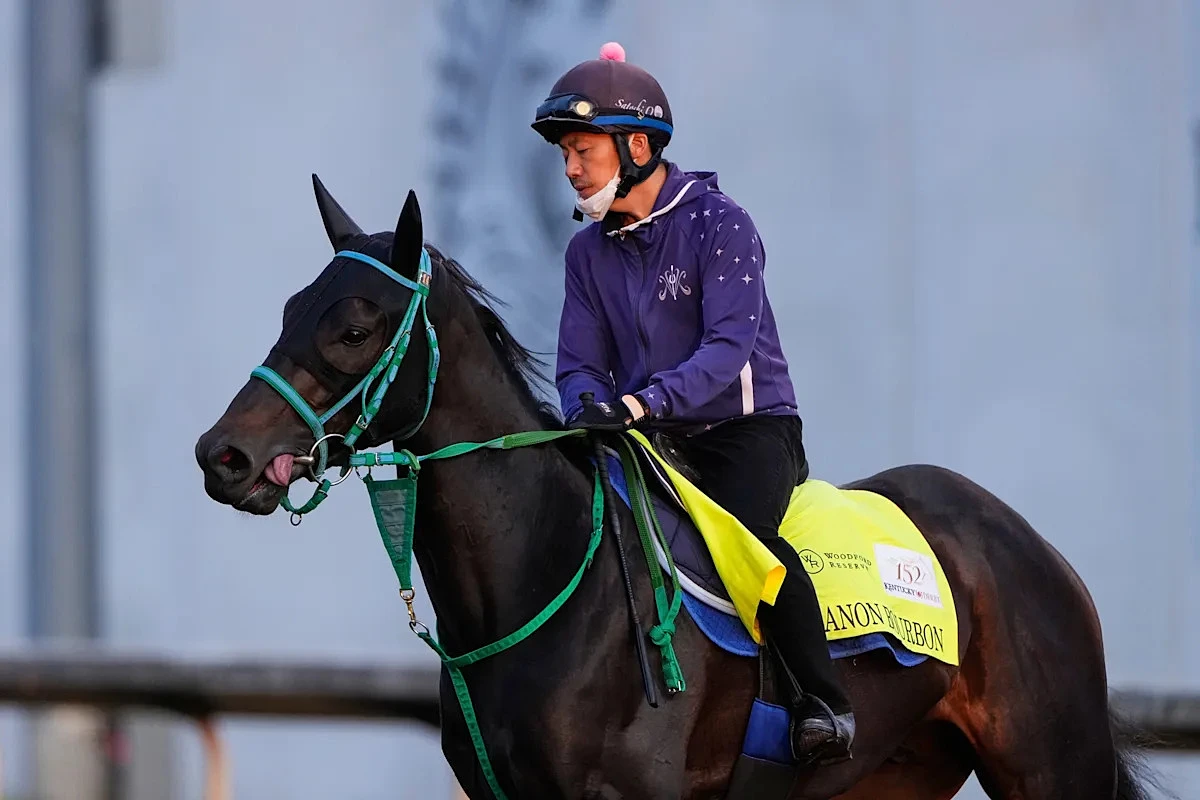
Horse racing in the United States is facing an uncertain future. Tracks are closing, and the rise of legalized sports betting has chipped away at what once made the sport unique. But across the Pacific, a different story is unfolding. Japan is experiencing a racing renaissance—and it could soon produce a Kentucky Derby winner.
Japan has been investing heavily in every aspect of the sport, from breeding and training to the racing itself. While turf racing has long been the country's focus, there's been a notable shift toward dirt-track runners over the past decade. That investment nearly paid off in 2024 when Forever Young came agonizingly close to glory. This year, all eyes are on Danon Bourbon and homebred Wonder Dean, two Japanese contenders with serious Derby aspirations.
"We are getting closer," said racing manager Hiroshi Ando, speaking outside the Japanese horses' barn at Churchill Downs. "For Japan, I think we’re able to change Japanese racing history again, like we did with Forever Young in the Breeders’ Cup Classic. Our ambition is the Kentucky Derby right now, if possible."
For years, Japan's ultimate goal was the prestigious Prix de l'Arc de Triomphe on turf in Paris—a natural target given the country's deep roots in grass racing. The Japan Racing Association launched the Japan Cup in 1981 to grow the sport domestically, and it has since become the richest turf race in the world, boasting a purse of $8.2 million.
"We tried to learn a lot of things from foreign countries—not only the U.S., but also European countries," explained Tom Hashimoto, general manager of the JRA's New York Representative Office. "We developed not in a short period, but we made it happen. Step by step, we learned from other countries. Now we are very lucky to have so many good thoroughbreds."
That deep well of quality traces back to the early 1990s, when Sunday Silence—winner of the 1989 Kentucky Derby, Preakness, and Breeders' Cup Classic—found little breeding interest in the U.S. and was exported to Japan. He went on to become the country's leading sire for 13 consecutive years, leaving a legacy that still shapes Japanese racing today.
With a blend of patience, investment, and world-class bloodlines, Japan is no longer just a rising force—it's knocking on the door of the Derby winner's circle.