
A homophobic chant, which had been heard only sporadically at local tournaments across Mexico for several months, has resurfaced strongly in recent weeks, raising concerns about its potential presence at the 2026 World Cup.
The slur has been a persistent and unwelcome feature at matches involving Mexico and its passionate supporters for two decades, drawing widespread condemnation and sanctions from soccer’s governing bodies.
The chant, a one-word Spanish slur literally meaning male prostitute, typically erupts when an opposing goalkeeper takes a goal kick.
It gained international notoriety during the 2014 World Cup in Brazil and was subsequently heard at the 2018 tournament in Russia and again four years later in Qatar.
Its continued use could lead to significant penalties from Fifa during the upcoming World Cup, co-hosted by Mexico, which would undoubtedly be a major embarrassment for the nation.
Fifa has partnered with the Fare Network to deploy observers to all World Cup matches, tasked with identifying discriminatory chants and banners across diverse countries and cultures.
Soccer’s governing bodies have long grappled with eliminating various forms of abuse, including racial slurs, despite implementing severe penalties such as heavy fines, stadium closures, points deductions, match suspensions, and bans for both fans and players.
European and Latin American nations have faced repeated fines, and Mexico currently has appeals against Fifa punishment over a 2024 match against the US pending before the Court of Arbitration for Sport.
Mexican soccer authorities have struggled to eradicate the chant. Initially, officials from the Mexican soccer federation argued that the chant was not directed at gay people and held different cultural connotations within Mexico.
However, prior to the 2018 World Cup, they launched social media campaigns that ultimately proved unsuccessful. The chant was heard during a match against Germany in Russia, leading to Fifa penalizing Mexico by making El Tri play World Cup qualifying matches behind closed doors at Azteca stadium in Mexico City for the first time in its history.
Despite these punishments, Mexican fans continued to use the slur at Qatar 2022 during matches against Poland and Saudi Arabia.
Ivar Sisniega, President of the Mexican Federation, told The Associated Press: "Sustained efforts have been made for years to eradicate this type of expression, with awareness campaigns and measures in stadiums, and while there has been progress, we are aware that isolated incidents still persist."
Both the federation and Liga MX, Mexico's top league, have resorted to simply asking fans before matches to refrain from the chant. Sisniega mentioned a recent advertising campaign, "We Are Mexico”, designed to highlight the positive aspects of Mexican fans.
Andoni Bello, an LGBTQ+ activist who has played for Mexico in amateur tournaments organised by the International Gay and Lesbian Football Association, views the chant as a form of verbal aggression that can escalate to physical violence.
A government survey indicates that approximately 5 million people in Mexico, or 5.1 per cent of the population, identify as having an LGBTQ+ sexual and gender orientation.
Bello added: "This permissiveness that nothing happens and that it’s cultural means that hate crimes also remain cultural."
The chant’s resurgence comes just months before the World Cup. Mexico is scheduled to play two of its group-stage matches in Mexico City and another in Guadalajara, the city where the chant is believed to have originated over two decades ago.
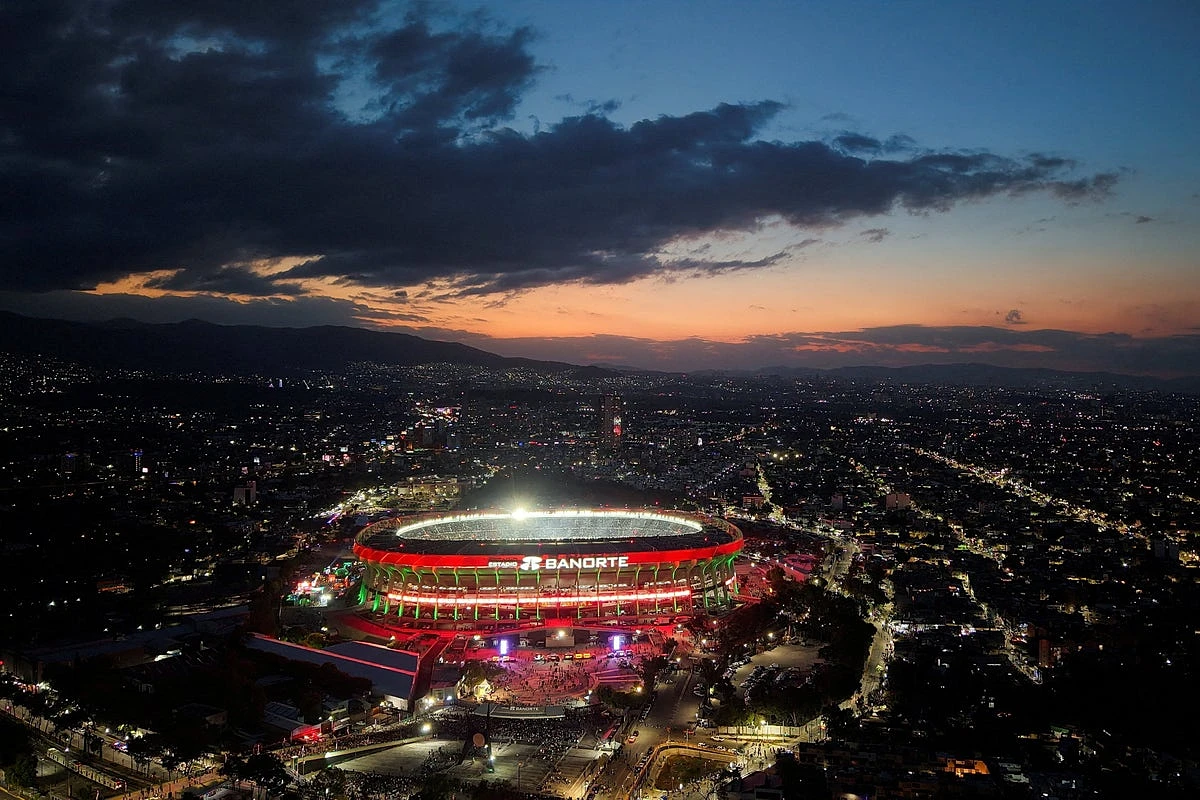
While it had become rare at national team games – noted only in an October 2023 friendly against the US – it was heard loudly last month at the Azteca stadium during a friendly against Portugal and again earlier this month at the same venue during a CONCACAF Champions Cup match between Club America and Nashville SC. Referees suspended both matches twice.
The chant was also heard during intercontinental playoffs in Guadalajara and Monterrey, even in games not involving Mexican teams, such as Iraq vs Bolivia and Congo vs Jamaica, where videos showed Mexican fans teaching African supporters the slur.
Sisniega acknowledged: "We understand that it often arises as a manifestation of frustration or annoyance from the fan, but that doesn’t make it acceptable, and we must continue working to change that behaviour."