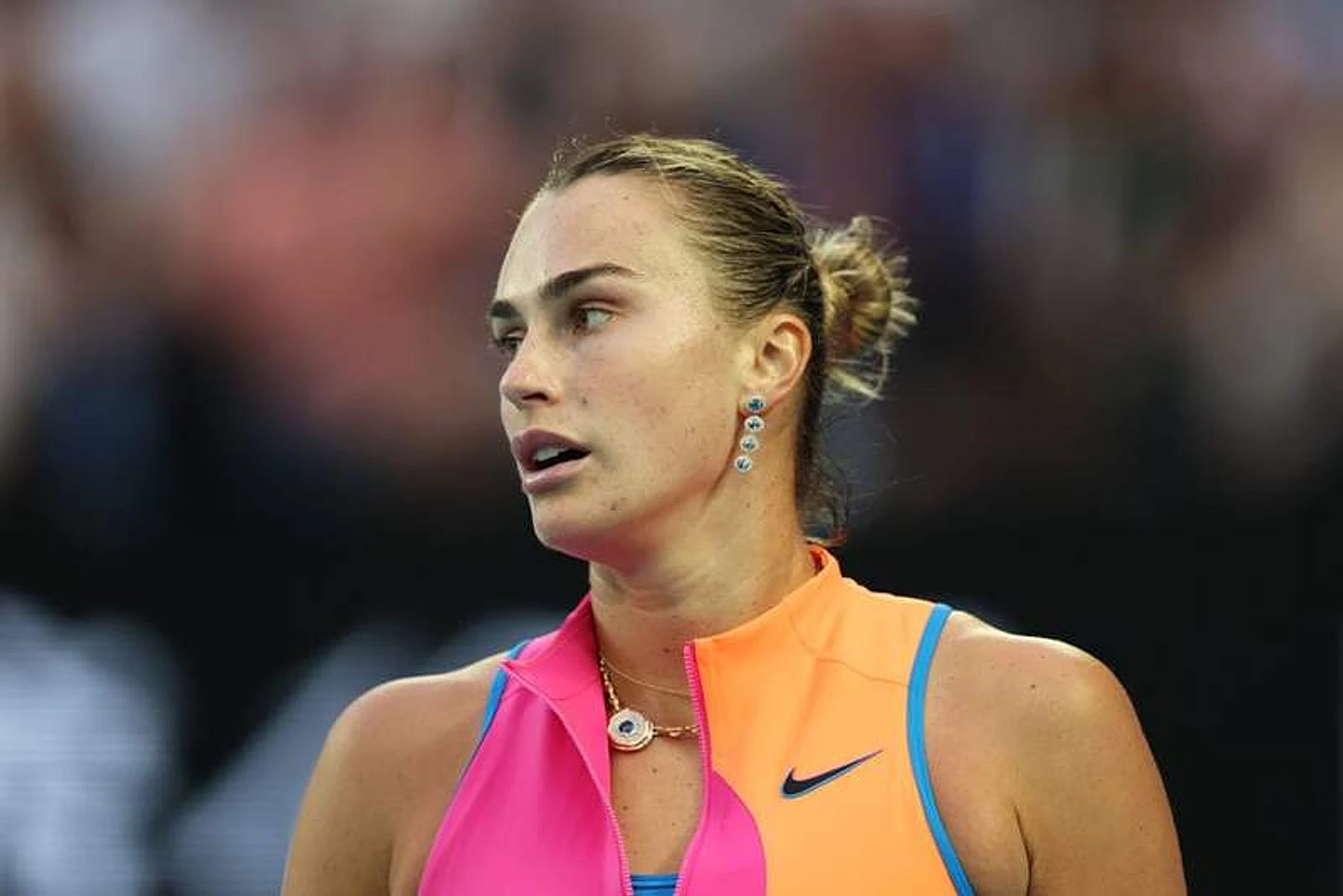
Aryna Sabalenka may be the world number one, but her clay-court form has raised more than a few eyebrows as Roland Garros approaches. After a blistering hard-court season that saw her lift trophies at Indian Wells and Miami, the Belarusian powerhouse has managed just four wins on the dirt—a stark contrast to her earlier dominance.
Sabalenka's European clay swing hit a snag in Madrid, where she fell to Hailey Baptiste in the quarter-finals, before suffering an early exit in Rome at the hands of Sorana Cirstea in the third round. With the French Open just around the corner, questions are mounting about whether the two-time Grand Slam champion can regain her rhythm on the slow, gritty surface.
Former British star Greg Rusedski, however, believes there's a clear explanation for Sabalenka's struggles. Speaking on the 'Off Court Cuts' podcast, the ex-world number four pointed to two key culprits: the tennis balls and the playing conditions. "The Dunlop ball. That's a terrible ball," Rusedski said bluntly, contrasting it with the Wilson Roland Garros balls currently in use at Bordeaux. He also noted that Sabalenka has found it difficult to hit through the slower courts in Rome and has been troubled by the unpredictable bounce in Madrid—factors that can throw even the best players off their game.
Despite these setbacks, Rusedski isn't ready to count Sabalenka out. He believes she could still peak at the perfect moment in Paris, describing the women's draw as "completely open" heading into the year's second major. "I can't confidently pick a favourite," he admitted, naming Sabalenka alongside Elena Rybakina, Iga Swiatek, and Coco Gauff as top contenders.
Rybakina has already made her mark on clay, claiming the Stuttgart title, while Swiatek appears to be finding her groove after a coaching change earlier this season. Gauff, meanwhile, has impressed with her grit, battling back from losing positions time and again during the European clay swing. With a modest 4-2 record on clay, Sabalenka may not look like a favourite on paper, but if she can build momentum early in Paris, her raw power could still make her a force to be reckoned with.